If You Think You’re Having a Heart Attack at Home, Do This Immediately
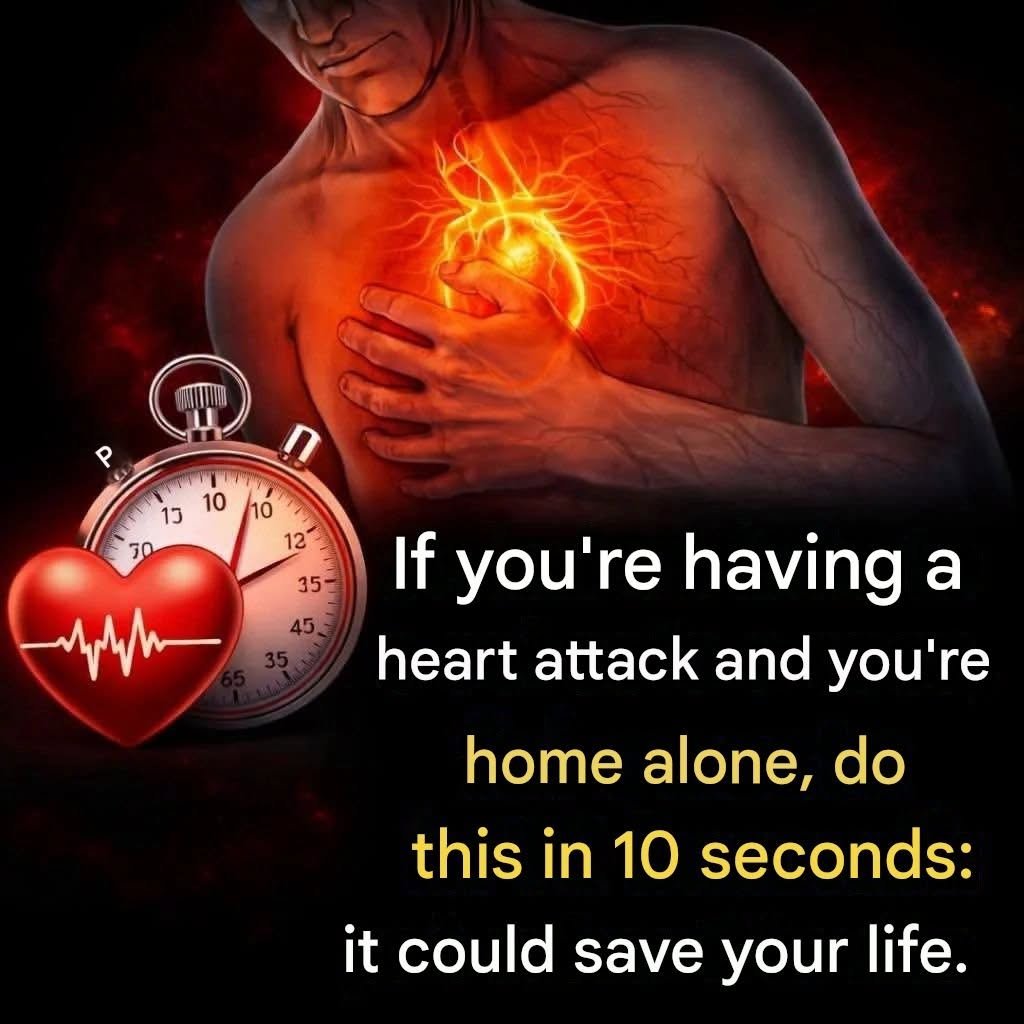
There is no reliable 10-second maneuver that can stop a heart attack at home. Claims that coughing forcefully, drinking water, taking baking soda, or performing a particular movement can “save your life” are dangerous because they can delay emergency treatment.
If you think you’re having a heart attack, the most important action is to get emergency medical help immediately.
1. Recognize the Warning Signs
A heart attack can cause:
- Pressure, squeezing, fullness, or pain in the center or left side of the chest
- Pain or discomfort spreading to the arm, shoulder, back, neck, jaw, or upper abdomen
- Shortness of breath
- Cold sweating
- Nausea or vomiting
- Sudden weakness or unusual fatigue
- Lightheadedness or fainting
Older adults, women, and people with diabetes may sometimes have less typical symptoms.
2. Call Emergency Services Immediately
If you suspect a heart attack, call your local emergency medical service right away.
Don’t wait to see whether the discomfort disappears.
Emergency medical teams can begin evaluation and treatment before you reach the hospital, and arriving by ambulance may allow the hospital to prepare for your arrival.
3. Sit Down and Stay as Calm as Possible
Stop what you’re doing and sit or rest in a safe position.
Avoid walking around, exercising, or trying to “work through” the symptoms.
If you’re alone, unlock the door if you can do so safely and keep your phone nearby while waiting for help.
4. Don’t Drive Yourself
Driving yourself to the hospital is risky because your condition could suddenly deteriorate.
An ambulance allows medical professionals to monitor and treat you during transport.
5. What About Aspirin?
For some adults with suspected heart attack, chewing aspirin may be recommended while waiting for emergency care, because aspirin can reduce blood clotting.
However, it isn’t appropriate for everyone.
Don’t take aspirin if you’re allergic to it, have been specifically told to avoid it, have certain bleeding conditions, or if emergency professionals advise against it. When possible, follow the instructions of your emergency medical service.
Do not delay the emergency call to search for or take aspirin.
6. Don’t Rely on “Cough CPR”
You may see advice online telling people to repeatedly cough forcefully during a heart attack.
This is sometimes called “cough CPR,” but it isn’t a recommended treatment for an ordinary heart attack outside a monitored medical setting.
Repeated coughing can waste precious time and give someone false confidence that they’re treating the problem.
7. If the Person Becomes Unresponsive
If someone collapses and is unresponsive and not breathing normally, call emergency services and begin CPR according to the dispatcher’s instructions.
If an automated external defibrillator (AED) is available, use it as soon as possible and follow its voice prompts.
This situation is different from a conscious person experiencing chest pain.
8. Don’t Wait for “Classic” Chest Pain
A heart attack doesn’t always produce dramatic crushing chest pain.
Especially in older adults and people with diabetes, symptoms can be subtler.
Unexplained shortness of breath, sweating, nausea, extreme weakness, or discomfort in the jaw, back, or upper abdomen can also be warning signs.
Final Takeaway
There is no 10-second trick that can reliably stop a heart attack.
If you suspect you’re having one, the life-saving priority is:
Recognize the symptoms → call emergency services immediately → rest and follow the emergency dispatcher’s instructions.
Don’t attempt internet remedies such as forceful coughing, drinking special mixtures, or exercising to “restart” the heart. Every minute can matter because prompt treatment can restore blood flow and limit permanent heart damage.