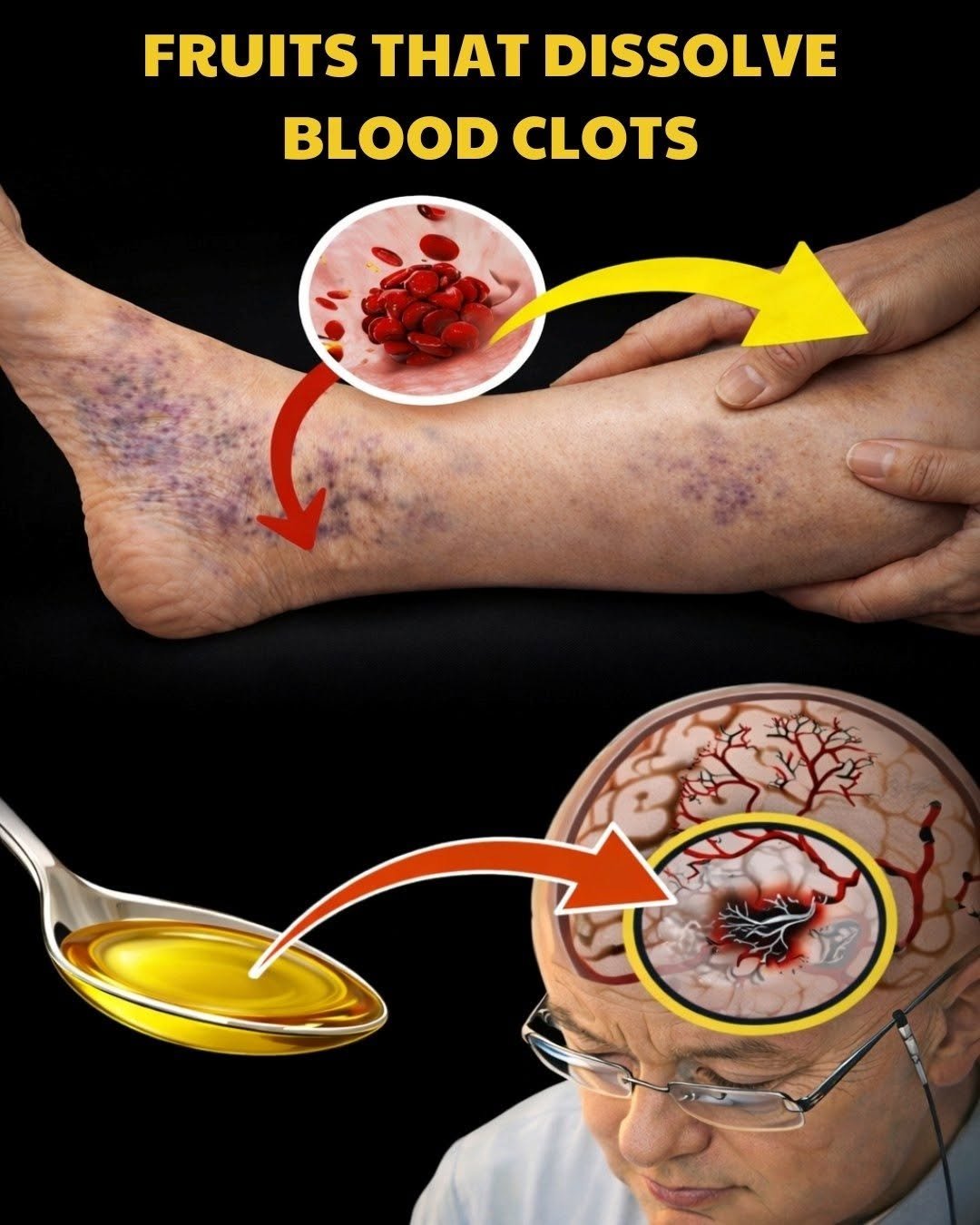
Top 8 Fruits That May Support Healthy Blood Clot Management 🍓🩸
Your body has a sophisticated system that keeps blood from clotting too easily while allowing clots to form when you are injured. No fruit can dissolve an existing blood clot or replace prescribed anticoagulant medication, but a balanced diet rich in fruits can support overall cardiovascular health.
1. 🍓 Strawberries
Strawberries provide vitamin C and polyphenols. These nutrients contribute to overall vascular and antioxidant health.
Enjoy them fresh with yogurt, oatmeal, or as part of a fruit salad.
2. 🫐 Blueberries
Blueberries are rich in anthocyanins and other plant compounds that have been studied for their potential cardiovascular benefits.
Regularly including berries in a balanced diet may support healthy blood-vessel function.
3. 🍊 Oranges
Oranges provide vitamin C, folate, potassium, and flavonoids.
Whole oranges are preferable to relying on juice because they provide fiber and are generally more filling.
4. 🍇 Grapes
Grapes contain several polyphenols, including compounds that have been investigated for cardiovascular effects.
They can be a nutritious addition to meals or snacks when eaten as whole fruit.
5. 🍒 Cherries
Cherries contain anthocyanins and other polyphenols. Their overall nutritional profile makes them a useful addition to a varied diet.
Fresh or frozen unsweetened cherries are good options.
6. 🥝 Kiwi
Kiwi provides vitamin C, fiber, potassium, and other nutrients.
A diet containing a variety of fruits and vegetables supports cardiovascular health more effectively than focusing on one “superfood.”
7. 🍎 Apples
Apples provide fiber and polyphenols, particularly when eaten with the skin.
They’re an easy everyday choice for supporting a generally heart-healthy eating pattern.
8. 🍉 Watermelon
Watermelon contributes fluids, potassium, and other nutrients. Staying adequately hydrated also supports normal circulation.
However, hydration isn’t a treatment for a blood clot.
🩸 What About Blood-Thinning Effects?
You may see claims that certain fruits “thin the blood.” This terminology can be misleading.
Some foods contain compounds that have demonstrated effects on platelets or blood vessels in laboratory or small human studies, but this does not mean eating the food produces the same anticoagulant effect as a medication.
Do not use fruit to treat a suspected blood clot.
💊 If You Take Blood-Thinning Medication
If you take warfarin or another anticoagulant, don’t make major dietary changes without discussing them with your healthcare professional.
With warfarin specifically, consistency in vitamin K intake is important. Most fruits are naturally low in vitamin K, but your overall dietary pattern still matters.
Also be cautious about concentrated herbal products or supplements marketed as “natural blood thinners.”
🚨 Know the Warning Signs of a Blood Clot
Seek urgent medical attention for symptoms such as:
-
Sudden shortness of breath
-
Chest pain, especially with breathing
-
Coughing up blood
-
One-sided leg swelling
-
Unexplained calf pain or tenderness
-
Sudden weakness, facial drooping, or difficulty speaking
The Bottom Line
Strawberries, blueberries, oranges, grapes, cherries, kiwi, apples, and watermelon can all contribute to a nutrient-rich, heart-healthy diet.
But there is no fruit that can safely dissolve or treat an existing blood clot. If you have symptoms suggesting a clot or have been prescribed an anticoagulant, medical treatment—not dietary remedies—is essential.
