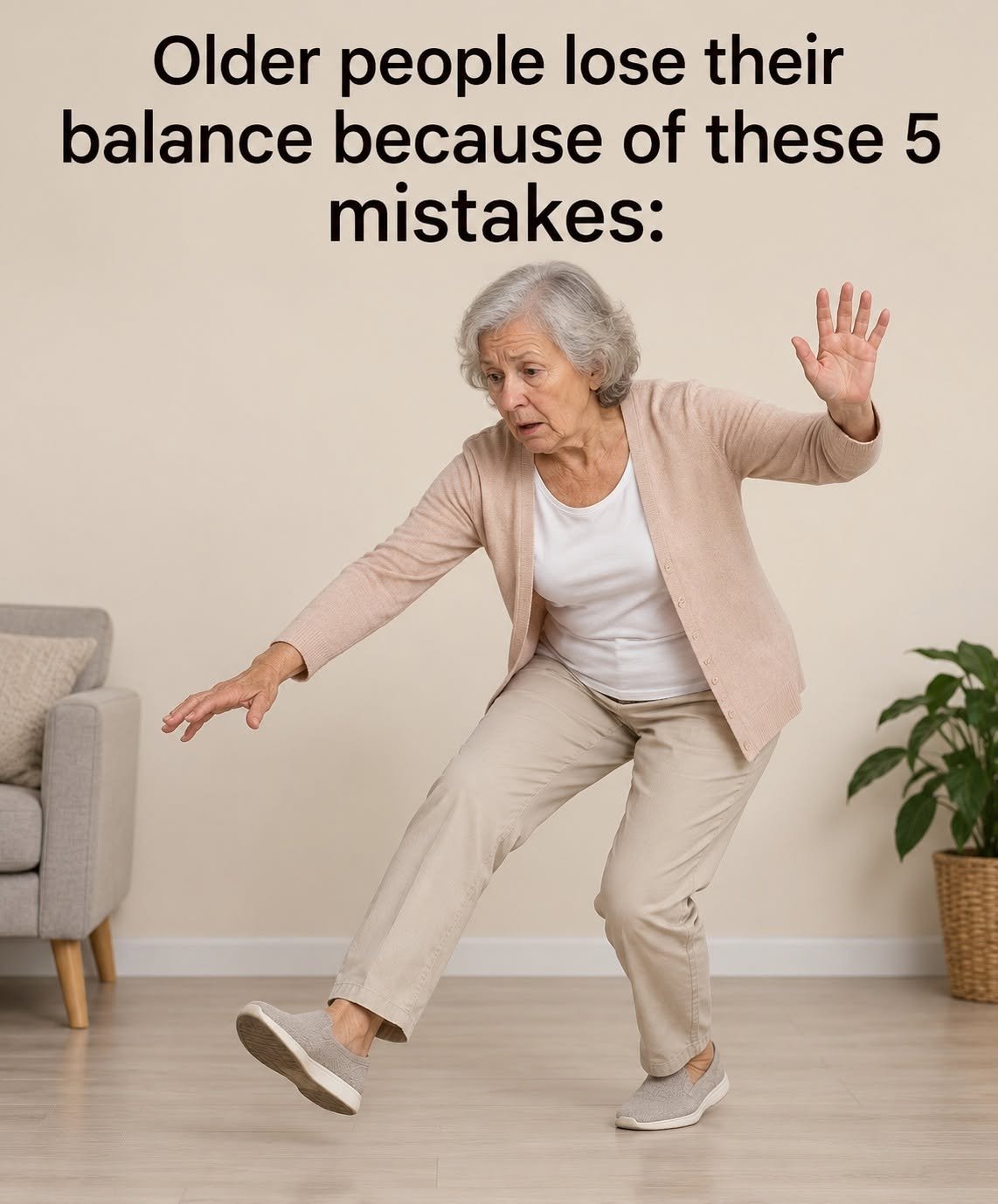
5 Common Mistakes That Can Affect Balance in Older Adults 🚶♀️⚠️
Balance can naturally change with age, but falls are not an inevitable part of getting older. Strength, vision, medications, footwear, the home environment, and certain medical conditions can all influence balance.
Here are five common mistakes that may increase fall risk—and what to do instead.
1. 🪑 Being Too Inactive
Spending most of the day sitting can gradually reduce leg strength, core strength, and coordination, all of which contribute to stability.
What to do instead:
Build movement into the day with activities such as:
-
Walking
-
Sit-to-stand exercises
-
Gentle strength training
-
Balance exercises
-
Tai chi
Start at a comfortable level and progress gradually.
2. 👟 Wearing Unsafe Footwear
Loose slippers, smooth soles, high heels, or shoes that don’t fit properly can make it harder to maintain stability.
Better choice:
Look for shoes that have:
-
A secure fit
-
Good heel support
-
Non-slip soles
-
A comfortable, stable base
Avoid walking on slippery floors in socks whenever possible.
3. 💊 Ignoring Medication Side Effects
Some medications can cause dizziness, drowsiness, blurred vision, or drops in blood pressure, which can increase fall risk.
This can include certain blood-pressure medicines, sedatives, sleep medications, and other drugs.
What to do:
Don’t stop medication on your own. Ask a doctor or pharmacist to review your medications if you experience dizziness or unsteadiness.
4. 🏠 Leaving Trip Hazards Around the Home
Many falls happen during ordinary activities.
Common hazards include:
-
Loose rugs
-
Electrical cords
-
Cluttered walkways
-
Poor lighting
-
Wet bathroom floors
-
Stairs without secure handrails
Make the home safer:
Keep pathways clear, improve lighting, use appropriate bathroom safety equipment, and secure or remove loose rugs.
5. 👁️ Ignoring Changes in Vision or Hearing
Good balance depends partly on information from your eyes, inner ear, muscles, and joints.
Uncorrected vision problems can make it harder to detect obstacles or judge steps and distances.
What to do:
Have your vision checked regularly and discuss new hearing or dizziness problems with a healthcare professional.
🧠 Balance Problems Can Have Medical Causes
Persistent or worsening balance problems shouldn’t simply be blamed on age.
Possible contributors include:
-
Inner-ear disorders
-
Neurological conditions
-
Low blood pressure
-
Vision problems
-
Arthritis
-
Muscle weakness
-
Vitamin deficiencies
-
Medication effects
A healthcare professional can help determine what’s causing the problem.
🚨 When Balance Problems Need Urgent Attention
Sudden loss of balance accompanied by facial drooping, one-sided weakness or numbness, difficulty speaking, severe dizziness, or vision changes can be a sign of a stroke. Seek emergency medical care immediately.
Also seek medical attention after a fall if there is a significant injury, severe pain, loss of consciousness, or inability to get up.
💪 Simple Ways to Protect Balance
A good routine can include strength training, balance practice, regular walking, adequate nutrition, appropriate footwear, and fall-proofing the home.
If you’re already unsteady, practice balance exercises near a sturdy counter or chair rather than somewhere you could fall.
Bottom Line
The goal isn’t to avoid movement because you’re worried about falling. Appropriate movement is one of the tools that can help maintain strength and balance as you age.
If balance is getting worse, don’t simply accept it as “normal aging”—find out why and address the underlying cause.
