New Colonoscopy Methods: Is the Traditional Examination Becoming Less Invasive?
The claim that colonoscopy will “no longer be an invasive examination” is too broad. Colonoscopy remains an invasive procedure because a flexible camera is inserted through the rectum to examine the colon. However, there are newer and less invasive ways to screen for colorectal cancer, and technology is continuing to improve how doctors detect abnormalities.
1. CT Colonography
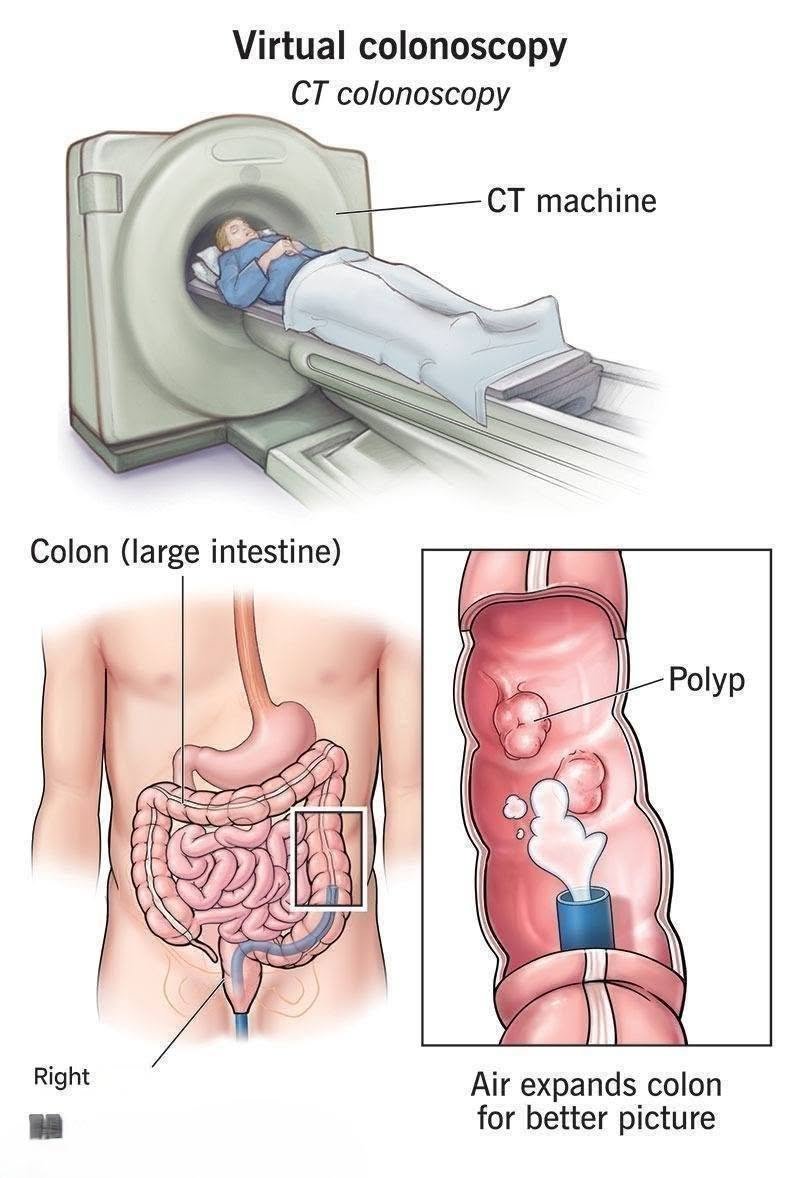
One important alternative is CT colonography, sometimes called a virtual colonoscopy.
Instead of inserting a camera through the entire colon, a CT scanner creates detailed images of the colon after it has been inflated with air or carbon dioxide.
The procedure doesn’t require a traditional colonoscope to travel through the colon, so it is less invasive than conventional colonoscopy.
However, bowel preparation is still generally required, and if a suspicious polyp is found, a conventional colonoscopy may still be needed to remove it or obtain tissue.
2. Stool-Based Screening
Another non-invasive approach involves testing a stool sample for signs associated with colorectal cancer.
Some tests look for hidden blood, while others detect abnormal DNA or other molecular markers associated with colorectal cancer.
These tests don’t require sedation or insertion of an instrument into the colon.
However, they are screening tests rather than a direct examination of the colon. An abnormal result generally requires follow-up colonoscopy.
3. Capsule Endoscopy
Researchers have also developed capsule endoscopy, in which a person swallows a small capsule containing a camera.
As it travels through the digestive tract, the camera captures images that can be examined by clinicians.
Capsule-based colon examination is appealing because it doesn’t require a conventional colonoscope, but it has limitations. If a polyp is discovered, the capsule cannot simply remove it.
For that reason, capsule colon examination hasn’t replaced conventional colonoscopy as the standard method for diagnosing and treating suspicious colon lesions.
4. Artificial Intelligence Is Changing Colonoscopy
Some of the most significant recent advances don’t eliminate colonoscopy—they make it more effective.
Artificial-intelligence systems can analyze the live video from a colonoscope and alert the endoscopist when a possible polyp or lesion is detected.
This is known as computer-aided detection (CADe).
Other systems are being investigated for characterizing polyps and helping clinicians distinguish potentially concerning lesions from benign ones.
AI therefore has the potential to improve detection while the procedure itself remains essentially the same.
5. Why Conventional Colonoscopy Is Still Important
Traditional colonoscopy has a major advantage over purely diagnostic tests: doctors can find and remove many polyps during the same procedure.
That matters because some colorectal cancers develop from precancerous polyps over time.
Removing an appropriate polyp can therefore prevent it from progressing.
A colonoscopy can also allow a doctor to take biopsies when necessary.
6. What About Newer Blood Tests?
Blood-based colorectal cancer screening is another rapidly developing area.
A blood sample can potentially identify biological signals associated with colorectal cancer without bowel preparation or an endoscope.
These tests may make screening more convenient for some people, but they don’t currently provide everything a colonoscopy can provide. A positive screening result may still require colonoscopy for diagnosis and treatment.
7. The Best Screening Method Depends on the Person
There isn’t one test that is ideal for everyone.
Doctors consider factors such as:
- Age
- Personal history of polyps
- Family history of colorectal cancer
- Previous screening results
- Symptoms
- Overall health
- Personal preferences
- Availability of different tests
People at higher risk may require a different screening strategy from people at average risk.
8. Don’t Confuse Screening With Investigation of Symptoms
This distinction is particularly important.
A stool test or other non-invasive screening method may be appropriate for an asymptomatic person who is due for routine screening.
But symptoms such as rectal bleeding, unexplained iron-deficiency anemia, persistent changes in bowel habits, unexplained weight loss, or ongoing abdominal symptoms may require diagnostic evaluation rather than simply choosing the least invasive screening test.
9. The Future May Be Less Invasive—but Not “No Colonoscopy”
Medical technology is moving toward increasingly convenient screening methods, including improved stool tests, blood tests, imaging, capsule technology, and AI-assisted examination.
These approaches may allow more people to participate in colorectal-cancer screening, particularly people who are reluctant to undergo conventional colonoscopy.
But an abnormal screening result may still lead to a conventional colonoscopy because physicians need the ability to directly examine, biopsy, and remove lesions.
Final Takeaway
The idea that “colonoscopy will no longer be invasive” is misleading.
The more accurate picture is that colorectal-cancer screening is becoming more diverse and, in some cases, less invasive. CT colonography, stool-based tests, capsule technology, and emerging blood tests can reduce the need for an initial conventional examination in appropriate people.
However, traditional colonoscopy remains valuable because it can directly examine the colon and remove or biopsy suspicious growths during the same procedure.
If you’re due for colorectal-cancer screening or have symptoms, discuss the available options with your healthcare professional rather than delaying screening because you are waiting for a completely non-invasive replacement.