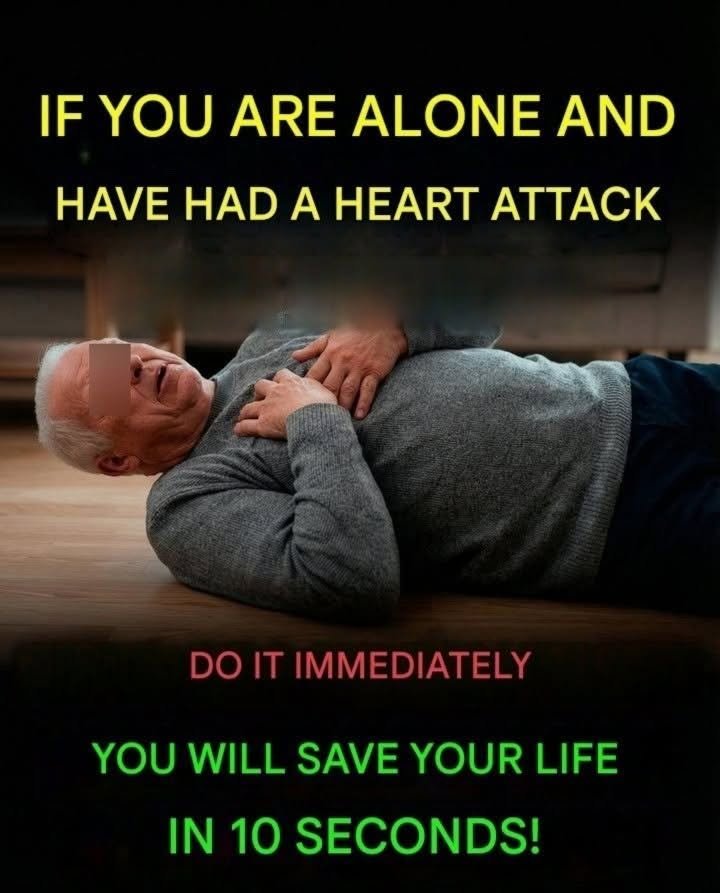
If You’re Alone During a Heart Attack, Take These Immediate Steps
A heart attack is a medical emergency. If you think you’re having one while alone, don’t try to “wait it out.” Getting emergency medical help as quickly as possible is the priority.
1. Call Emergency Services Immediately
Call your local emergency number right away. Put your phone on speaker so you can continue following instructions.
Tell the dispatcher that you may be having a heart attack and give your exact location.
2. Unlock Your Door
If you’re able to do so safely, unlock your front door so emergency responders can enter quickly. Then return to a safe place and sit or lie down.
3. Stop What You’re Doing
Sit somewhere safe, preferably with your upper body supported. Avoid walking around, driving yourself to the hospital, or trying to continue normal activities.
4. Take Aspirin Only If Appropriate
For a suspected heart attack, emergency medical guidance may recommend chewing an aspirin (usually 160–325 mg) if you are not allergic to aspirin and have not been told by a healthcare professional to avoid it.
However, don’t delay your emergency call to find aspirin, and follow your local emergency dispatcher’s instructions. Aspirin may be unsafe for people with certain bleeding problems or other medical conditions.
5. Use Your Prescribed Heart Medicine
If you have been prescribed nitroglycerin for angina, take it exactly as your doctor or emergency dispatcher has instructed. Don’t take someone else’s medication.
6. Don’t Drive Yourself
Even if you feel capable of driving, your condition can deteriorate suddenly. An ambulance crew can begin assessment and treatment on the way to the hospital.
7. If You Become Unresponsive
If you become unable to respond and someone is nearby, they should call emergency services and begin CPR if you aren’t breathing normally. An automated external defibrillator (AED) should be used if available.
Know the Warning Signs
Possible heart-attack symptoms include:
-
Pressure, squeezing, or pain in the chest
-
Pain spreading to the arm, shoulder, back, neck, jaw, or upper abdomen
-
Shortness of breath
-
Cold sweating
-
Nausea or vomiting
-
Unusual weakness or light-headedness
Symptoms can vary, and some people—particularly women and older adults—may have less typical symptoms.
Most Important Rule
Call emergency services first. Don’t wait to see whether symptoms disappear, and don’t attempt a home remedy to treat a suspected heart attack.
If symptoms are happening right now, call your local emergency medical service immediately.