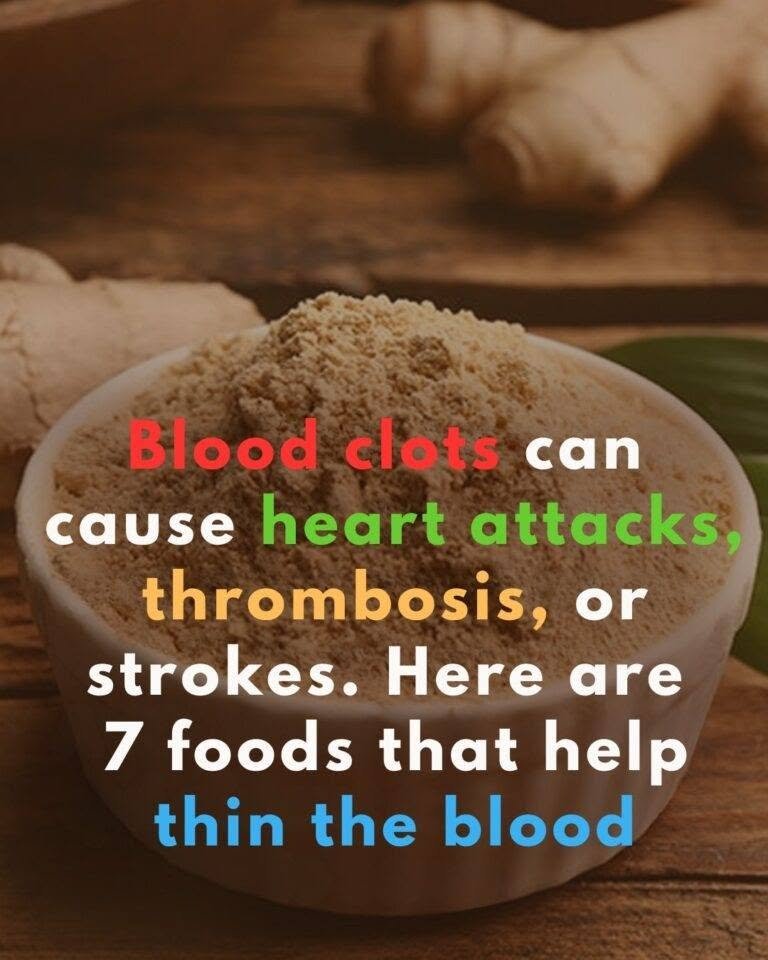
7 Foods Often Called “Blood-Thinning” Foods You Should Know About
You may have heard that certain foods can “thin the blood.” The reality is more nuanced: foods don’t work like prescription blood thinners, and their effects on blood clotting vary considerably.
Some foods contain compounds that may influence platelet activity or blood-clotting pathways, but they should not be used to replace medication prescribed to prevent blood clots.
1. Garlic
Garlic contains sulfur compounds that have been studied for possible effects on platelet aggregation. It can be part of a heart-healthy diet.
However, concentrated garlic supplements may increase bleeding risk, particularly when combined with anticoagulant or antiplatelet medicines.
2. Ginger
Ginger has compounds that may affect platelet function in laboratory and small human studies. Using normal amounts of ginger in food is generally very different from taking concentrated supplements.
3. Fatty Fish
Salmon, sardines, mackerel, and other oily fish provide omega-3 fatty acids, which are associated with cardiovascular benefits and may have modest effects on platelet function.
4. Turmeric
Turmeric contains curcumin, which has been investigated for effects on inflammation and platelet activity. Evidence that turmeric meaningfully “thins blood” in people is limited.
5. Foods Rich in Vitamin E
Nuts, seeds, avocados, and certain vegetable oils provide vitamin E. High-dose vitamin E supplements can affect bleeding, but ordinary food portions aren’t equivalent to taking a high-dose supplement.
6. Green Leafy Vegetables—With an Important Warning
Spinach, kale, collard greens, and other leafy vegetables are excellent sources of nutrients, but they’re also high in vitamin K.
If you’re taking warfarin, suddenly changing the amount of vitamin-K-rich foods you eat can alter how the medication works.
That doesn’t mean you have to avoid these vegetables. The important thing is to keep your intake consistent and follow your healthcare professional’s advice.
7. Berries
Berries contain polyphenols and other plant compounds that are associated with cardiovascular health. They can be a nutritious addition to a balanced diet, but they should not be considered a substitute for anticoagulant medication.
If You’re Taking a Blood Thinner
This is especially important: don’t deliberately add large amounts of garlic, ginger, turmeric, fish-oil supplements, vitamin E, or herbal products because you want to “thin your blood.”
Depending on the medication, certain supplements and dietary changes may increase bleeding risk or interfere with treatment.
Bottom Line
Foods can support overall cardiovascular health, but there is no food that safely replaces a prescribed blood thinner such as warfarin or a direct oral anticoagulant.
If you’re taking a blood-thinning medication, tell your doctor or pharmacist about any supplements or major dietary changes before making them.