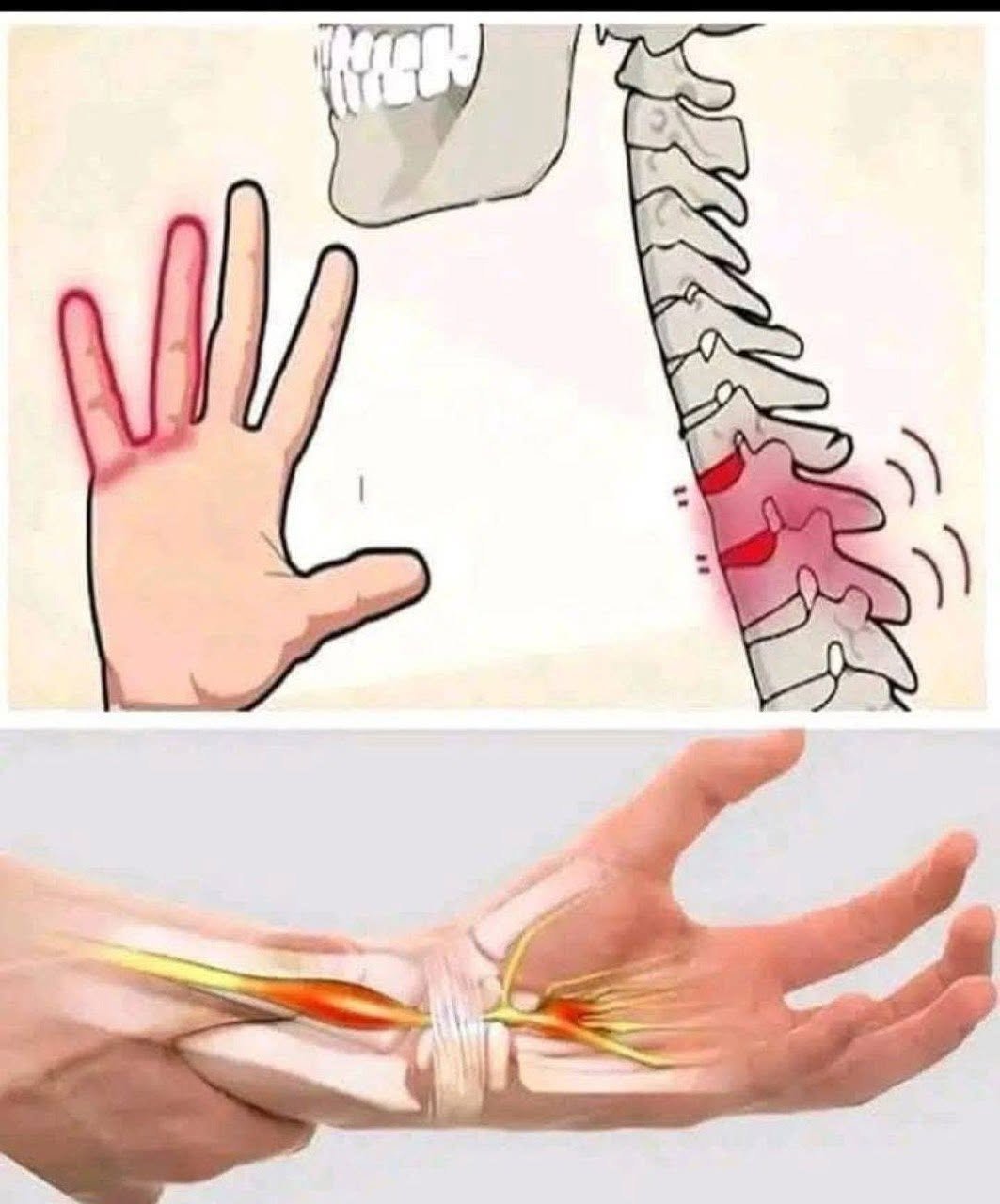
If Your HANDS Fall Asleep Often, Here Are 7 Possible Causes You Should Know
That familiar feeling of pins and needles in your hand can happen to anyone. Maybe you slept with your arm in an awkward position, leaned on your elbow too long, or kept your wrist bent for several minutes.
Occasional tingling that quickly disappears is usually not a reason to panic.
But if your hands frequently go numb, tingle, burn, feel weak, or “fall asleep” for no obvious reason, it’s worth paying attention. Persistent or recurring symptoms can sometimes point to an underlying nerve, metabolic, or circulation problem.
Here are seven possible causes to know about.
1. Carpal Tunnel Syndrome
Carpal tunnel syndrome is one of the most common causes of numbness and tingling in the hand.
It occurs when the median nerve becomes compressed as it passes through the wrist.
Typical symptoms include:
-
Tingling or numbness in the thumb, index, middle, and part of the ring finger
-
Symptoms that are worse at night
-
A feeling that the hand has fallen asleep
-
Weakness or difficulty gripping objects
-
Accidentally dropping things
People who repeatedly use their hands and wrists may notice symptoms more often, although carpal tunnel syndrome can occur for many different reasons.
2. keeps returning alongside neck or arm pain, a medical evaluation can help determine whether a nerve is being numbness and tingling in the hands or feet. Some people may also experience A Pinched Nerve in Your Neck
The problem may not actually be in your hand.
Nerves traveling from the spinal cord through your neck eventually supply your arms and hands. A compressed or irritated nerve in the neck can cause pain, tingling, numbness, or weakness that travels down the arm.
You may also experience neck pain or symptoms that change when you move your head or neck.
If numbness keeps returning alongside neck or arm pain, a medical evaluation can help determine whether a nerve is being compressed.
3. Diabetes
High blood sugar over time can damage nerves, a condition known as diabetic neuropathy.
Although the feet are commonly affected first, diabetes can also contribute to nerve symptoms in the hands.
Possible symptoms include:
-
Tingling
-
Burning
-
Numbness
-
Reduced sensation
-
Pain
-
Weakness
If you have diabetes and notice new or worsening numbness, tell your healthcare professional.
4. Vitamin B12 Deficiency
Vitamin B12 is important for healthy nerve function.
A significant deficiency can cause neurological symptoms, including numbness and tingling in the hands or feet. Some people may also experience weakness, balance problems, fatigue, or other symptoms.
B12 deficiency can have several causes, including inadequate intake and problems absorbing the vitamin.
If a deficiency is suspected, a healthcare professional can determine whether blood testing is appropriate.
5. Pressure on a Nerve at the Elbow
Have you ever noticed tingling in your little finger and ring finger after keeping your elbow bent for a long time?
That can happen because of irritation or compression of the ulnar nerve, which passes around the inside of the elbow.
Symptoms can include:
-
Tingling in the little and ring fingers
-
Numbness in part of the hand
-
Hand weakness
-
Difficulty with fine finger movements
Repeatedly leaning on your elbows or keeping them bent for prolonged periods can aggravate symptoms.
6. Certain Medications or Medical Conditions
Numbness and tingling can sometimes occur as a side effect of medications or as a consequence of another medical condition.
For example, some treatments can affect peripheral nerves, while conditions affecting the thyroid, kidneys, blood vessels, or nervous system may also produce sensory changes.
That’s why recurring numbness shouldn’t always be attributed to sleeping in the wrong position.
A clinician can look at your symptoms, medical history, medications, and other factors to determine what needs investigating.
7. Reduced Blood Flow or a Circulation Problem
Changes in blood flow can sometimes cause unusual sensations in the hands.
Your hands may feel cold, pale, blue after sleeping on your arm and disappears within minutes is very different from numbness that occurs repeatedly or progressively together with facial drooping, arm weakness, difficulty speaking, confusion, trouble walking, severe dizziness, or a sudden severe headache, seek emergency medical care, painful, or numb if blood supply is significantly reduced.
However, not every episode of tingling means poor circulation. Nerve compression is often a more likely explanation for a hand that temporarily falls asleep.
Sudden or severe changes in circulation require prompt medical attention.
When Should You Be Concerned?
The pattern matters.
Occasional tingling that happens after sleeping on your arm and disappears within minutes is very different from numbness that occurs repeatedly or progressively worsens.
Make an appointment with a healthcare professional if you experience:
-
Frequent or persistent numbness
-
Increasing weakness in your hand
-
Difficulty gripping objects
-
Symptoms that interfere with sleep or daily activities
-
Numbness accompanied by neck or arm pain
-
Symptoms affecting both hands without an obvious explanation
-
Progressive loss of sensation
A Sudden Numb Hand Can Be an Emergency
Don’t wait to see whether it goes away if numbness suddenly develops, particularly on one side of the body.
If it occurs together with facial drooping, arm weakness, difficulty speaking, confusion, trouble walking, severe dizziness, or a sudden severe headache, seek emergency medical care immediately. These can be warning signs of a stroke.
The Bottom Line
Hands that occasionally “fall asleep” are usually caused by temporary pressure on a nerve.
But frequent, persistent, or worsening numbness deserves attention. Carpal tunnel syndrome, nerve compression, diabetes, vitamin deficiencies, medications, and other conditions can all produce similar sensations.
And remember: numb hands are not a reliable sign of cancer. If the symptom keeps happening, the safest approach is to find out what’s causing it rather than assuming the worst—or ignoring it.