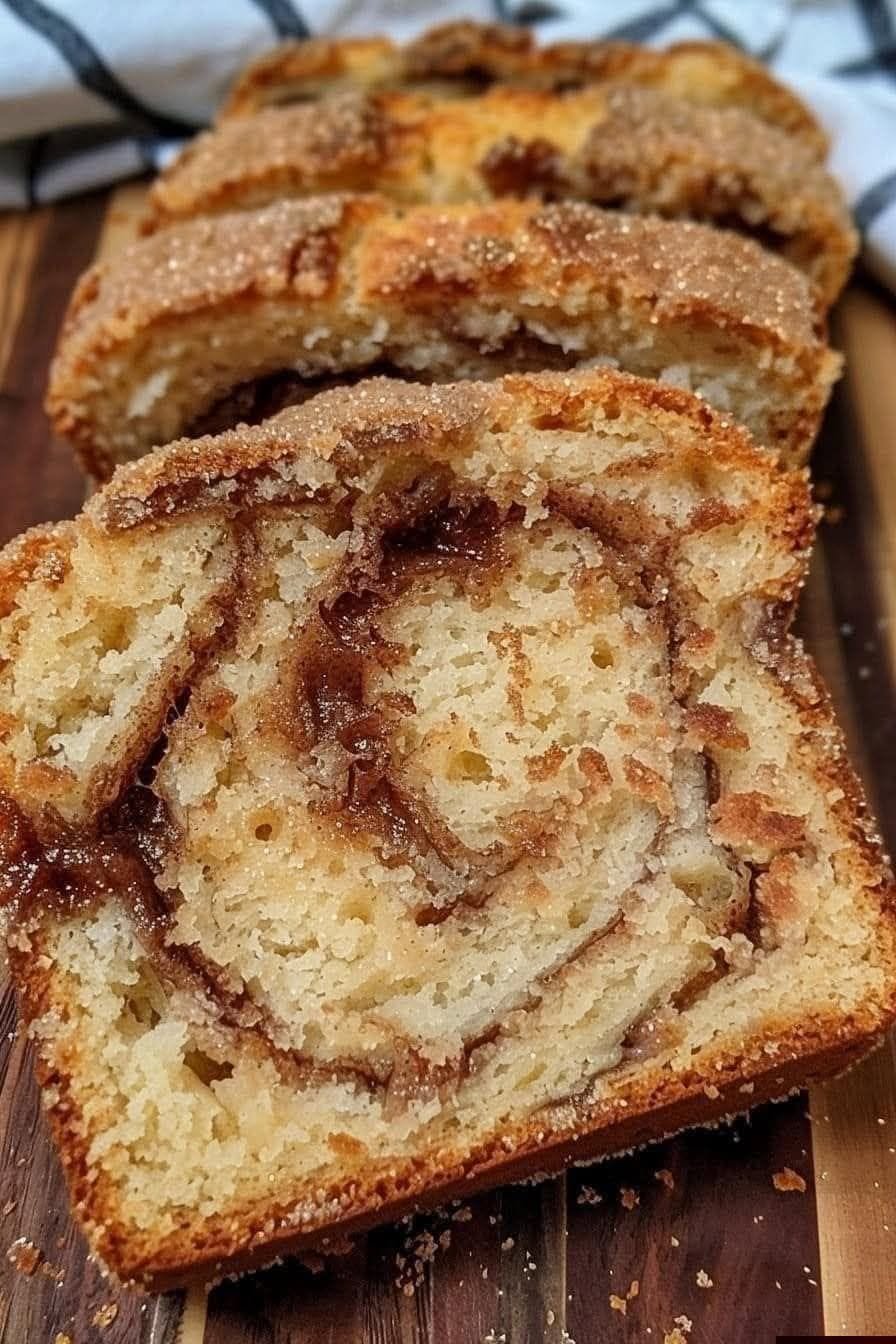
Homemade Cinnamon Swirl Bread
Nothing beats the smell of freshly baked bread, especially when that bread is filled with warm cinnamon and brown sugar. This Homemade Cinnamon Swirl Bread is soft and tender on the inside, lightly golden on the outside, and packed with a sweet cinnamon filling that creates beautiful swirls in every slice.
The recipe is made with simple pantry ingredients and doesn’t require any complicated equipment. Although the dough needs time to rise, most of that time is hands-off, making this an excellent weekend baking project.
The finished loaf is delicious straight from the oven, but it becomes even better when sliced and toasted with butter. You can also add a simple vanilla glaze if you want to turn it into a sweeter dessert-style bread.
Ingredients
For the bread
- 3 cups (375 g) all-purpose flour
- 2¼ teaspoons (7 g) active dry yeast
- ¼ cup (50 g) granulated sugar
- 1 teaspoon salt
- ¾ cup (180 ml) warm milk
- ¼ cup (60 ml) warm water
- 1 large egg
- 3 tablespoons (42 g) unsalted butter, softened
- 1 teaspoon vanilla extract
For the cinnamon filling
- ⅓ cup (67 g) packed brown sugar
- 2 tablespoons granulated sugar
- 1½ tablespoons ground cinnamon
- 3 tablespoons (42 g) unsalted butter, softened
- 1 tablespoon all-purpose flour
Optional topping
- 1 tablespoon melted butter
- Extra cinnamon sugar
- Vanilla glaze
Instructions
1. Activate the yeast
Add the warm milk and warm water to a large mixing bowl.
The liquid should be comfortably warm to the touch, not hot. If the liquid is too hot, it can damage or kill the yeast.
Add the yeast and about 1 teaspoon of the granulated sugar. Stir gently and let the mixture stand for 5–10 minutes.
The mixture should become slightly foamy. This is a good indication that the yeast is active.
If the mixture remains completely flat with no signs of activity, the yeast may be inactive. It’s better to replace it before proceeding because inactive yeast will prevent the bread from rising properly.
2. Mix the dough
Add the remaining sugar, egg, vanilla extract, softened butter, and salt to the yeast mixture.
Stir until everything is reasonably well combined.
Gradually add the flour, mixing as you go.
Once the dough becomes thick, transfer it to a lightly floured work surface.
Knead the dough for approximately 8–10 minutes.
The dough should become smooth, elastic, and soft. It may feel slightly tacky, but it shouldn’t be excessively sticky.
Try not to add large amounts of flour during kneading. Too much flour can make the finished bread heavy and dry.
3. Let the dough rise
Lightly grease a clean bowl.
Place the dough into the bowl and turn it once so the surface is lightly coated.
Cover the bowl with plastic wrap or a clean kitchen towel.
Place the bowl in a warm, draft-free area and allow the dough to rise for approximately 1–1½ hours, or until it has doubled in size.
The exact time depends on the temperature of your kitchen. If your kitchen is cool, the dough may need additional time.
Instead of relying only on the clock, look for a dough that has noticeably increased in volume and feels light and airy.
4. Prepare the cinnamon filling
While the dough is rising, make the filling.
Combine the brown sugar, granulated sugar, cinnamon, and flour in a small bowl.
Add the softened butter and mix until you have a thick, spreadable cinnamon paste.
The filling should be easy to spread but shouldn’t be completely liquid.
Set it aside until the dough is ready.
5. Roll out the dough
Once the dough has doubled in size, gently press it down to release some of the excess air.
Transfer it to a lightly floured work surface.
Roll it into a rectangle approximately 9 × 15 inches.
Try to keep the dough an even thickness from one end to the other.
If the dough repeatedly springs back while you’re rolling it, let it rest for about 5–10 minutes. This allows the gluten to relax and makes the dough easier to shape.
6. Spread the cinnamon filling
Spread the cinnamon mixture evenly over the surface of the dough.
Leave approximately ½ inch of space around the edges.
An even layer of filling will help create consistent cinnamon swirls throughout the loaf.
Don’t pile the filling heavily in the middle because too much filling in one area can make the bread difficult to roll and may cause the filling to leak during baking.
7. Roll the dough into a log
Starting from one of the shorter ends, carefully roll the dough into a log.
Try to roll it firmly enough to create a defined swirl without squeezing the filling out.
Continue rolling until you reach the opposite edge.
Pinch the seam closed and gently pinch the ends as well.
This helps keep the cinnamon filling inside the loaf while it bakes.
8. Place it in the loaf pan
Grease a 9 × 5-inch loaf pan.
Place the rolled dough into the pan with the seam facing downward.
Cover the pan loosely with a clean kitchen towel or plastic wrap.
9. Let the loaf rise again
Allow the shaped dough to rise for another 30–45 minutes.
The loaf should become noticeably puffy and rise toward the top of the pan.
While the bread is undergoing its second rise, preheat the oven to 350°F (175°C).
Don’t allow the dough to become excessively overproofed. It should look puffy and airy but still have enough structure to hold its shape.
10. Bake the bread
Place the loaf in the preheated oven.
Bake for approximately 35–40 minutes, until the top is golden brown and the bread is cooked through.
If the top becomes dark before the center has finished baking, loosely cover the loaf with aluminum foil for the remainder of the baking time.
For an especially reliable result, the internal temperature of the finished bread should be approximately 190–200°F (88–93°C).
11. Cool the bread
Remove the loaf from the oven and let it cool in the pan for about 10 minutes.
Carefully remove it from the pan and transfer it to a wire rack.
If desired, brush the top with a little melted butter while the bread is still warm.
Allow the loaf to cool for at least 30–45 minutes before slicing.
Cooling allows the crumb to finish setting and makes it much easier to cut clean slices without crushing the soft interior.
How to Get Beautiful Cinnamon Swirls
The key to a good cinnamon swirl is an even layer of filling and a careful roll.
Make sure the butter in the filling is softened rather than melted. Melted butter can make the filling excessively runny and increase the chance of it leaking from the bread.
Spread the filling all the way across the dough while leaving a small border around the edges.
When rolling, keep consistent pressure throughout the process.
A loose roll can create large gaps in the swirl, while an extremely tight roll can force the filling out.
A firm but gentle roll produces a beautiful spiral with evenly distributed cinnamon throughout the loaf.
How to Keep the Bread Soft
One of the most important things you can do is avoid adding too much flour.
Homemade bread dough can feel slightly sticky during kneading, but that doesn’t necessarily mean it needs more flour.
As you knead, the gluten develops and the dough becomes smoother and more manageable.
Adding too much flour can result in a dense, dry loaf.
It’s also important not to overbake the bread. Once the loaf reaches a beautiful golden-brown color and is cooked through, remove it from the oven.
Optional Vanilla Glaze
For a sweeter cinnamon bread, drizzle the cooled loaf with a simple vanilla glaze.
Ingredients
- ½ cup powdered sugar
- 1–2 tablespoons milk
- ¼ teaspoon vanilla extract
Instructions
Place the powdered sugar in a small bowl.
Add the milk gradually, stirring after each addition.
Add the vanilla extract and mix until smooth.
Drizzle the glaze over the completely cooled bread.
For a thick glaze, use less milk. For a thinner drizzle, add slightly more.
Serving Suggestions
There are many ways to enjoy homemade cinnamon swirl bread.
Serve a warm slice with softened butter for a simple breakfast.
Toast the bread until the edges are golden and crisp, then spread it with cream cheese or butter.
You can also serve it with honey, jam, or your favorite nut butter.
For dessert, warm a thick slice and serve it with a scoop of vanilla ice cream.
One of the best uses for leftover cinnamon swirl bread is French toast. The cinnamon sugar is already baked into the bread, so the finished French toast has an incredible flavor without requiring much additional seasoning.
Storage
Allow the bread to cool completely before storing.
Wrap the loaf tightly in plastic wrap or place it in an airtight container.
Keep it at room temperature for approximately 2–3 days.
For longer storage, slice the bread and freeze the individual slices.
Place parchment paper between slices so they don’t stick together, then transfer them to a freezer-safe bag or container.
When you’re ready to eat a slice, thaw it at room temperature or place it directly into the toaster.
Troubleshooting
Why didn’t my bread rise?
The yeast may have been inactive, the liquid may have been too hot or too cold, or the dough may have been placed somewhere too cold.
Give the dough additional time if your kitchen is cool.
Why is my bread dense?
Dense bread can result from too much flour, insufficient kneading, inactive yeast, or inadequate rising time.
Make sure the dough is soft and allow it to become noticeably larger during both rising stages.
Why did the cinnamon filling leak out?
Some filling leakage can happen naturally, but excessive leakage usually means the filling was too soft or the dough wasn’t sealed properly.
Use softened rather than melted butter and leave a small border around the dough. Pinch the seam securely after rolling.
Why did the top brown too quickly?
Your oven may have strong top heat.
Loosely cover the loaf with aluminum foil during the final portion of baking to protect the crust while the inside continues cooking.
Recipe Details
- Prep time: 25 minutes
- First rise: 1–1½ hours
- Second rise: 30–45 minutes
- Bake time: 35–40 minutes
- Total time: Approximately 2½–3 hours
- Yield: 1 loaf
Final Tips
For the best homemade cinnamon swirl bread, use fresh yeast, don’t rush the rising process, and resist the temptation to add excessive flour.
The dough should be soft and elastic, the cinnamon filling should be spread evenly, and the loaf should be rolled firmly enough to create a defined spiral.
Allow the baked bread to cool before slicing so that the crumb has time to set.
Once sliced, you’ll have a soft loaf filled with beautiful ribbons of buttery cinnamon sugar. It’s delicious on its own, but even better toasted and spread with butter or cream cheese.
This homemade cinnamon swirl bread is an excellent recipe to keep on hand for weekends, holidays, brunches, or whenever you want the comforting aroma of freshly baked cinnamon bread filling your kitchen.