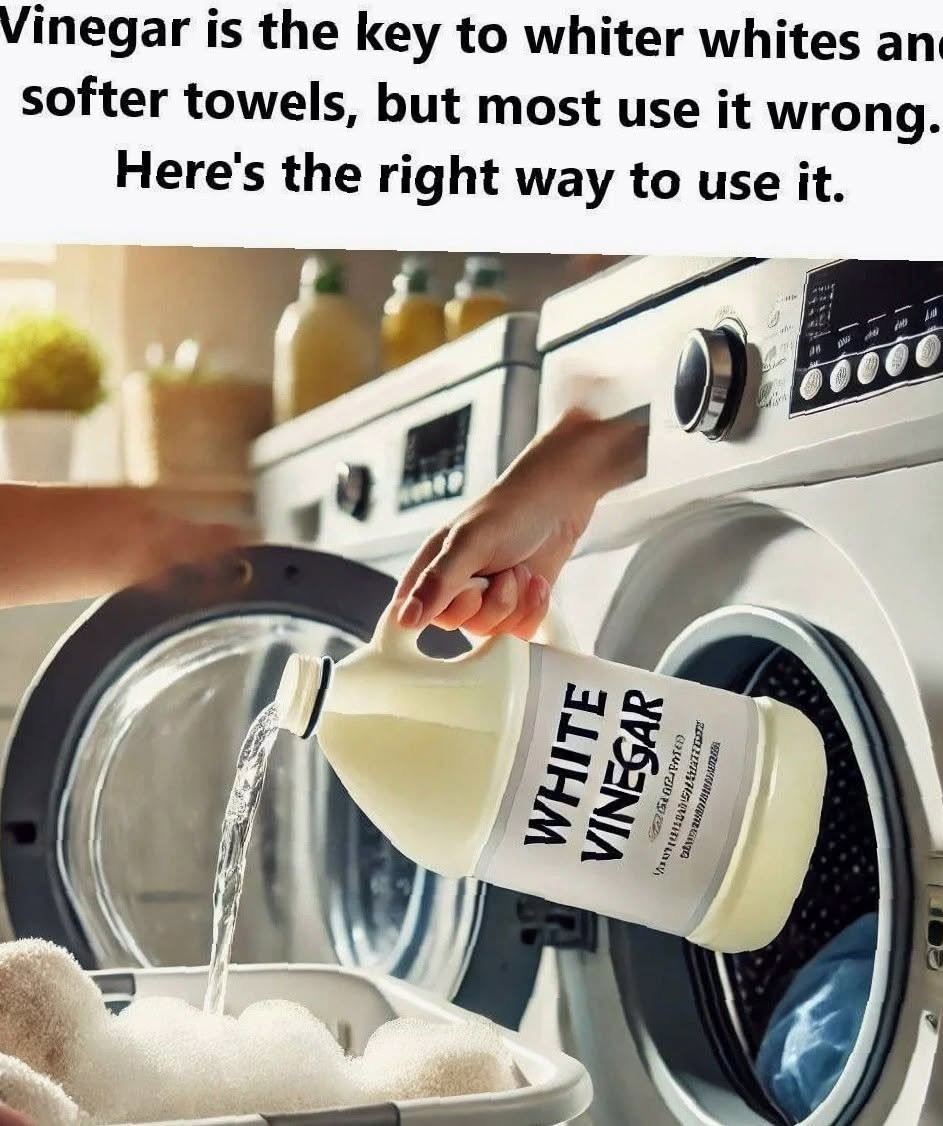
🧺 Vinegar Can Give You Whiter Whites and Softer Towels—but Most People Use It the Wrong Way
White vinegar is a popular laundry trick because its mild acidity can help dissolve some detergent residue, mineral deposits, and odors. It can also make towels feel less stiff when buildup is the problem.
But vinegar isn’t a replacement for laundry detergent, and using it incorrectly can damage fabrics or your washing machine.
🧴 1. Use White Distilled Vinegar
For laundry, use plain distilled white vinegar rather than colored or flavored vinegar.
Avoid varieties containing dyes, sugars, herbs, or other additives.
🧺 2. Add It to the Fabric-Softener Compartment
The easiest method is to put approximately ½ cup (120 mL) of distilled white vinegar into the washing machine’s fabric-softener dispenser.
The machine will release it during the rinse cycle.
Why this works
It can help remove some of the residue left behind by detergent and hard water, which may make towels feel stiff or rough.
🛁 3. Use Vinegar for Towel Buildup
Towels can gradually accumulate:
- Detergent residue
- Fabric-softener residue
- Body oils
- Mineral deposits
This buildup can make them feel less absorbent.
Washing towels properly and occasionally using vinegar in the rinse cycle can help with residue.
Important:
Don’t use vinegar together with chlorine bleach.
Mixing them can produce dangerous chlorine-containing gases.
👕 4. What About Whiter Whites?
Vinegar may help remove some residue and odors, which can make fabrics look fresher, but it isn’t a powerful whitening agent.
For genuinely stained white clothing, use a laundry product specifically designed for whitening, following its label instructions.
If you’re using chlorine bleach, keep it completely separate from vinegar.
🚫 5. Don’t Pour Vinegar Directly Onto Clothes
It’s generally better to dilute vinegar through the machine’s dispenser rather than pouring concentrated vinegar directly onto fabric.
This reduces the chance of concentrated acid contacting delicate materials.
🧴 6. Don’t Mix Vinegar With Other Cleaning Chemicals
This is one of the most important rules.
❌ Never mix vinegar with chlorine bleach.
❌ Avoid combining vinegar with products containing ammonia.
⚠️ Be cautious with commercial laundry products.
You don’t need to create chemical mixtures to get clean laundry. Follow the instructions on your detergent and washing machine.
🧼 7. Don’t Use Vinegar as Your Main Detergent
Vinegar doesn’t replace detergent.
Detergent is formulated to remove:
- Body oils
- Grease
- Dirt
- Food stains
- Other soils
Vinegar is better thought of as an occasional rinse aid for certain laundry problems, not as the substance doing the main cleaning.
🧺 8. Skip Fabric Softener on Towels
If your goal is soft, absorbent towels, conventional fabric softener can actually work against you.
Fabric softeners can coat towel fibers and reduce absorbency over time.
Instead:
- Use an appropriate amount of detergent.
- Don’t overload the washer.
- Use an extra rinse if residue is a problem.
- Dry towels thoroughly.
- Consider occasional vinegar use in the rinse cycle if your machine and garment-care instructions allow it.
⭐ One More Important Point
Before using vinegar regularly, check your washing-machine manufacturer’s instructions. Some manufacturers discourage acidic products because repeated use may affect certain rubber components or finishes.
And always follow the care label on the clothing or towel.
🌟 Bottom Line
Vinegar can be useful in laundry, particularly for reducing odors and helping remove detergent or mineral residue, which may make towels feel softer and more absorbent.
But the secret isn’t simply “add more vinegar.”
Use distilled white vinegar in the rinse compartment, don’t overdo it, and—most importantly—never mix vinegar with chlorine bleach.