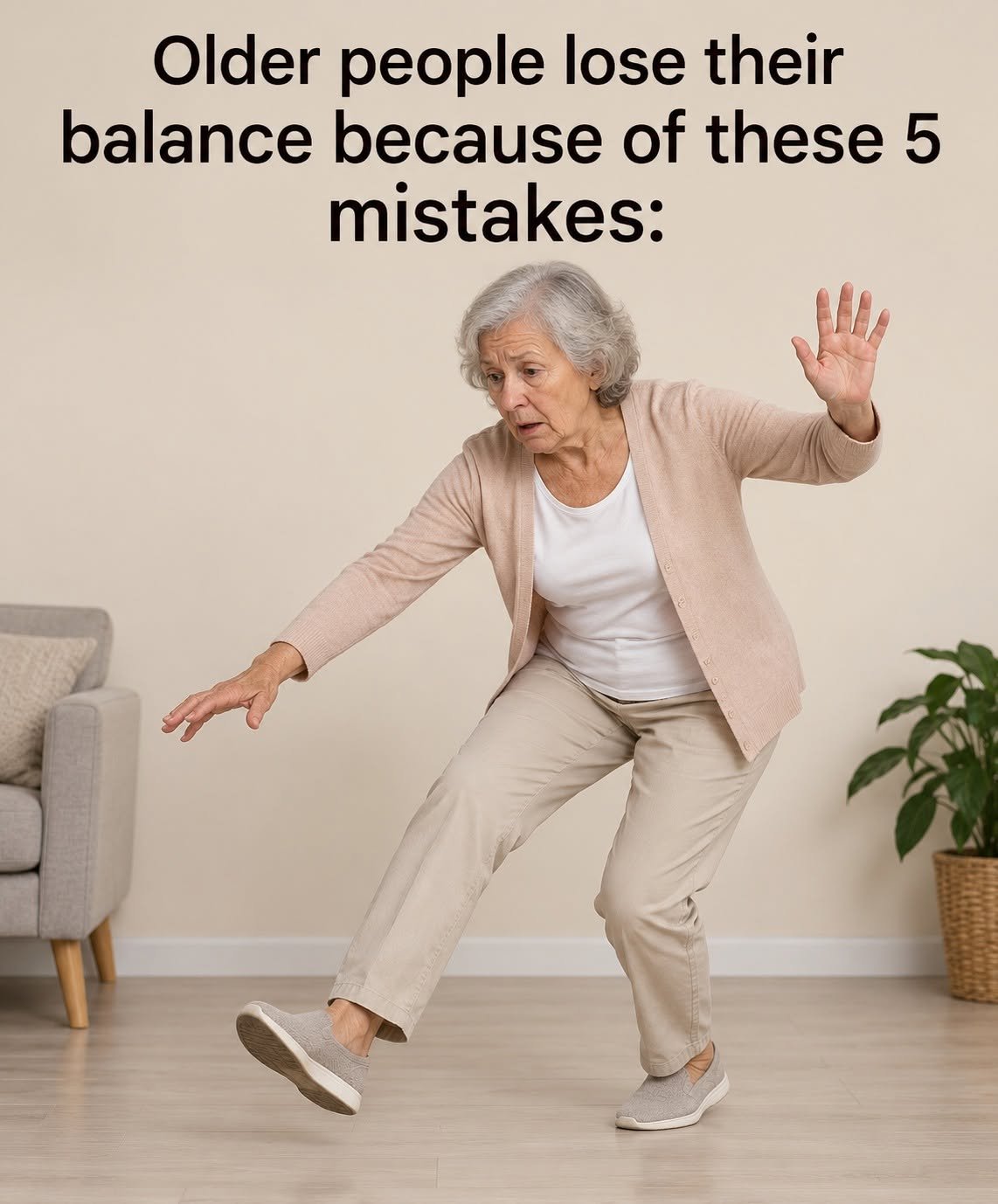
🚶 5 Common Mistakes That Can Affect Balance in Older Adults
Balance can naturally change with age, but losing balance is not simply something that older adults have to accept. Muscle weakness, vision problems, medications, inactivity, and certain medical conditions can all contribute to unsteadiness.
The good news is that many risk factors can be addressed.
1. 🛋 prevents it, incorporate safe activities such as walking, chair exercises, strength training, and balance exercises eye examinations and make sure glasses are appropriate for your current vision️ Being Too Inactive
One of the biggest mistakes is avoiding movement because of fear of falling.
When someone becomes less active, they may gradually lose:
- Leg strength
- Core strength
- Flexibility
- Coordination
- Confidence
This can create a cycle: fear of falling → less movement → weaker muscles → greater fall risk.
What to do instead
Unless a medical condition prevents it, incorporate safe activities such as walking, chair exercises, strength training, and balance exercises.
If balance is already poor, begin with support nearby and consider guidance from a physical therapist.
2. 👟 Wearing Unsafe Footwear
Shoes can have a surprisingly large effect on stability.
Be cautious with:
- Loose slippers
- Smooth, worn-out soles
- High heels
- Shoes that don’t fit properly
- Walking barefoot on slippery surfaces
A better choice
Look for comfortable shoes that fit securely and have good traction and stable soles.
Avoid walking around the house in slippery socks.
3. 👀 Ignoring Changes in Vision
Good balance depends partly on being able to see where you’re going.
Untreated vision problems can make it harder to recognize:
- Steps
- Uneven flooring
- Obstacles
- Changes in surface height
Conditions such as cataracts or other eye problems can also affect everyday mobility.
What to do
Keep up with recommended eye examinations and make sure glasses are appropriate for your current vision.
Good lighting throughout the home is equally important.
4. 💊 Not Reviewing Medications
Some medications can cause:
- Dizziness
- Sleepiness
- Low blood pressure
- Confusion
- Problems with coordination
The risk can be greater when someone takes several medications.
Important
Never stop a prescribed medicine suddenly on your own.
Instead, ask a doctor or pharmacist to review all prescription medicines, over-the-counter products, and supplements—especially if dizziness or falls began after starting or changing a medication.
5. 🏠 Ignoring Hazards at Home
Even someone with excellent balance can fall because of a preventable household hazard.
Look for:
- Loose rugs
- Electrical cords across walkways
- Clutter on the floor
- Poor lighting
- Slippery bathroom surfaces
- Unstable furniture
- Lack of handrails on stairs
Make the home safer
Keep frequently used items within easy reach, improve lighting, secure rugs, and consider grab bars or handrails where appropriate.
A bathroom deserves particular attention because wet surfaces can become extremely slippery.
🧠 Other Factors That Can Affect Balance
Balance problems can also be related to:
- Inner-ear disorders
- Nerve problems
- Arthritis
- Muscle weakness
- Low blood pressure
- Neurological conditions
- Vitamin deficiencies
- Certain illnesses
That’s why persistent or worsening balance problems shouldn’t simply be blamed on age.
🚨 When Should You Seek Medical Advice?
Talk to a healthcare professional if an older adult:
- Has fallen recently
- Frequently feels unsteady
- Has repeated near-falls
- Develops new dizziness
- Has difficulty walking
- Experiences sudden weakness or numbness
- Has a new change in coordination
Sudden loss of balance, especially together with facial drooping, difficulty speaking, severe headache, weakness, or numbness, can be a sign of a stroke and requires emergency medical attention.
⭐ Simple Daily Approach
A safer routine can be:
Move regularly → strengthen the legs → practice balance safely → wear supportive shoes → maintain good vision → review medications → remove household hazards.
Bottom Line
Five common mistakes are too little physical activity, unsafe footwear, neglecting vision, failing to review medications, and overlooking hazards at home.
Balance problems are worth taking seriously because falls can lead to fractures and loss of independence—but many fall risks can be reduced with the right support and preventive measures.