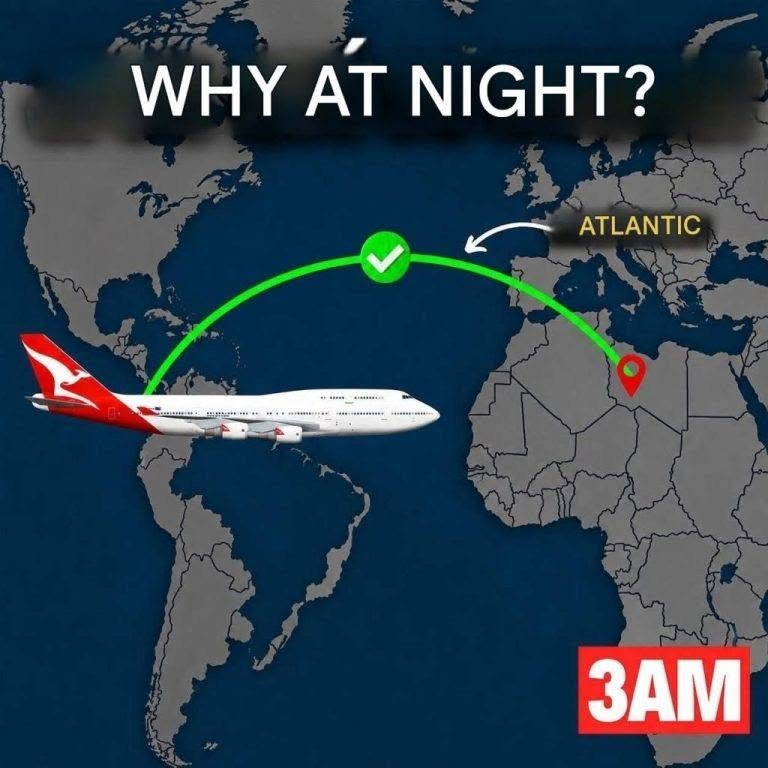
✈️ Why Don’t Planes Cross the Atlantic During the Day?
Actually, they absolutely do. The idea that airplanes don’t cross the Atlantic during daylight is a common misconception.
Thousands of transatlantic flights operate during both daytime and nighttime. What can make it look as though most flights cross at night is the scheduling of flights between Europe and North America.
🌍 1. Time Zones Make the Situation Confusing
The Atlantic Ocean spans several time zones.
For example, a flight leaving New York in the morning can arrive in London in the evening, while a flight leaving London in the morning can arrive in New York in the afternoon.
So whether it’s “day” or “night” depends on where you are and which time zone you’re using.
☀️ 2. Some Flights Are Scheduled Specifically for Daylight
Many airlines operate daytime westbound flights from Europe to North America.
For example, a flight might leave London in the morning and arrive in New York in the afternoon.
Passengers can spend much of the journey in daylight.
🌙 3. Overnight Flights Are Popular for Practical Reasons
Eastbound flights from North America to Europe are often scheduled in the evening.
You leave the U.S. or Canada at night and arrive in Europe the following morning.
This schedule is convenient because passengers can sleep during part of the flight and arrive at their destination in the morning.
🌬️ 4. Jet Streams Affect with favorable winds can shorten a flight, while flying against Flight Times
Airlines also consider winds when planning routes.
The jet stream can produce strong winds at cruising altitude. Flying with favorable winds can shorten a flight, while flying against them can make it considerably longer.
That’s one reason eastbound and westbound transatlantic flight times can differ.
🛫 5. There Is No “Daytime Ban” Over the Atlantic
There is no rule that says passenger aircraft cannot cross the Atlantic during daylight.
Aircraft routinely fly across the ocean throughout the day and night.
The North Atlantic is actually one of the world’s busiest international aviation regions.
👀 Why Does It Sometimes Look Empty During the Day?
If you’re looking at a particular flight-tracking map, the apparent lack of aircraft may be caused by:
- The specific time you’re looking
- Your map’s geographic coverage
- Flight schedules
- Seasonal changes
- Different airline operating patterns
- The map not displaying every aircraft
At another time of day, the same region can appear packed with aircraft.
✈️ The Interesting Part
The Earth’s rotation and time zones make transatlantic travel particularly interesting.
A flight can leave Europe when it’s daytime, spend several hours over the Atlantic, and arrive in North America while it’s still daylight—because you’re traveling westward and effectively “chasing” the Sun.
So the real answer is:
Planes do cross the Atlantic during the day. They’re simply scheduled around passenger demand, time zones, airport operations, and prevailing winds—not because daytime Atlantic crossings are prohibited.