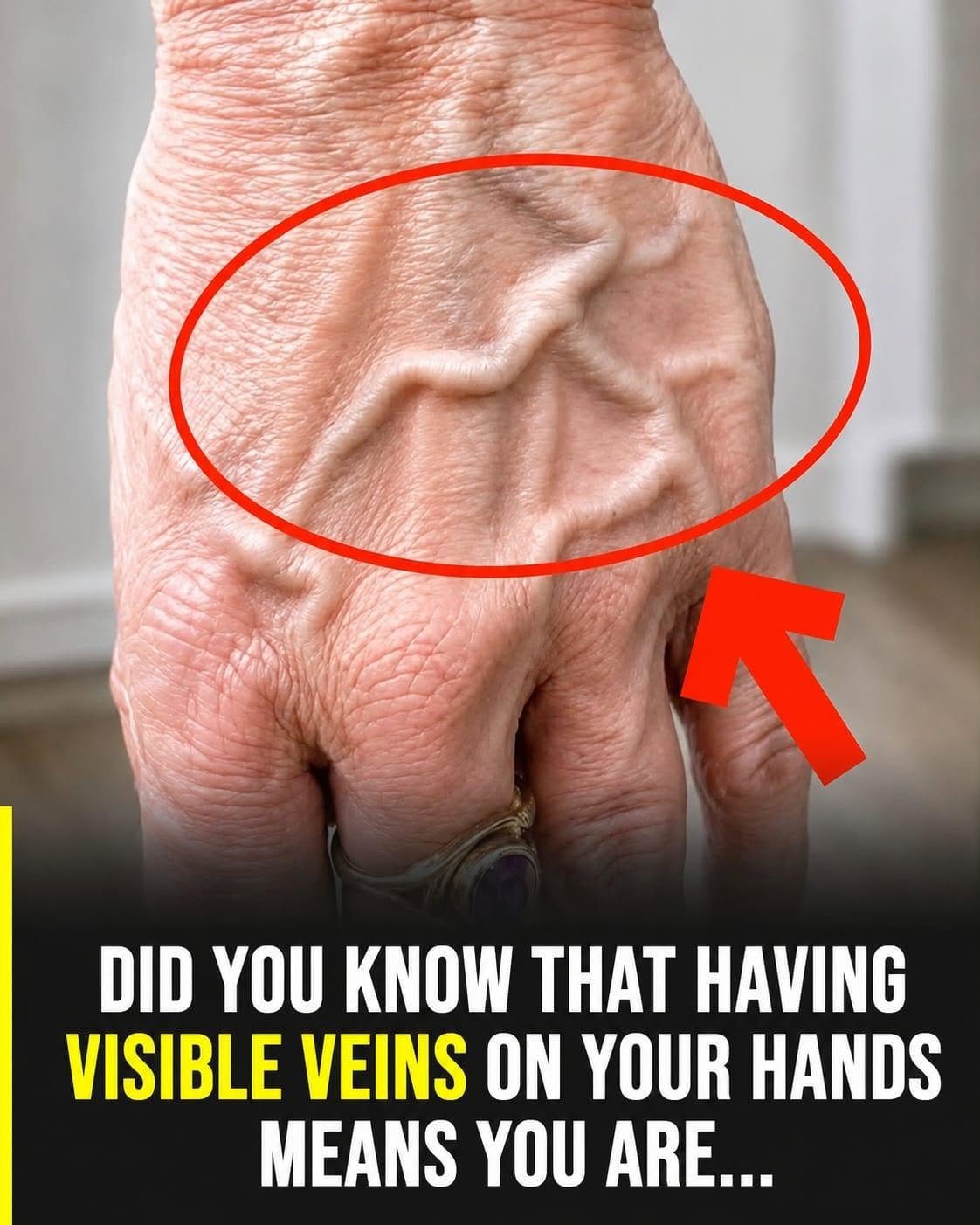
Did You Know That Having Visible Veins Means You Are…?
Visible veins—especially on the hands, arms, legs, or feet—are not automatically a sign of a disease or a particular health condition. In many people, prominent veins are completely normal.
Several factors can make veins more noticeable.
1. 💪 You Have Less Body Fat
When there is less fat beneath the skin, veins can appear closer to the surface and become more visible.
This is common in people who are naturally lean or who have lost weight.
2. 🏋️ You Exercise Regularly
Exercise, particularly strength training, increases blood flow to working muscles. This can temporarily make veins appear more prominent.
People who regularly lift weights may notice more visible veins in their arms and hands.
3. 🌡️ You’re Hot
Heat causes blood vessels near the skin to widen to help the body release heat.
As a result, veins can become more noticeable after:
- Exercising
- Taking a hot shower
- Spending time outdoors in hot weather
- Being in a warm room
They often become less prominent once your body cools down.
4. 💧 Dehydration Can Make Them Look More Prominent
When you’re dehydrated, your overall blood volume can decrease and your skin may appear different, potentially making superficial veins more noticeable.
However, visible veins are not a reliable way to determine whether you’re dehydrated. Thirst, urine color, and other symptoms are more useful clues.
5. 🧬 Genetics and Age Matter
Some people simply inherit skin and vascular characteristics that make their veins easier to see.
As we age, skin becomes thinner and loses some of its underlying fat and elasticity. Consequently, veins can become increasingly visible even without a health problem.
When Visible Veins Could Be a Warning Sign
Although prominent veins are usually harmless, a new or suddenly prominent vein can deserve attention, particularly when accompanied by other symptoms.
Seek medical evaluation if you notice:
- A vein that suddenly becomes swollen or painful
- Redness or warmth along a vein
- Significant swelling of one arm or leg
- Skin discoloration
- A hard or tender vein
- Shortness of breath or chest pain
Sudden swelling and pain in one leg, especially with breathing difficulty or chest pain, can be associated with a blood clot and requires urgent medical attention.
What About Varicose Veins?
Veins that become twisted, enlarged, and rope-like, particularly in the legs, may be varicose veins.
They can cause:
- Aching or heaviness
- Leg swelling
- Itching
- Burning
- Cramping
- Skin changes around the ankles
They aren’t the same thing as ordinary visible veins on the hands or arms.
Bottom Line
Visible veins usually mean your veins are close enough to the skin to be seen—not that something is necessarily wrong. Body composition, exercise, temperature, genetics, and age can all make veins more prominent.
What matters most is a sudden change or visible veins accompanied by pain, swelling, redness, warmth, or other symptoms.