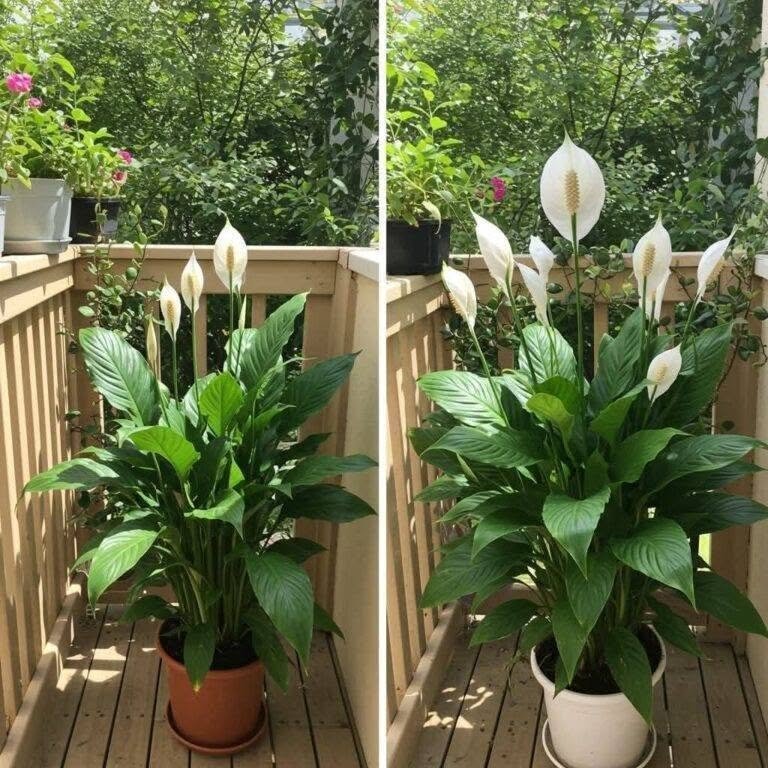
Just 1 Cup Can Help Your Peace Lily Bloom Better — Even the Struggling Ones
1. First, understand what the “one cup” actually does
A cup of plain water isn’t a miracle fertilizer.
Its main benefit is controlled watering. Instead of repeatedly flooding the pot, a measured amount can help prevent the common problem of keeping the soil constantly soaking wet.
For a small-to-medium indoor peace lily, you can use approximately one cup of water as a starting point, but don’t follow the amount blindly. Pot size, drainage, temperature, and humidity all affect how much water the plant needs.
The goal is to moisten the root zone without leaving the roots sitting in water.
2. Don’t water according to the calendar
This is one of the biggest mistakes people make with peace lilies.
Instead of saying, “I water every Sunday,” check the soil.
Push your finger about an inch into the potting mix. If the upper layer feels dry and the plant is beginning to droop slightly, it may be time to water.
If the soil is still wet, wait.
Constantly wet soil can deprive roots of oxygen and eventually lead to root problems.
3. Light is often the real reason for missing flowers
Peace lilies tolerate relatively low light, which is why they’re popular houseplants.
But tolerating low light isn’t the same as flowering well in low light.
If your plant produces lots of leaves but rarely flowers, try moving it closer to a bright window where it receives bright, indirect light.
Avoid harsh, prolonged direct afternoon sunlight, which can scorch the leaves.
A good location might be near a bright window with a sheer curtain.
4. Give it nutrients—but don’t overdo fertilizer
A peace lily needs nutrients to produce healthy leaves and flowers.
During active growth, an appropriate balanced houseplant fertilizer used according to its label directions can be more useful than homemade fertilizer mixtures.
More fertilizer does not mean more flowers.
Excess fertilizer can accumulate in the soil and damage roots, producing brown leaf tips and declining growth.
If you’ve recently repotted the plant into fresh, nutrient-rich potting mix, you may not need to fertilize immediately.
5. Don’t use random kitchen ingredients
You may see online advice recommending things such as:
- Sugar water
- Milk
- Coffee grounds
- Rice water
- Baking soda
- Banana mixtures
These aren’t reliable substitutes for proper plant nutrition.
Some homemade mixtures can encourage unpleasant odors, mold, fungus gnats, or mineral buildup in the potting medium.
Plain water + appropriate fertilizer + good light is a much more dependable combination.
6. Check the pot and drainage
A beautiful peace lily can struggle if it’s planted in a container that holds excess water.
Make sure:
- The pot has drainage holes.
- Excess water can escape.
- The plant isn’t sitting in a saucer full of water.
- The potting mix drains reasonably well.
- The container isn’t dramatically oversized for the root system.
If water remains trapped around the roots for long periods, flowering can suffer along with overall plant health.
7. Temperature matters
Peace lilies generally prefer a warm, stable indoor environment.
Keep the plant away from:
- Cold drafts
- Air-conditioning vents
- Heating vents
- Very cold windows
- Sudden temperature changes
A comfortable, stable environment can reduce stress and support healthy growth.
8. What about an “ugly” peace lily?
Even a peace lily with yellowing leaves, brown tips, or sparse growth can sometimes recover.
Start by fixing the basics rather than immediately adding fertilizer.
Step 1: Remove severely damaged or completely dead leaves with clean scissors.
Step 2: Check the soil moisture.
Step 3: Make sure the pot drains properly.
Step 4: Move it into bright, indirect light.
Step 5: Check for pests.
Step 6: Once it’s actively growing again, provide appropriate nutrition.
Don’t expect flowers overnight. The plant needs time to recover and redirect energy toward new growth.
The simple “one-cup” routine
If your peace lily is in a relatively small indoor pot, you can use about one cup of water as a starting point, but adjust according to the plant and container.
- Check the soil before watering.
- If the top layer has dried, water slowly.
- Don’t let the plant sit in standing water.
- Give it bright, indirect light.
- Fertilize only when appropriate and according to the product instructions.
- Watch the leaves and soil rather than following a rigid schedule.
One important reality
There isn’t a special liquid that will make every peace lily “bloom like crazy.” Flowering depends on the plant’s variety, maturity, light, nutrition, root health, temperature, and overall growing conditions.
So if someone promises that exactly one cup of a particular homemade mixture will guarantee flowers, be skeptical.
The real bloom formula is simple: bright indirect light + appropriate watering + healthy roots + adequate nutrition + patience.