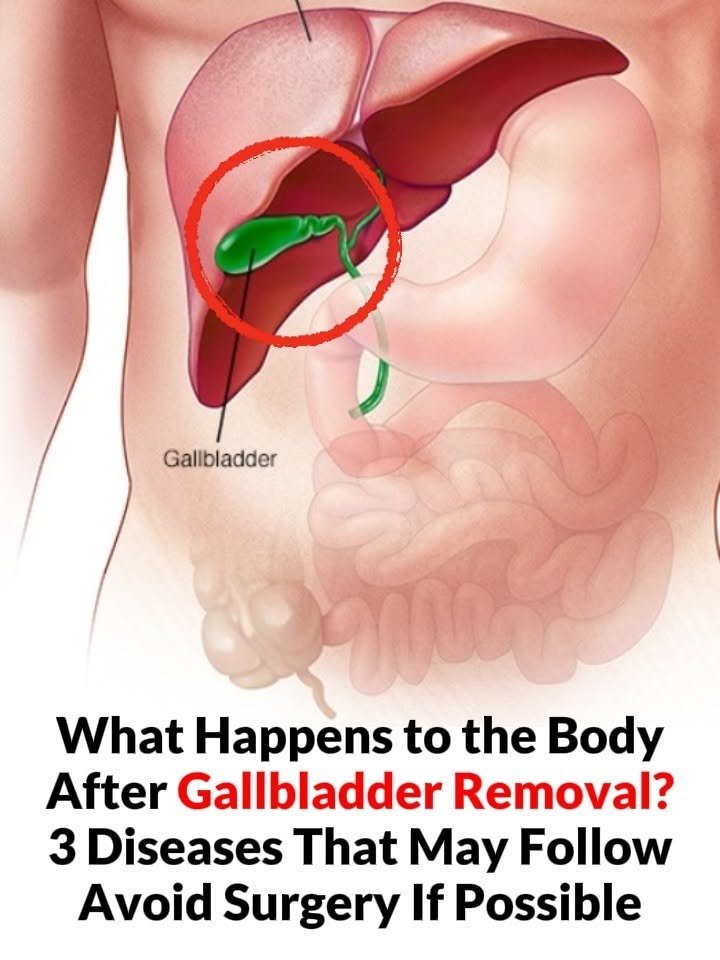
After Gallbladder Removal: 3 Things You Could Develop — and Why Surgery Isn’t Always Necessary
The headline “you should avoid gallbladder removal whenever possible” is too absolute. Gallbladder removal, or cholecystectomy, is a common and generally safe operation. Whether you need it depends on why you have gallstones or gallbladder disease.
If gallstones cause no symptoms, treatment often isn’t necessary. But recurrent attacks, inflammation, bile-duct blockage, or gallstone-related pancreatitis can make surgery the appropriate treatment. NIDDK+1
1. 🚽 Diarrhea and Changed Bowel Habits
After the gallbladder is removed, bile no longer gets stored in the gallbladder. Instead, it flows more continuously from the liver into the intestine.
Some people consequently experience:
- Softer stools
- More frequent bowel movements
- Urgency
- Diarrhea, particularly after meals
For many people these changes are temporary and improve after surgery. A smaller number develop persistent diarrhea that may require medical evaluation and treatment. nhs.uk+1
2. 🤢 Indigestion, Bloating, or Abdominal Discomfort
Some people experience continuing digestive symptoms after surgery, including:
- Indigestion
- Nausea
- Bloating
- Abdominal pain
- Vomiting
These symptoms are sometimes grouped under post-cholecystectomy syndrome.
Importantly, surgery doesn’t necessarily cause all of these symptoms. Some people undergo surgery because they already have digestive symptoms, and those symptoms may have another underlying cause. nhs.uk
3. 🩺 Rare Surgical Complications
As with any operation, gallbladder removal carries risks.
Possible complications include:
- Infection
- Blood clots
- Injury to nearby organs
- Injury to the bile ducts
- Bile leaking into the abdomen
- Gallstones remaining in the bile ducts
These complications are uncommon, but bile-duct injury can be serious and occasionally requires additional treatment or surgery. nhs.uk+1
🟢 So, Should You Avoid Gallbladder Surgery?
Not automatically.
If you have silent gallstones that aren’t causing symptoms, doctors commonly recommend no treatment and simply monitoring the situation. NIDDK+1
But if gallstones repeatedly cause painful attacks or complications, avoiding surgery can carry its own risks.
Gallstones can block the bile ducts and cause:
- Gallbladder inflammation (cholecystitis)
- Bile-duct infection or obstruction
- Jaundice
- Pancreatitis
Some untreated gallstone complications can become serious or even life-threatening. nhs.uk+1
🩻 When Surgery Is Commonly Recommended
Removal may be recommended when gallstones cause recurrent or severe symptoms, acute inflammation, or other complications.
For gallstone-related pancreatitis, for example, guidelines and clinical practice commonly favor removing the gallbladder to reduce the chance of another gallstone attack. NIDDK
🍽️ Can You Live Normally Without a Gallbladder?
Yes.
The gallbladder isn’t an essential organ. Your liver continues to produce bile, which can flow directly into the small intestine after the gallbladder is removed.
Most people can eventually return to a normal, healthy diet. Smaller meals and temporarily limiting very fatty foods may make the early recovery period easier for some people. NIDDK+2
🚨 Warning Signs After Surgery
Contact your medical team promptly if you develop severe or worsening abdominal pain, fever, wound infection, or yellowing of the skin or eyes after surgery. nhs.uk
Severe breathing difficulty or chest pain associated with leg swelling or pain requires emergency medical attention because it can indicate a blood clot. nhs.uk
Bottom Line
Gallbladder removal isn’t a procedure everyone should avoid.
The more accurate message is:
Don’t have surgery simply because you have symptom-free gallstones—but don’t avoid medically necessary surgery because of scary claims about life without a gallbladder.
If you’re considering surgery, the key questions are what caused the recommendation, whether your gallstones are symptomatic, and whether you’ve already had complications. A surgeon or gastroenterologist can weigh those factors against the risks of the operation.