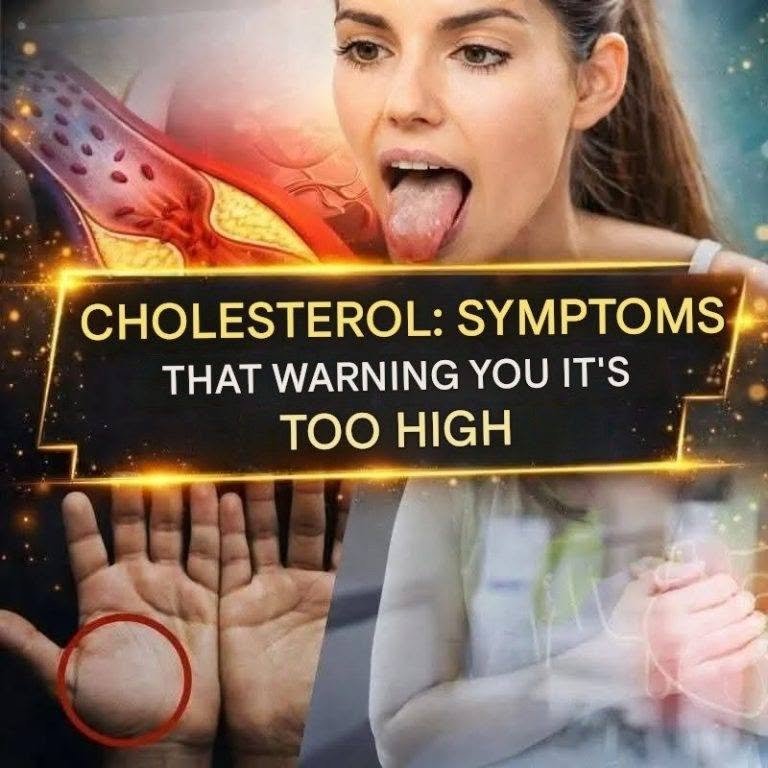
Cholesterol: 5 Symptoms That May Warn You It’s Too High
High cholesterol is often called a “silent” condition because most people have no symptoms at all. You usually cannot tell from how you feel whether your cholesterol is high—the reliable way to know is with a blood test.
However, very high or long-standing cholesterol can sometimes contribute to physical signs caused by cholesterol deposits or by artery disease.
1. 🟡 Yellowish Bumps Around the Eyes
Small yellowish deposits around the eyelids are called xanthelasma.
They can be associated with abnormal cholesterol levels, although they can also occur in people whose cholesterol is normal.
If you notice new yellowish plaques around your eyes, it’s reasonable to have your cholesterol checked.
2. 👁️ A Gray-White Ring Around the Cornea
A ring around the outer edge of the cornea is called corneal arcus.
It becomes increasingly common with age and isn’t necessarily a sign of high cholesterol in older adults.
However, a new corneal arcus in a younger person can sometimes be associated with unusually high cholesterol and deserves medical assessment.
3. 🟠 Cholesterol Deposits on the Skin or Tendons
Xanthomas are fatty deposits that can appear as yellowish bumps under the skin.
They can occur around:
- Tendons
- Hands
- Knees
- Elbows
- Feet
Certain types of xanthomas can be associated with inherited cholesterol disorders.
4. 🦵 Leg Pain When Walking
High cholesterol itself doesn’t usually cause leg pain.
However, cholesterol can contribute to plaque buildup in the arteries, eventually causing peripheral artery disease (PAD).
A classic symptom is aching or cramping in the calf, thigh, or buttock that appears during walking and improves with rest.
This deserves medical evaluation because PAD indicates a higher risk of cardiovascular disease.
5. ❤️ Chest Pain or Pressure
Again, chest pain isn’t a direct symptom of high cholesterol.
Rather, high LDL cholesterol can contribute to atherosclerosis, the buildup of plaque inside arteries.
If coronary arteries become narrowed, a person may develop angina—chest discomfort or pressure, particularly with physical exertion.
🚨 Don’t Wait With New Chest Pain
Seek emergency medical care for chest pressure or pain that is severe, persistent, or accompanied by:
- Shortness of breath
- Sweating
- Nausea
- Fainting
- Pain spreading to the arm, jaw, back, or shoulder
The Most Important Point
You cannot reliably diagnose high cholesterol from symptoms.
Someone can have very high LDL cholesterol and feel completely healthy.
That’s why a lipid blood test is much more useful than looking for warning signs.
A lipid panel typically measures:
- LDL cholesterol
- HDL cholesterol
- Triglycerides
- Total cholesterol
What Can Raise Cholesterol?
Factors include:
- Genetics
- Diet high in saturated or trans fats
- Excess body weight
- Physical inactivity
- Smoking
- Diabetes
- Certain medical conditions
- Some medications
- Increasing age
Some people inherit familial hypercholesterolemia (FH), which can cause very high LDL cholesterol from a young age.
Bottom Line
The five signs worth knowing are yellowish eyelid deposits, corneal arcus, cholesterol-related skin/tendon deposits, exertional leg pain, and symptoms of artery disease such as angina.
But these are not reliable “symptoms of high cholesterol.” The vast majority of people with high cholesterol have no obvious warning signs.
If you’re concerned about your cholesterol, a blood test is the way to find out—not waiting for symptoms to appear.