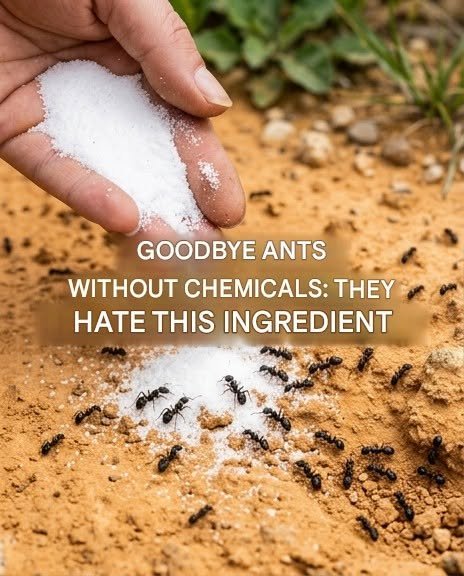
Here’s the detail first: ants can sometimes be discouraged by strong-smelling substances, but most viral “ants can’t stand this” remedies are temporary deterrents rather than permanent solutions. The best approach depends on the ant species and whether you’re dealing with a few indoor ants or an established colony.
Ants Can’t Stand It! Use It to Keep Them Away
1. Start by Removing What Attracts Them
Ants usually enter homes because they’re looking for food, water, or shelter.
Clean up crumbs and spills promptly, keep food in sealed containers, empty trash regularly, and wipe counters and floors where ants have been traveling.
Even tiny amounts of sugary or greasy food can attract foraging ants.
2. Try Vinegar for Cleaning Trails
A diluted vinegar solution can be useful for cleaning surfaces and removing the scent trails ants use to navigate.
Mixing equal parts water and white vinegar is commonly used for household surface cleaning.
Wipe the areas where you’ve seen ants, but avoid using vinegar on surfaces that can be damaged by acids, such as certain natural stones.
Vinegar doesn’t eliminate an established colony.
3. Citrus Scents May Discourage Ant Activity
Lemon or other citrus scents may temporarily discourage ants from particular areas.
You can clean suitable surfaces with a diluted citrus-based cleaner, but don’t rely on citrus alone if ants continue returning.
4. Seal Their Entry Points
This is one of the most effective long-term steps.
Look around:
- Window frames
- Door thresholds
- Baseboards
- Pipe openings
- Cracks in walls
- Gaps around utility lines
Seal accessible cracks and gaps with an appropriate household sealant.
If ants can’t easily get inside, deterrents become much more effective.
5. Keep Pet Food Areas Clean
Pet food can be an overlooked source of attraction.
Don’t leave food sitting out for long periods, and clean up crumbs around bowls.
Also check for leaking faucets, condensation, or other moisture sources.
6. Don’t Scatter Random Powders Around Your Home
You may see claims recommending large amounts of baking soda, cinnamon, coffee grounds, salt, or other kitchen ingredients.
Some may temporarily interfere with ants, but there’s no guarantee they’ll eliminate the colony.
Avoid putting substances where children or pets could ingest them.
7. Consider Ant Baits for Persistent Infestations
If ants keep returning despite cleaning and sealing, ant bait can be more useful than simply repelling the workers.
Worker ants can carry bait back to the colony, allowing the treatment to affect ants that you don’t see.
Follow the product directions carefully, and keep bait inaccessible to children and pets.
8. Don’t Spray Repellent Directly Around Bait
This is an important practical point.
If you’re using ant bait, spraying strong repellents around the same area can discourage ants from approaching the bait.
If the goal is colony control, allow the ants to reach the bait according to the product instructions.
9. Look for the Source
A trail of ants tells you where workers are traveling, but not necessarily where the colony is located.
Follow the trail if possible and look for an entry point.
Outdoor colonies near foundations, patios, walls, or plants may continually send workers indoors.
10. Know When to Call a Professional
Consider professional pest control if:
- Ants keep returning despite treatment
- You see large numbers indoors
- They’re emerging from walls or ceilings
- You repeatedly find winged ants indoors
- You suspect carpenter ants
- The infestation is affecting multiple rooms
Some species can indicate moisture or structural problems, so identifying the ant can be more useful than repeatedly trying different home remedies.
A Simple Approach to Try
Clean → remove food and water sources → wipe trails → seal entry points → use appropriate bait if necessary.
That approach is generally more reliable than trying to find one ingredient that supposedly makes ants disappear forever.
Final Takeaway
There isn’t a single household ingredient that can honestly guarantee “ants will stay away for good.”
Strong scents may provide temporary deterrence, but eliminating food sources, blocking entry points, and using appropriate bait when needed are much better strategies for long-term control.