Almost No One Knows What the Small Hole in Nail Clippers Is For
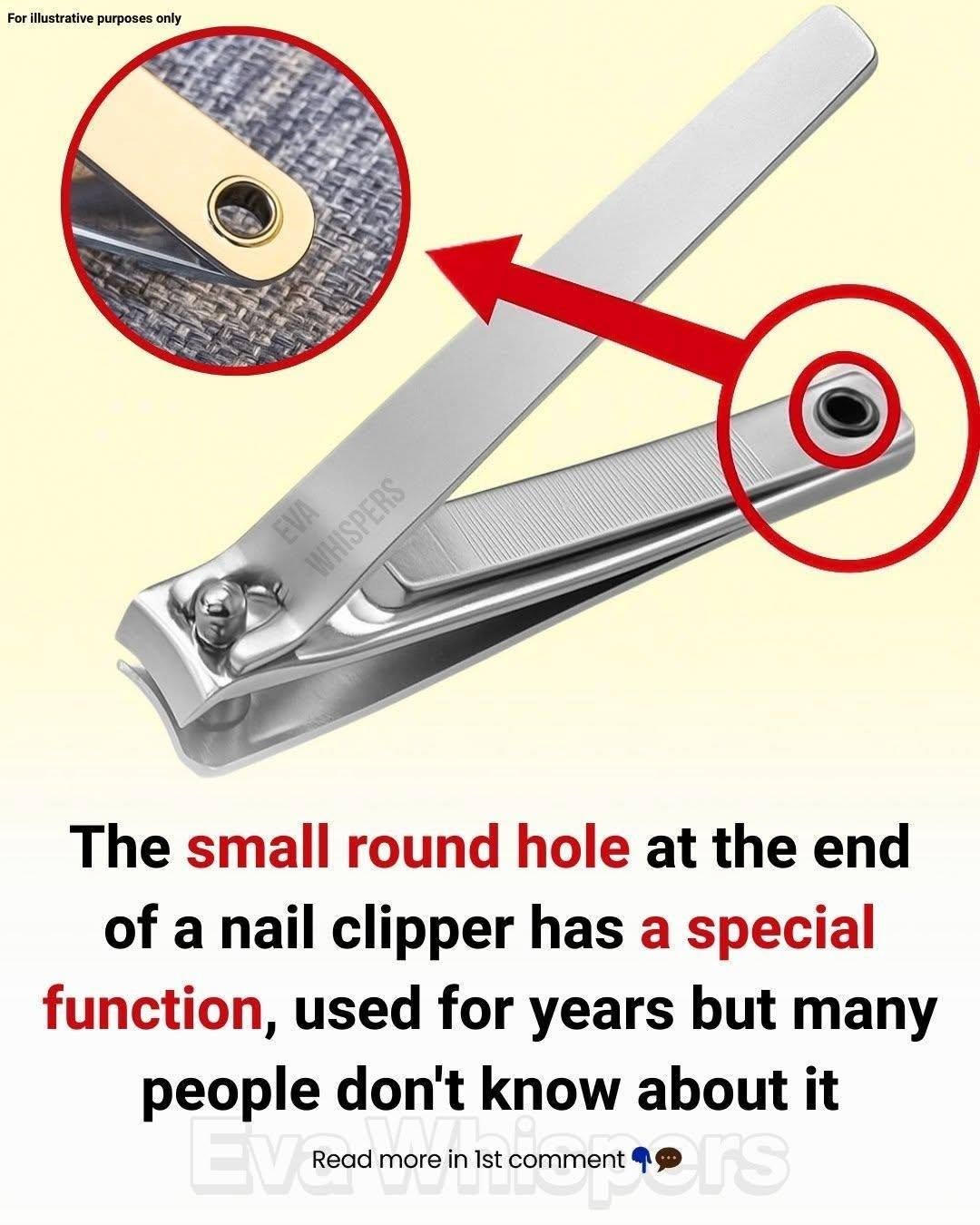
Have you ever looked closely at your nail clippers and wondered why there’s a tiny round hole near the end?
It looks like it should have an important function—and in many nail clippers, it does.
But there’s a common misconception about exactly what that hole is designed to do.
The Main Purpose: Attaching or Hanging the Clipper
On many traditional nail clippers, the small hole is primarily a convenient attachment point.
It can be used to:
- Attach the clipper to a key ring or small chain
- Hang it from a hook
- Keep it attached to a grooming kit
- Make the tool easier to store or carry
This makes sense for a small item that’s surprisingly easy to lose.
Some compact grooming sets are designed specifically so their tools can be attached together.
But Isn’t the Hole for Removing Nails?
Not usually.
You may see social-media posts claiming the hole is designed to catch nail clippings or help remove dirt from underneath your nails.
That’s generally not what the round hole is for.
The nail file or pointed cleaning tool, when included on the clipper, is the part intended for grooming or cleaning underneath nails.
And even then, you shouldn’t dig aggressively underneath your nails because you can injure the sensitive tissue beneath them.
What About the Lever?
There’s another feature that can cause confusion.
The small metal lever on a nail clipper is what gives you mechanical advantage.
When you press the lever, it pushes the cutting jaws together and allows you to cut the nail with relatively little force.
The pivoting connection between the lever and clipper body is part of that mechanism.
So if you’re looking at a traditional clipper, there are several tiny features working together:
The jaws cut.
The lever multiplies your force.
The pivot allows the mechanism to move.
The small round hole can provide an attachment or hanging point.
Why Is It So Small?
Because it doesn’t need to support much weight.
The nail clipper itself is small and lightweight, so a relatively tiny opening is enough for a thin chain, ring, or attachment.
Keeping it small also means it doesn’t interfere with the clipper’s structure.
Does Every Nail Clipper Use the Hole This Way?
No.
Nail clippers come in many different designs, and manufacturers may use holes and openings differently.
Some holes may be related to manufacturing, assembly, or the particular design of the tool.
So if your clipper looks different from the traditional style, don’t assume that every opening has exactly the same purpose.
A Useful Tip: Keep Your Clippers Clean
Regardless of what that tiny hole is for, nail clippers can collect nail debris, skin particles, and microorganisms.
Clean your clippers regularly.
You can wash away visible debris and disinfect the tool using an appropriate disinfectant according to its directions. Let it dry thoroughly before storing it.
If you share nail clippers with other people, cleaning becomes even more important—and ideally, personal grooming tools shouldn’t be shared.
Don’t Use the Clipper as a Multi-Purpose Tool
Because nail clippers are small and sturdy, people sometimes use them to open packages, scrape objects, cut wires, or perform other tasks.
That’s a bad idea.
Using them for unintended purposes can damage the cutting edges or cause injury.
They’re designed for trimming nails—not for opening cans or cutting materials they’re not designed to handle.
The Bottom Line
That little round hole on many nail clippers isn’t a secret medical feature or a hidden nail-cleaning device.
It’s commonly there as a convenient attachment or hanging point, although the exact purpose can vary by design.
It’s a tiny example of how everyday objects can contain features we rarely notice.
So the next time you pick up your nail clippers, take a closer look.
That little hole may have been there simply to make a tiny tool easier to carry, attach, or store.