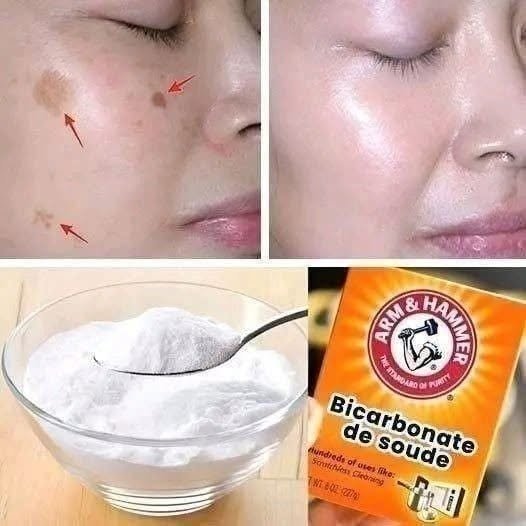
How to Use Baking Soda for Dark Spots, Wrinkles, and Dark Circles—And Why You Should Be Careful
You’ve probably seen DIY skincare recipes that mix baking soda with water, lemon juice, honey, or other ingredients and promise to make your face look younger and brighter.
But before putting baking soda on your skin, there’s something important to know:
Baking soda isn’t a proven treatment for dark spots, wrinkles, or dark circles—and it can irritate facial skin.
Your face has a protective skin barrier with a naturally acidic environment. Baking soda is alkaline, so frequent or prolonged use can disrupt that barrier.
That may lead to:
- Dryness
- Burning or stinging
- Redness
- Irritation
- Increased sensitivity
- Worsening pigmentation
So what should you do instead?
1. For Dark Spots: Focus on Sun Protection
Dark spots can become darker with ultraviolet exposure.
A broad-spectrum sunscreen of SPF 30 or higher is one of the most important steps for preventing pigmentation from becoming more noticeable.
Apply it to exposed facial skin every morning and reapply when appropriate for prolonged outdoor exposure.
Without sun protection, even an effective pigmentation treatment may have disappointing results.
2. Consider Proven Ingredients for Uneven Pigmentation
Depending on the cause of the pigmentation, dermatologists may recommend ingredients such as:
- Vitamin C
- Niacinamide
- Azelaic acid
- Retinoids
- Other prescription or dermatologist-directed treatments
The right choice depends on your skin type and the reason for the pigmentation.
If a dark spot is new, changing, bleeding, irregular, or very different from your other spots, don’t try to bleach it at home. Have it evaluated by a healthcare professional.
3. For Wrinkles: Don’t Scrub Your Skin
Baking soda doesn’t “erase” wrinkles.
Wrinkles develop as the skin changes with age and cumulative ultraviolet exposure.
A better evidence-based approach includes:
Daily sunscreen + moisturizer + appropriate retinoid use when suitable.
Retinoids have some of the strongest evidence among topical ingredients for improving signs of photoaging.
They can also cause irritation, particularly when first introduced, so start appropriately and follow professional advice when needed.
4. For Dark Circles: Find the Cause
Dark circles aren’t always caused by a buildup of dead skin.
They can result from:
- Genetics
- Natural facial anatomy
- Thin skin
- Blood vessels showing through the skin
- Hyperpigmentation
- Allergies or rubbing
- Lack of sleep
- Shadowing from hollows beneath the eyes
Because the causes differ, one DIY treatment can’t fix every type of dark circle.
And the skin around the eyes is particularly delicate.
Avoid putting baking soda near your eyes.
5. Never Mix Baking Soda With Lemon for Your Face
This is a particularly common DIY recipe.
Lemon juice can irritate the skin and can increase sensitivity to sunlight. Combining irritating ingredients doesn’t make them safer or more effective.
If a skincare mixture burns, stings strongly, or leaves your skin red, don’t assume that means it’s “working.”
Irritation is a sign to stop.
6. Don’t Use Baking Soda as a Facial Scrub
Baking soda has a fine powdery texture, but that doesn’t make it an appropriate facial exfoliant.
Repeated scrubbing can damage the skin barrier and cause inflammation.
Inflammation can sometimes make pigmentation more noticeable, creating the opposite of the result you wanted.
If you want exfoliation, choose a product formulated specifically for facial skin and use it according to its instructions.
7. What About Baking Soda and Honey?
Honey may have moisturizing properties, but mixing it with baking soda doesn’t create a proven anti-aging treatment.
If your goal is softer skin, you’re better off using a properly formulated moisturizer designed for your skin type.
8. Patch-Test New Skincare Products
Even legitimate skincare ingredients can cause irritation or allergic reactions.
When introducing a new product, follow its directions and consider testing it on a small area first.
Don’t immediately apply multiple new products at once. If your skin reacts, you won’t know which ingredient caused the problem.
A Simple Routine for Healthier-Looking Skin
You don’t need a complicated DIY recipe.
Morning
1. Gentle cleanser
Clean your face without aggressively scrubbing.
2. Moisturizer
Choose one appropriate for your skin type.
3. Broad-spectrum SPF 30+ sunscreen
This is especially important if you’re concerned about pigmentation or premature skin aging.
Evening
1. Gentle cleansing
2. A proven treatment if appropriate
For example, a dermatologist may recommend a retinoid or another ingredient depending on your concerns.
3. Moisturizer
Give skincare time to work.
Dark spots and wrinkles generally don’t disappear overnight, and constantly changing treatments can irritate your skin.
When Should You See a Dermatologist?
Consider professional evaluation if:
- A dark spot is new or changing
- A spot has irregular borders or multiple colors
- It bleeds or repeatedly develops a crust
- Pigmentation suddenly becomes widespread
- Dark circles appear with swelling or other eye symptoms
- Wrinkles or skin changes concern you despite consistent skincare
- Your skin is persistently burning, peeling, or inflamed
A dermatologist can determine what’s actually causing the change and recommend treatment appropriate for your skin.
The Bottom Line
Baking soda isn’t a magic eraser for dark spots, wrinkles, or dark circles.
Putting it on your face may actually cause irritation and damage the skin barrier, particularly when used frequently or mixed with other irritating ingredients.
Instead, focus on the basics:
Gentle skincare + moisturizer + daily sunscreen + evidence-based treatments when appropriate.
And remember: healthy skin doesn’t have to look perfectly smooth or completely free of lines and pigmentation.
The goal isn’t to strip your skin until every imperfection disappears.
The goal is to keep your skin healthy while treating specific concerns safely.