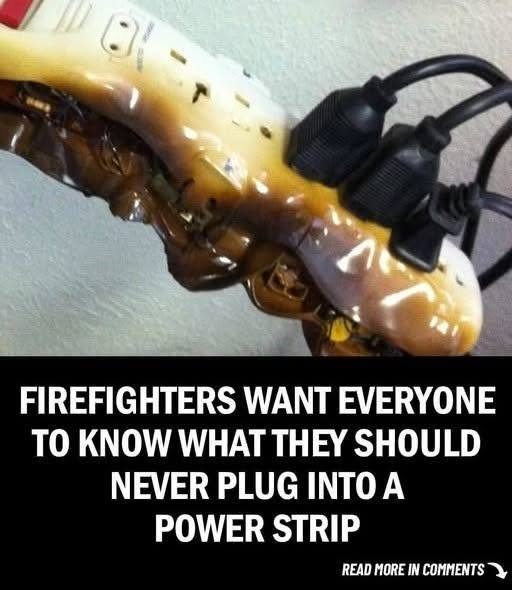
Things You Should Never Plug Into a Power Strip
Power strips are convenient. They let you connect several devices to one electrical outlet, which makes them especially useful around desks, entertainment centers, and work areas.
But a power strip doesn’t create additional electrical capacity. The wall outlet and the strip still have limits.
Plugging a high-power appliance into a basic power strip can overload the strip, cause overheating, trip a circuit breaker, or in the worst case contribute to an electrical fire.
Here are some of the devices you should generally plug directly into an appropriate wall outlet instead of a standard power strip.
1. Space Heaters
Portable space heaters are among the biggest concerns.
They can draw substantial amounts of electricity continuously. Adding a space heater to a power strip—especially alongside other appliances—can overload the strip or its wiring.
For safety, follow the heater manufacturer’s instructions. Many manufacturers specifically recommend plugging the heater directly into a wall outlet.
Don’t use an extension cord or ordinary power strip unless the manufacturer explicitly permits it and the equipment is appropriately rated.
2. Air Conditioners
Portable and window air conditioners can also draw significant electrical current.
Connecting one to a basic power strip may exceed the strip’s rating.
An air conditioner should generally be connected according to the manufacturer’s electrical requirements, usually to an appropriately rated wall receptacle or dedicated circuit when specified.
If the plug, outlet, or cord becomes unusually hot, stop using the equipment and have the electrical setup inspected.
3. Refrigerators and Freezers
Refrigerators and freezers contain compressors that can draw a higher current when starting.
A standard power strip isn’t generally the right place for these appliances.
It’s better to follow the manufacturer’s instructions and connect the appliance to a properly grounded wall outlet.
This also avoids accidentally switching off the power strip and leaving your food without refrigeration.
4. Microwaves
Microwave ovens can consume substantial power while operating.
Although a microwave may work when connected to a power strip, that doesn’t mean the arrangement is safe.
Check the manufacturer’s instructions and the electrical requirements for your particular model.
If the microwave requires a dedicated circuit or direct wall connection, follow that guidance.
5. Toasters and Toaster Ovens
Toasters and toaster ovens generate considerable heat and can draw substantial electrical power.
Plug them directly into an appropriate wall outlet rather than using a crowded power strip.
And never operate them near curtains, paper, towels, or other combustible materials.
6. Coffee Makers
Coffee makers, especially models with heating plates, can consume considerable power while operating.
A coffee maker sitting alongside several other appliances on one power strip can create an unnecessary electrical load.
Plug it directly into a suitable outlet whenever possible.
If you’re finished using it, turn it off and allow it to cool according to the manufacturer’s instructions.
7. Electric Kettles
Electric kettles heat water very quickly, which means they can draw substantial power while operating.
Don’t assume that because a kettle is small, it’s safe to plug into any power strip.
A properly rated wall outlet is the better choice.
This is especially important in kitchens where multiple high-power appliances may already be connected to the same circuit.
8. Hair Dryers
Hair dryers can draw a lot of electricity.
Combining a hair dryer with other high-power devices through one power strip can overload the strip or circuit.
Use a suitable wall outlet, preferably one protected by a ground-fault circuit interrupter (GFCI) where required or recommended for the location.
Never use electrical appliances near water unless the installation and equipment are appropriate for that environment.
9. Washing Machines and Clothes Dryers
Large laundry appliances shouldn’t normally be connected to ordinary power strips.
Clothes dryers can consume very large amounts of electricity, particularly electric models.
Washing machines also have motors and heating elements in some models.
Follow the manufacturer’s installation instructions and local electrical requirements. These appliances may require dedicated circuits or specific receptacles.
10. Dishwashers
Dishwashers can use substantial power, particularly models that heat water internally.
They should be installed according to the manufacturer’s instructions and local electrical codes rather than connected to a basic household power strip.
11. Ovens and Electric Stoves
Large cooking appliances are designed for dedicated electrical connections capable of handling their substantial loads.
Never try to power an electric stove or oven through an ordinary power strip.
These appliances require appropriately sized wiring, outlets, and circuit protection.
12. High-Powered Workshop Equipment
Tools such as large saws, compressors, welders, and some heavy-duty drills can draw significant current.
Don’t assume a power strip designed for computers and small electronics is suitable for these devices.
Use the electrical connection specified by the equipment manufacturer.
What Is a Power Strip Actually Designed For?
A typical power strip is most useful for lower-power electronics, such as:
- Computers
- Monitors
- Phone chargers
- Speakers
- Routers
- Lamps
- Televisions
- Streaming devices
Even then, check the strip’s maximum current or wattage rating.
The total load of everything connected to the strip should remain within its rated capacity.
Don’t Confuse a Power Strip With a Surge Protector
A basic power strip may simply provide additional outlets.
A surge protector includes components designed to protect connected electronics from certain voltage surges.
They’re not identical.
And neither one increases the amount of electricity your household circuit can safely provide.
A surge protector also isn’t a guarantee against every electrical hazard.
Don’t Plug One Power Strip Into Another
This practice is sometimes called daisy chaining.
For example:
Wall outlet → power strip → second power strip → several appliances
It may seem like an easy way to reach more devices, but it can create an overloaded or poorly protected setup.
Use a power strip with enough outlets for the devices you actually need, and connect it directly to the wall outlet.
Watch for Signs of Overheating
Pay attention to warning signs such as:
- A hot plug
- A hot power strip
- Discoloration around an outlet
- Melted plastic
- Burning smells
- Buzzing or crackling
- Sparks
- Frequently tripped breakers
If you notice these signs, stop using the equipment and have the electrical problem assessed.
Don’t simply replace the strip and continue using the same overloaded setup.
What About Extension Cords?
Extension cords aren’t intended to be a permanent replacement for properly installed outlets.
If you need electricity somewhere regularly, a qualified electrician can determine whether an additional outlet or another electrical solution is appropriate.
If you temporarily use an extension cord, make sure it’s properly rated for the equipment and intended for the environment in which you’re using it.
Never hide extension cords under rugs or carpets where heat and damage can go unnoticed.
A Simple Rule to Remember
Here’s an easy way to think about it:
Low-power electronics → power strip may be appropriate.
High-power heating or motor-driven appliances → use the appropriate wall outlet or dedicated circuit according to the manufacturer’s instructions.
When in doubt, check the appliance manual and the power strip’s rating.
The Bottom Line
Avoid using ordinary power strips for high-power appliances such as:
- Space heaters
- Air conditioners
- Refrigerators and freezers
- Microwaves
- Toasters and toaster ovens
- Coffee makers
- Electric kettles
- Hair dryers
- Washing machines and dryers
- Dishwashers
- Ovens and electric stoves
- Heavy-duty workshop equipment
The key isn’t simply how many plugs are connected.
It’s how much electrical power those devices are drawing and whether the entire setup is rated for that load.
A power strip is a convenience—not an upgrade to your home’s electrical system.
When dealing with high-power appliances, follow the manufacturer’s instructions and local electrical requirements. If an outlet, plug, or cord is getting hot, damaged, or discolored, stop using it and have it checked.