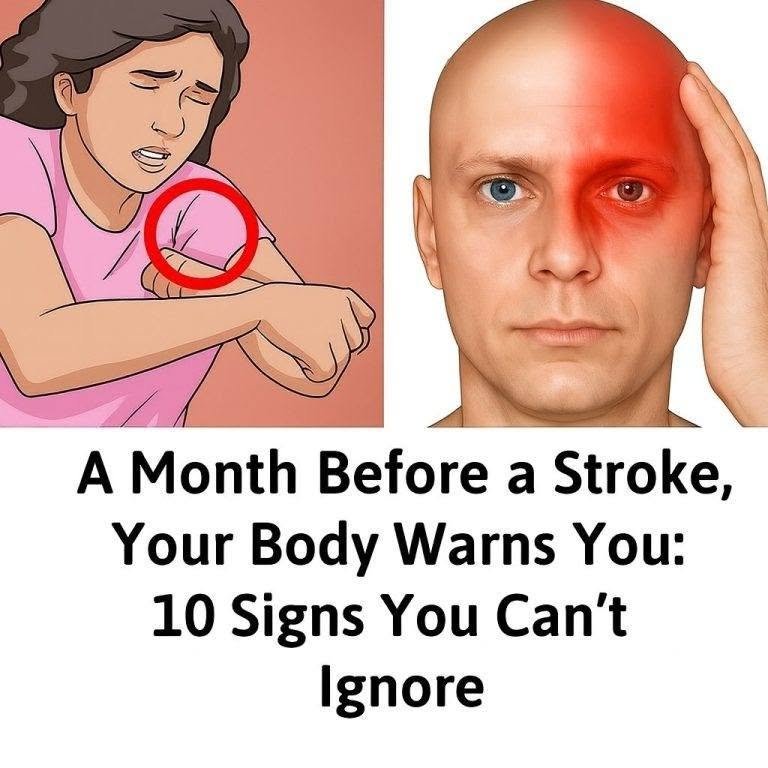
A Month Before a Stroke, Your Body Warns You: 10 Signs You Should Know
Here’s the detail first: a stroke does not usually follow a predictable pattern of warning symptoms exactly one month beforehand. Some people have no warning at all. However, a transient ischemic attack (TIA)—sometimes called a “warning stroke”—can cause temporary stroke-like symptoms and signals an increased risk of a future stroke. www.stroke.org+1
That distinction is important: if any of the symptoms below happen suddenly, especially if they disappear after a few minutes, don’t wait for another episode. A TIA requires urgent medical assessment because it can precede a major stroke. www.stroke.org
1. Sudden Weakness on One Side
One arm, leg, or side of the face may suddenly feel weak or numb.
For example, you might notice that one arm doesn’t stay raised when you hold both arms out.
This is one of the classic warning signs and should never be ignored. CDC
2. Sudden Facial Drooping
Ask the person to smile.
Does one side of the mouth droop? Does the face suddenly feel numb or uneven?
Facial drooping together with arm weakness or speech difficulty is particularly concerning for stroke. www.stroke.org
3. Sudden Difficulty Speaking
Speech may suddenly become:
- Slurred
- Confused
- Difficult to understand
- Difficult to produce
Someone may know exactly what they want to say but suddenly be unable to express it properly.
Sudden speech difficulty is an emergency symptom—even if it resolves. www.stroke.org
4. Trouble Understanding Other People
A person may suddenly struggle to understand ordinary conversation or instructions.
They may appear confused or respond inappropriately despite previously communicating normally.
This can be another sign of a temporary or ongoing interruption of blood flow to the brain. CDC
5. Sudden Vision Changes
Stroke and TIA can cause sudden changes in vision, including:
- Loss of vision in one or both eyes
- Blurred vision
- Double vision
- Other sudden visual disturbances
Don’t assume a sudden vision problem is simply an eye issue, particularly when it occurs with dizziness, weakness, or speech problems. www.stroke.org
6. Sudden Loss of Balance
A person may suddenly become unsteady or have difficulty walking.
They may feel unusually dizzy, lose coordination, or feel as though they’re going to fall.
Sudden balance problems can be a stroke symptom, particularly when they occur with other neurological changes. CDC
7. Sudden Severe Headache
A sudden, severe headache with no known cause can be a warning sign of stroke.
A particularly abrupt and extremely severe headache requires emergency assessment because some strokes are caused by bleeding in or around the brain. www.stroke.org+1
8. Sudden Dizziness
Dizziness can have many harmless causes, but sudden dizziness accompanied by balance problems, weakness, vision changes, or difficulty speaking should be taken seriously.
Stroke symptoms can vary depending on which area of the brain is affected. www.stroke.org
9. Temporary Stroke-Like Symptoms
This is perhaps the most important “warning” to recognize.
A person may suddenly experience weakness, numbness, speech difficulty, vision loss, dizziness, or another neurological symptom—and then feel completely normal again.
That does not mean the danger has passed.
A TIA can produce symptoms similar to a stroke that resolve, but it can signal a significant risk of a subsequent stroke. The American Stroke Association advises immediate medical attention even when symptoms disappear. www.stroke.org
10. Sudden Confusion or Disorientation
Unexpected confusion can occur during a stroke or TIA.
Someone who suddenly becomes disoriented, has trouble understanding what is happening, or cannot communicate normally should be evaluated urgently.
Don’t assume sudden confusion is simply aging or tiredness. CDC
Remember B.E. F.A.S.T.
A simple way to recognize the major warning signs is B.E. F.A.S.T.:
- B — Balance: sudden loss of balance or coordination
- E — Eyes: sudden vision changes
- F — Face: facial drooping
- A — Arm: sudden weakness or numbness
- S — Speech: difficulty speaking or understanding
- T — Time: call emergency services immediately
The CDC and American Stroke Association both emphasize acting quickly because stroke treatment is time-sensitive. CDC+1
What About Symptoms That Happen Weeks Earlier?
This is where many online articles become misleading.
Fatigue, headaches, poor sleep, dizziness, tingling, or occasional forgetfulness do not mean that a stroke is definitely coming in a month. These symptoms have many possible causes.
Rather than trying to predict a stroke from vague symptoms, focus on sudden neurological changes and known stroke risk factors such as high blood pressure, diabetes, heart disease, atrial fibrillation, and smoking. www.stroke.org
If the Symptoms Disappear, Don’t Ignore Them
One of the most dangerous misconceptions is: “It went away, so everything is fine.”
A TIA can resolve quickly, but it is still a medical emergency. The American Stroke Association notes that stroke-like symptoms that disappear still require urgent assessment. www.stroke.org
If you experience sudden weakness, facial drooping, speech difficulty, vision loss, severe unexplained headache, or sudden balance problems, note the time the symptoms began and seek emergency medical help immediately. www.stroke.org+1
Final Takeaway
There isn’t a reliable list of 10 symptoms that appear exactly one month before every stroke. Stroke can occur without advance warning.
The symptoms worth remembering are the sudden ones: facial drooping, one-sided weakness or numbness, speech difficulty, vision changes, loss of balance, severe unexplained headache, confusion, and other sudden neurological changes.
Don’t wait to see whether they get worse, and don’t ignore them because they disappear. Fast evaluation can make an important difference in treatment and prevention.