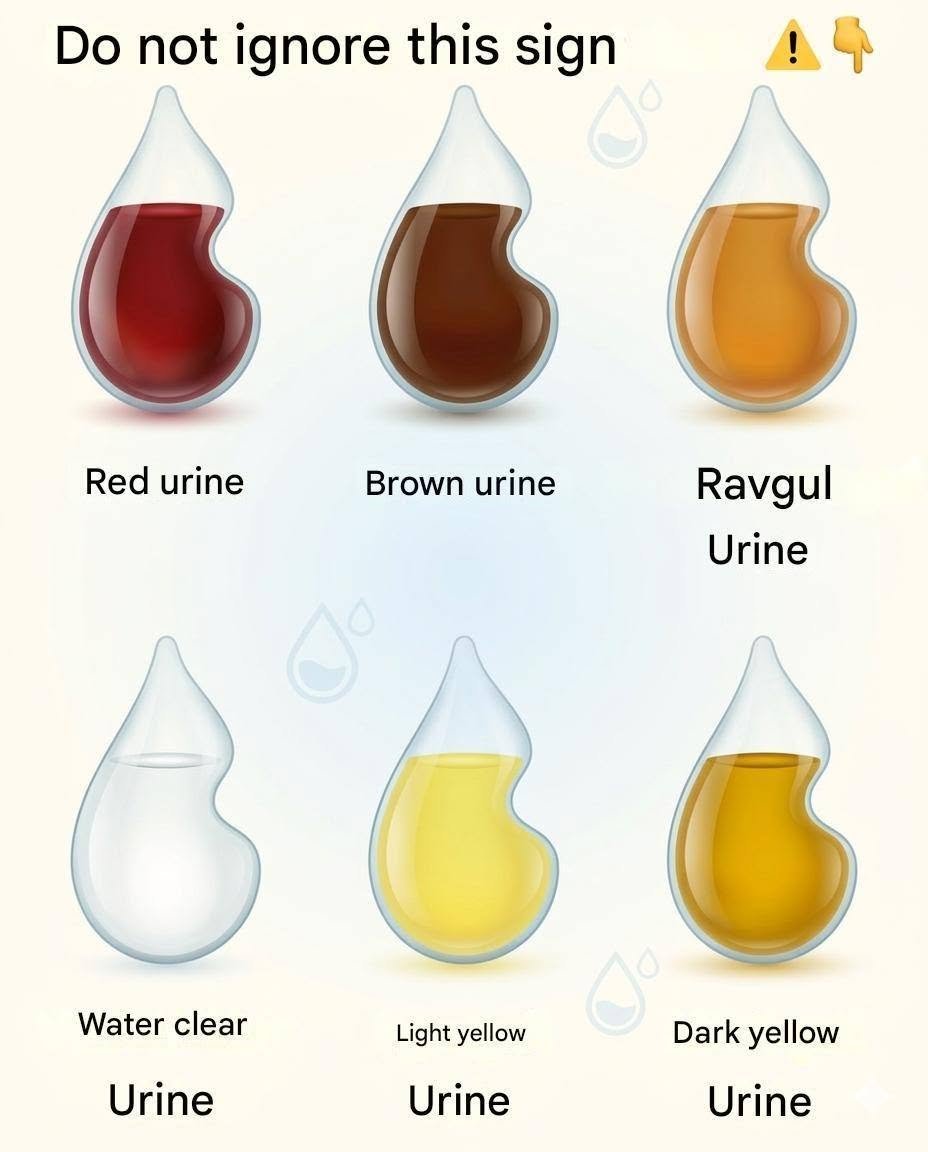
What Does the Color of Your Urine Say About Your Health?
Urine can tell you surprisingly little about your health from color alone, but changes in color can sometimes provide useful clues about hydration, medications, foods, infections, or problems involving the kidneys and urinary tract.
Urine gets its usual yellow color from pigments called urochromes (urobilin). The more concentrated your urine is, the darker yellow it tends to look. That’s why your first urine in the morning is often darker than urine produced after you’ve been drinking plenty of fluids.
Most changes are harmless—but some colors deserve medical attention.
💧 1. Clear or Completely Transparent
Very clear urine usually means your urine is highly diluted.
This can happen when you’ve been drinking a lot of water. Occasionally, that’s completely normal.
However, if your urine is almost always completely clear and you’re also extremely thirsty or urinating unusually often, it may be worth discussing with a healthcare professional. Excessive urination and thirst can occur with conditions such as diabetes.
You don’t need to force yourself to drink enormous amounts of water simply to make your urine clear. Clear urine isn’t necessarily healthier than pale yellow urine.
💛 2. Pale Yellow — Usually Normal
A pale straw or light-yellow color is generally a normal finding.
It commonly indicates that you’re adequately hydrated, although urine color isn’t a precise measurement of hydration.
If you’re otherwise feeling well and your urine is pale yellow, there’s generally no reason to try to make it even clearer.
🟡 3. Dark Yellow
Dark yellow urine often means your urine is more concentrated.
Common reasons include:
- Not drinking enough fluid
- Sweating heavily
- Exercising
- Waking up after several hours of sleep
- Vomiting or diarrhea
Try drinking fluids normally throughout the day. If the urine repeatedly remains very dark despite adequate fluid intake, or you have other symptoms, consider getting medical advice.
🟠 4. Orange
Orange urine can sometimes occur from dehydration, but medications and medical conditions can also change urine to orange.
Some medicines can produce orange or reddish-orange urine. Certain liver or bile-duct problems can also cause dark urine, particularly when accompanied by yellowing of the skin or eyes and pale stools.
If orange urine persists without an obvious explanation, it’s worth having it checked.
🔴 5. Pink or Red
Pink or red urine can be caused by blood in the urine (hematuria).
Possible causes include:
- Urinary tract infection
- Kidney stones
- Kidney or bladder problems
- Prostate problems
- Certain medications
- Trauma or vigorous exercise
But not every red-looking urine sample contains blood. Beets, blackberries, and some food dyes can also produce reddish urine.
Nevertheless, visible blood in the urine shouldn’t simply be dismissed as something you ate. If you notice red or pink urine and don’t have an obvious dietary explanation, seek medical evaluation.
🟤 6. Brown or Cola-Colored
Brown or cola-colored urine deserves more attention.
It can occur with severe dehydration, but dark-brown urine may also be associated with liver or bile problems, certain medications, or rhabdomyolysis—a condition in which damaged muscles release substances into the bloodstream that can darken urine.
If brown urine appears after intense exercise and is accompanied by severe muscle pain or weakness, seek urgent medical attention.
🟢 7. Green
Green urine is unusual but doesn’t automatically mean something is seriously wrong.
Certain medications, dyes, and food coloring can produce greenish urine. In rare circumstances, some urinary infections can also cause unusual coloration.
If you haven’t consumed a food dye or started a medication that explains the color, persistent green urine should be evaluated.
🔵 8. Blue
Blue urine is rare.
It can sometimes result from medications, dyes used in medical procedures, or certain rare metabolic disorders.
A temporary color change after a medication or medical procedure may have an obvious explanation. Otherwise, unexplained blue urine warrants medical advice.
🟣 9. Purple
Purple urine is extremely unusual.
One recognized phenomenon is purple urine bag syndrome, which can occur in some people with urinary catheters, particularly in certain infection-related circumstances.
It’s not a normal urine color and should be assessed by a healthcare professional when it occurs.
☁️ 10. Cloudy or Milky Urine
Cloudy urine can have several explanations.
It may result from:
- Dehydration
- Urinary crystals
- A urinary tract infection
- Blood cells or white blood cells
- Protein
- Other substances in the urine
If cloudy urine occurs with burning during urination, urgency, frequent urination, pelvic pain, fever, or a strong unusual odor, a urinary infection becomes more concerning.
🫧 What About Foamy Urine?
Foamy urine isn’t technically a color change, but it’s another urinary appearance people often notice.
Occasional bubbles can be completely normal, especially when urine hits the toilet water forcefully.
However, persistent, unusually frothy urine can sometimes indicate excess protein in the urine. Protein leakage can be associated with kidney disease.
If this happens repeatedly, a urine test—particularly a urine albumin-to-creatinine ratio (UACR)—can help determine whether protein is present.
🦠 Does Smelly Urine Mean Infection?
Not necessarily.
Urine can smell stronger when you’re dehydrated or after consuming foods such as asparagus. Certain vitamins and medications can also change its odor.
A strong or unusual odor accompanied by burning, urgency, frequent urination, pelvic discomfort, or fever is more suggestive of a urinary problem and should be evaluated.
💊 Medications Can Change Urine Color
Don’t panic if your urine changes color shortly after starting a medication.
Several medicines and supplements can produce dramatic color changes. For example, some medications can turn urine orange, while certain vitamin supplements can make it appear intensely yellow.
If you’re unsure whether a medication is responsible, check the medication information or ask a pharmacist rather than stopping a prescribed medication yourself.
🥕 Food Can Change Urine Color Too
Certain foods can temporarily change urine appearance.
Examples include:
- Beets: pink or reddish urine
- Blackberries: reddish or dark urine
- Food dyes: various unusual colors
- Asparagus: stronger urine odor
These changes generally disappear after the substance has passed through your system.
🚨 When Should You Worry?
Urine color deserves medical attention when the change is persistent, unexplained, or accompanied by other symptoms.
Seek medical advice if you notice:
- Blood or red urine without an obvious dietary explanation
- Persistent brown or cola-colored urine
- Orange urine with yellow eyes or skin
- Cloudy urine with fever or significant pain
- Very little urine despite normal fluid intake
- Persistent foamy urine
- Severe pain in your side or back
- Burning or difficulty urinating
Sudden inability to urinate, severe flank pain, significant bleeding, fever with urinary symptoms, or severe weakness can require urgent medical care.
Is Urine Color a Reliable Hydration Test?
It’s useful as a rough clue, but it isn’t a perfect hydration test.
Pale-yellow urine generally suggests that your urine isn’t highly concentrated. Darker yellow urine can suggest that you need more fluids.
But many factors influence urine color, including food, medications, supplements, exercise, illness, and the time of day.
So don’t obsess over achieving perfectly clear urine.
What Your Urine Color Can—and Can’t—Tell You
Urine color can provide clues, but it cannot diagnose a disease by itself.
For example, dark urine might simply mean you haven’t had enough fluids, while brown urine could signal something much more serious. Likewise, red urine can be caused by food—but it can also represent blood.
That’s why persistent or unexplained changes should be interpreted alongside your symptoms and, when appropriate, laboratory testing.
Bottom Line
A simple rule of thumb is:
- Pale yellow: usually normal
- Dark yellow: often concentrated urine/dehydration
- Orange: dehydration, medication, or sometimes liver/bile problems
- Pink/red: possible blood or certain foods
- Brown/cola-colored: dehydration, liver problems, medications, or muscle injury
- Green/blue/purple: uncommon; often medication, dye, or a specific medical circumstance
- Cloudy: can be harmless, but may indicate infection or urinary abnormalities
- Persistent foam: can sometimes indicate protein in the urine
Don’t diagnose yourself from urine color alone. If the color change is persistent, unexplained, or accompanied by pain, fever, blood, swelling, jaundice, or changes in urination, a healthcare professional can determine whether a urine or blood test is needed.