Sleeping on Your Left Side: What It May Mean for Your Health
Sleeping on your left side is generally a safe and healthy sleeping position for many people. It does not have a hidden medical meaning by itself, and there is no strong evidence that simply preferring your left side indicates that something is wrong with your body.
However, your sleeping position can affect acid reflux, pregnancy comfort, snoring, breathing, shoulder or hip pressure, and overall sleep quality. For some people, switching to the left side can make a noticeable difference.
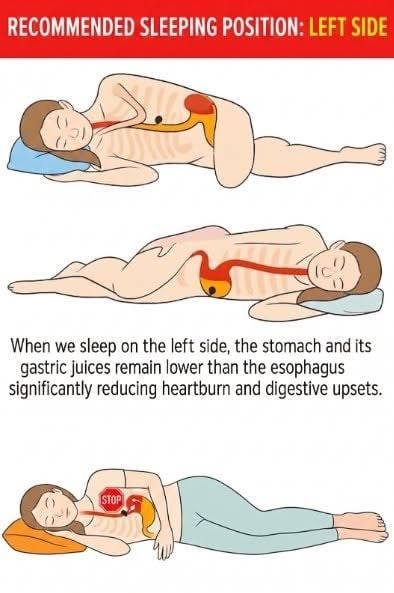
1. It May Help With Acid Reflux
For people who experience heartburn or gastroesophageal reflux disease (GERD), sleeping on the left side may be helpful.
The stomach’s anatomy means that lying on the left can reduce the likelihood that stomach contents move back toward the esophagus compared with lying on the right side.
If nighttime heartburn is a problem, left-side sleeping may be one useful part of a larger strategy that can include avoiding meals close to bedtime and elevating the upper body.
2. It Can Be Helpful During Pregnancy
As pregnancy progresses, finding a comfortable sleeping position can become difficult.
Side sleeping is generally recommended later in pregnancy, and the left side is often suggested because it may promote comfortable blood flow and reduce pressure from the uterus on major blood vessels.
However, don’t panic if you wake up on your back or on your right side. Sleep naturally changes position during the night, and the most important goal is getting adequate, comfortable sleep.
If you’re pregnant and have questions about the safest sleeping position for your particular circumstances, your obstetric clinician can provide individualized advice.
3. It May Reduce Nighttime Reflux Compared With Right-Side Sleeping
Research on body position and GERD has found that the right side can worsen nighttime reflux for some people, while the left side may reduce acid exposure.
This doesn’t mean everyone with reflux must sleep exclusively on the left. Individual responses differ, and treatment may require dietary changes, weight management when appropriate, medication, or evaluation by a clinician.
4. It May Influence Snoring and Breathing
Side sleeping can be helpful for some people who snore or have sleep-disordered breathing.
When you’re on your side, gravity is less likely to allow the tongue and soft tissues to fall backward and narrow the airway compared with sleeping flat on your back.
That doesn’t mean left-side sleeping cures sleep apnea. If you regularly snore loudly, wake up gasping or choking, have witnessed pauses in breathing, or feel excessively sleepy during the day, you should discuss possible sleep apnea with a healthcare professional.
5. It May Affect Shoulder Comfort
Sleeping on the left side puts pressure on the left shoulder.
If you have a shoulder injury, arthritis, bursitis, or another painful condition, lying directly on that shoulder may aggravate symptoms.
In that situation, try supporting the upper arm with a pillow or changing sides. Your best sleeping position is ultimately the one that allows you to sleep comfortably without worsening pain.
6. Your Hip Can Also Be Affected
Side sleeping places pressure on the hip that is closest to the mattress.
People with hip arthritis or other sources of hip pain may find that prolonged pressure causes discomfort during the night.
A pillow between the knees can sometimes improve alignment and reduce pressure on the hips and lower back.
7. It Doesn’t Mean Your Heart Is in Danger
A common internet claim says that sleeping on the left side is dangerous because the heart is located on the left.
For most healthy people, this is not a reason to avoid left-side sleeping.
The heart isn’t simply being “crushed” by lying on your left side. In fact, many people with heart conditions comfortably sleep on their side.
If a particular position consistently causes chest discomfort, breathlessness, palpitations, or unusual symptoms, however, don’t ignore it. The symptom—not the position itself—is what deserves evaluation.
8. It May Feel Different if You Have Heart Failure
People with heart failure can experience shortness of breath when lying down and may naturally prefer a particular position.
Some people may find side sleeping more comfortable, while others prefer sleeping somewhat upright with additional pillows.
There isn’t one universally correct position for every person with heart disease. If you have heart failure and notice a new change in your ability to lie flat or suddenly need substantially more pillows to breathe comfortably, contact your healthcare team.
9. It Can Influence How Comfortable Your Spine Feels
Side sleeping can be perfectly compatible with good spinal alignment.
The key is keeping your head, neck, shoulders, hips, and legs reasonably aligned rather than allowing your head to bend sharply toward or away from the mattress.
A pillow that’s too high or too low can create neck strain.
A pillow between the knees can also prevent the upper leg from rotating forward and pulling the pelvis out of a comfortable position.
10. It May Help Some People Sleep More Comfortably
There is no universally “best” sleeping position.
Some people naturally sleep better on their left side, while others prefer the right side, back, or a combination of positions.
If you’re sleeping comfortably, waking refreshed, and aren’t experiencing concerning symptoms, there’s generally no need to force yourself into a different position simply because someone claims one side is universally healthier.
11. Left-Side Sleeping Doesn’t “Detox” Your Body
You may see claims that sleeping on the left side dramatically improves lymphatic drainage or “flushes toxins” from the body.
These claims are often exaggerated.
Your kidneys, liver, lungs, gastrointestinal system, and other organs already perform the body’s normal waste-processing and elimination functions. You don’t need a special sleeping position to detoxify yourself.
12. The Best Position Is the One That Supports Good Sleep
Sleep quality matters much more than following a rigid rule about which side you should use.
If sleeping on your left side:
- Reduces your reflux
- Helps you breathe comfortably
- Reduces snoring
- Keeps your spine comfortable
- Doesn’t aggravate shoulder or hip pain
- Helps you sleep through the night
then there’s a good practical reason to continue doing it.
How to Make Left-Side Sleeping More Comfortable
If you like sleeping on your left side, a few simple adjustments can help:
- Use a supportive pillow that keeps your neck relatively straight.
- Put a pillow between your knees if your hips or lower back feel strained.
- Consider hugging a pillow to support your upper arm and shoulder.
- Use a mattress that provides enough pressure relief for your shoulder and hip.
- If reflux is the problem, consider elevating the upper body rather than relying only on side position.
When Your Sleeping Position Could Be a Warning Sign
The position itself usually isn’t concerning. What matters is why you feel you need that position.
Talk to a healthcare professional if you develop:
- New shortness of breath when lying down
- Chest pain
- Repeated nighttime choking or gasping
- Loud, persistent snoring with daytime sleepiness
- New swelling of the legs
- Severe or persistent shoulder, hip, or back pain
- A sudden major change in your normal sleeping pattern
Seek emergency care for severe or sudden chest pain, severe difficulty breathing, fainting, or other acute symptoms.
Final Takeaway
Sleeping on your left side is generally safe and may be particularly useful for people with nighttime acid reflux or during pregnancy. It may also help some people with snoring and breathing problems.
But there is no evidence that left-side sleeping has a secret ability to “detox” your body, dramatically improve circulation, or predict your health.
If the position helps you sleep comfortably and breathe well, there’s usually no reason to change it. Your overall sleep quality, comfort, and any symptoms you’re experiencing are much more important than whether you sleep on the left or right side.
