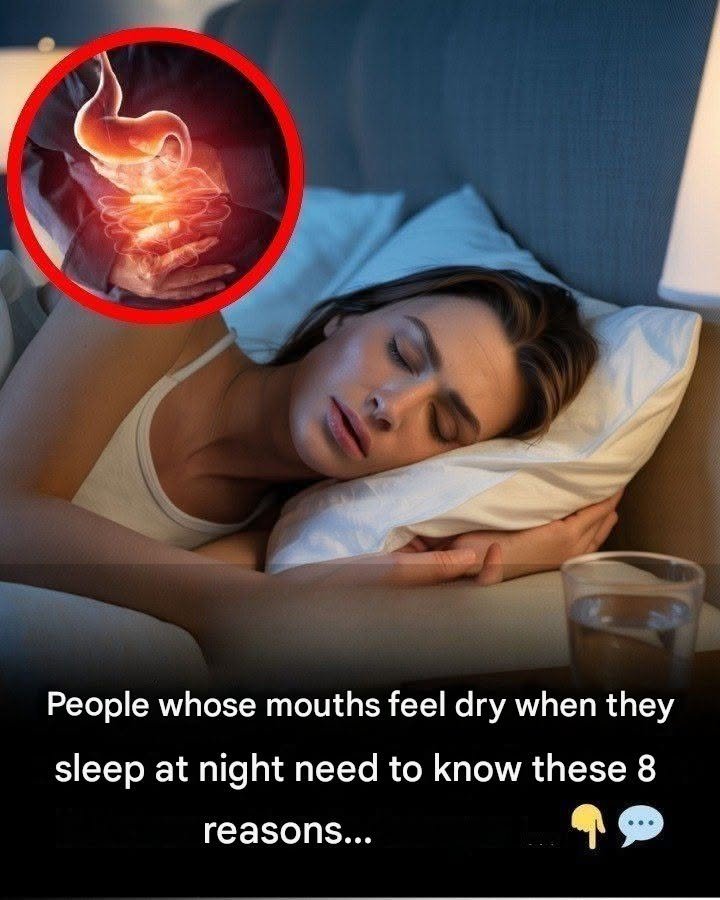
🌙 People Whose Mouths Feel Dry When They Sleep at Night Need to Know These 8 Reasons
Waking up with a dry, sticky mouth is common, especially if it happens occasionally. But if you regularly wake up desperately thirsty, have a dry tongue, bad breath, or difficulty swallowing, it is worth looking at the possible cause.
Here are 8 common reasons nighttime dry mouth can happen.
1. 👄 Breathing Through Your Mouth
One of the most common reasons is simply sleeping with your mouth open.
This can happen because of:
- A blocked nose
- Allergies
- A deviated nasal septum
- Nasal congestion
- Snoring
- Sleep apnea
Air continually passing through the mouth can dry the tissues overnight.
What may help
Treating nasal congestion and using a humidifier may help some people. If you snore heavily or wake up gasping, talk to a healthcare professional about possible sleep apnea.
2. 💊 Medications
Dry mouth is a side effect of many medications.
Examples include some medicines used for:
- Allergies
- Depression
- Anxiety
- High blood pressure
- Pain
- Asthma
- Urinary problems
If your dry mouth began after starting or changing a medication, ask your doctor or pharmacist whether it could be contributing.
Don’t stop a prescribed medication on your own.
3. 💧 Dehydration
Not drinking enough fluids during the day, sweating heavily, vomiting, diarrhea, or consuming a lot of caffeine or alcohol can contribute to dehydration.
You may notice:
- Strong thirst
- Darker urine
- Dry lips
- Headache
- Dry mouth
Try maintaining normal hydration throughout the day rather than drinking a huge amount immediately before bed.
4. 😴 Snoring and Sleep Apnea
Loud snoring can be associated with mouth breathing and nighttime dryness.
More importantly, obstructive sleep apnea can cause repeated interruptions in breathing during sleep.
Possible warning signs include:
- Loud habitual snoring
- Gasping or choking during sleep
- Morning headaches
- Excessive daytime sleepiness
- Difficulty concentrating
- Someone noticing that you stop breathing during sleep
If these symptoms sound familiar, discuss them with a healthcare professional.
5. 🩸 High Blood Sugar
Persistent dry mouth can sometimes occur with high blood glucose.
If you’re also experiencing:
- Excessive thirst
- Frequent urination
- Unexplained weight loss
- Increased hunger
- Fatigue
- Blurred vision
it’s worth discussing blood-sugar testing with a healthcare professional.
Dry mouth alone does not mean you have diabetes.
6. 🚬 Smoking or Tobacco Use
Smoking can contribute to dry mouth and can also increase the risk of gum disease and other oral-health problems.
Tobacco reducing alcohol and excessive caffeine, especially close use can make existing dryness and bad breath more noticeable.
Quitting tobacco is one of the best things you can do for your overall and oral health.
7. ☕ Alcohol and Caffeine
Alcohol can contribute to dehydration and can also worsen sleep quality.
Large amounts of caffeine may contribute to the sensation of dryness in some people, particularly when combined with inadequate fluid intake.
If your mouth is consistently dry at night, consider reducing alcohol and excessive caffeine, especially close to bedtime.
8. 🦷 Salivary Gland or Medical Problems
Sometimes persistent dry mouth—known medically as xerostomia—is related to reduced saliva production.
Possible causes include certain medical conditions, radiation treatment involving the head and neck, autoimmune diseases, and problems affecting the salivary glands.
Persistent dryness can increase the risk of:
- Tooth decay
- Gum disease
- Mouth sores
- Difficulty swallowing
- Oral infections
- Bad breath
A dentist or doctor can help determine the underlying cause.
🌙 What Can You Do Tonight?
Try these simple measures:
💧 Stay normally hydrated
Drink adequate fluids throughout the day.
👃 Keep your nose clear
If allergies or congestion are causing mouth breathing, address the underlying problem.
🪥 Protect your teeth
Brush twice daily with fluoride toothpaste and maintain regular dental care.
🍬 Stimulate saliva
Sugar-free gum or sugar-free lozenges can stimulate saliva during waking hours. Products containing xylitol may also help reduce cavity risk.
🌡️ Consider bedroom humidity
If your bedroom air is very dry, a clean, properly maintained humidifier may make you more comfortable.
🚨 When Should You See a Doctor or But persistent symptoms can sometimes point to sleep apnea, high blood sugar, salivary-gland problems, or another Dentist?
Don’t ignore dry mouth if it is persistent, severe, or getting worse, especially if you have:
- Difficulty swallowing or speaking
- Frequent cavities
- Mouth sores
- Burning or painful mouth
- White patches
- Significant thirst or frequent urination
- Loud snoring or nighttime gasping
- Symptoms that began after starting a medication
Bottom Line
Nighttime dry mouth is often caused by something relatively simple—mouth breathing, dehydration, medications, snoring, or a dry environment. But persistent symptoms can sometimes point to sleep apnea, high blood sugar, salivary-gland problems, or another medical issue.
Don’t simply drink more water and ignore it if the problem happens every night. Finding the underlying cause is the best way to get lasting relief.