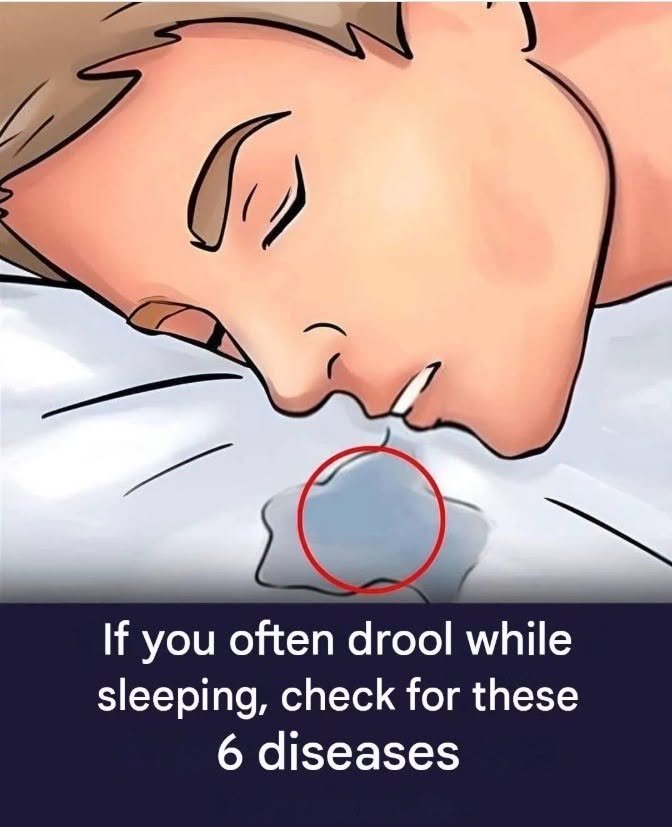
😴 Nighttime Revelation: Why Does Your Mouth “Run” While You Sleep?
If you wake up with a wet pillow or notice that saliva escapes from your mouth during sleep, you’re experiencing nighttime drooling (sialorrhea). It is common and usually harmless.
Drooling happens when saliva production exceeds your ability to swallow it while asleep, or when your sleeping position allows saliva to escape through your lips.
1. 🛏️ Your Sleeping Position
Sleeping on your side or stomach can make saliva more likely to flow out of your mouth because gravity works against you.
Sleeping on your back may reduce drooling for some people, although it isn’t practical—or comfortable—for everyone.
2. 👃 A Blocked Nose
When your nose is congested, you may naturally start breathing through your mouth.
Possible causes include:
- Colds
- Allergies
- Sinus congestion
- Nasal polyps
- A deviated septum
Mouth breathing makes it easier for saliva to escape while you’re asleep.
3. 😮💨 Snoring or Sleep Apnea
Snoring and obstructive sleep apnea can cause mouth breathing and nighttime drooling.
Watch after starting a new medication for other symptoms such as:
- Loud, persistent snoring
- Gasping or choking during sleep
- Pauses in breathing noticed by a partner
- Morning headaches
- Excessive daytime sleepiness
If these occur regularly, talk with a healthcare professional. Sleep apnea is treatable and shouldn’t be ignored.
4. 💊 Certain Medications
Some medications can increase saliva production or affect swallowing.
If drooling began soon after starting a new medication, check with your doctor or pharmacist.
Don’t stop a prescribed medication on your own.
5. 🧠 Difficulty Swallowing or Neurological Conditions
Occasional drooling is usually not concerning.
However, new or persistent excessive drooling accompanied by difficulty swallowing, speech changes, facial weakness, tremors, or muscle weakness should be evaluated.
Certain neurological conditions can interfere with the muscles involved in swallowing and controlling saliva.
6. 🦷 Dental or Oral Problems
Mouth irritation, dental problems, or inflammation can sometimes alter saliva production or swallowing.
Good oral hygiene and regular dental care can help identify these problems.
🌙 Is Drooling While Sleeping Normal?
For many people, yes.
A little drooling occasionally—especially when you’re deeply asleep, congested, or sleeping on your side—is generally nothing to worry about.
It becomes more worth investigating when it is new, excessive, persistent, or accompanied by other symptoms.
🚨 When to Seek Medical Attention
Get urgent medical help if drooling begins suddenly along with:
- Facial drooping
- Difficulty speaking
- New weakness or numbness
- Severe difficulty swallowing
- Trouble breathing
- Sudden confusion
These can indicate a serious neurological or airway problem.
⭐ Simple Things You Can Try
If nighttime drooling is bothering you:
- Treat nasal congestion appropriately.
- Try sleeping on your back if comfortable.
- Keep your bedroom free of known allergens.
- Review new medications with your pharmacist.
- Maintain good oral hygiene.
- If you snore heavily or feel extremely sleepy during the day, ask about evaluation for sleep apnea.
Bottom Line
Drooling during sleep is usually caused by sleeping position, mouth breathing, nasal congestion, or simply reduced swallowing while you’re asleep. It doesn’t automatically mean something is wrong.
But if excessive drooling is new or accompanied by swallowing, speech, breathing, or neurological changes, it’s worth getting checked rather than assuming it’s harmless.