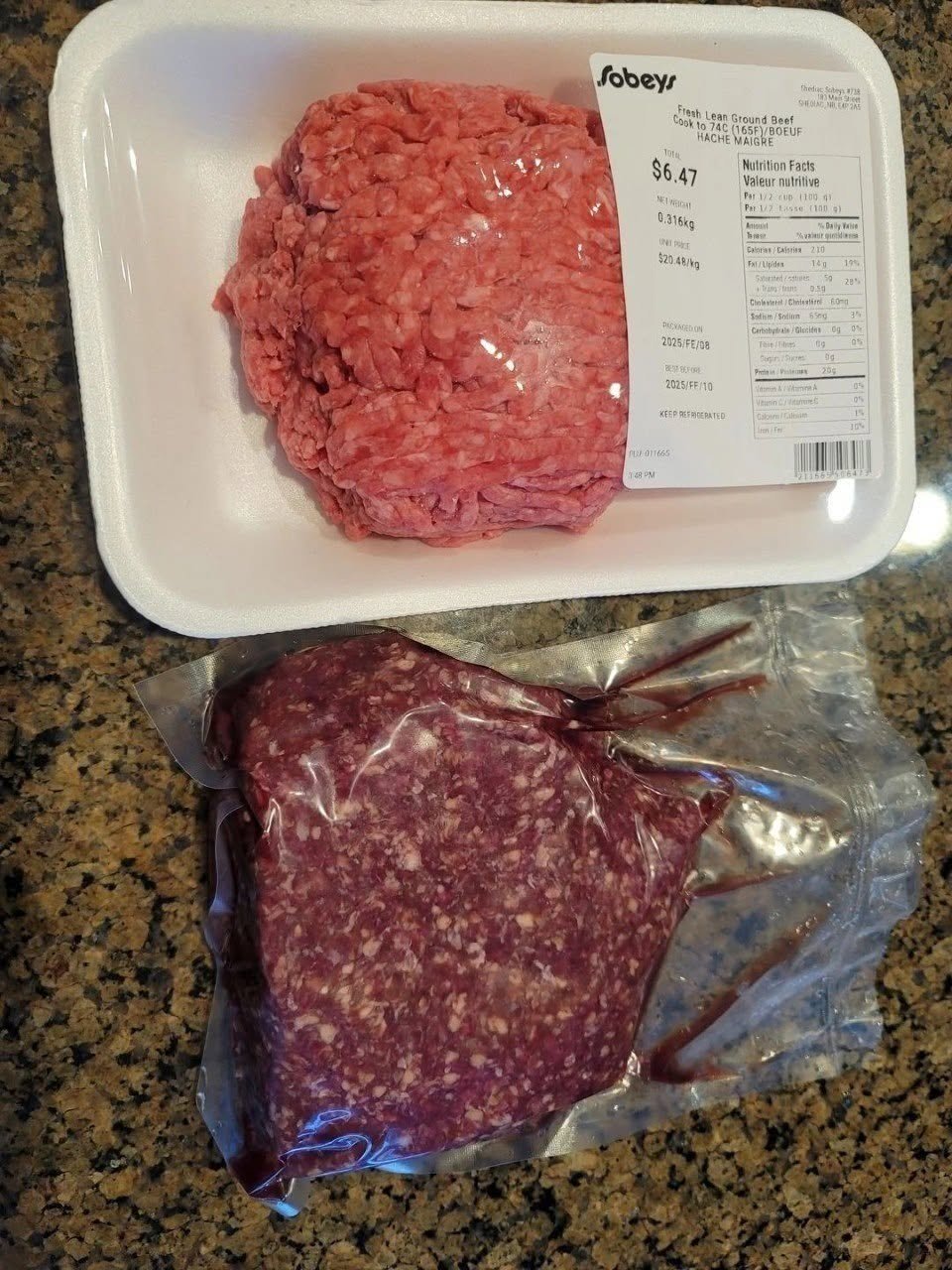
Don’t Get Fooled by the Supermarkets. The Truth About Where Your Beef Comes From.
When you pick up a package of beef at the supermarket, it can be easy to think you know what you’re buying. The package tells you the cut, the weight, the price, and perhaps a few words such as “grass-fed,” “natural,” or “USDA inspected.” But one important question often remains unanswered: Where did this beef actually come from, and how was the animal raised?
For generations, families often had a much closer relationship with the people who produced their food. Older adults may remember buying beef from a local butcher, knowing the farmer who raised the cattle, or purchasing meat from a nearby farm. You could ask questions about the animal’s diet, where it lived, and how it was handled.
Today, the journey from cattle ranch or farm to supermarket shelf can be considerably more complicated.
That does not automatically mean supermarket beef is bad. Large-scale beef production can provide affordability, consistency, food-safety controls, and year-round availability. But it does mean that shoppers may have less direct knowledge about the animal behind the package.
So Where Does Supermarket Beef Come From?
Most supermarket beef comes through a large, organized supply chain involving cattle producers, feedlots or other finishing operations, meatpacking facilities, processors, distributors, and retailers.
A calf may begin life on a ranch or farm, spending time on pasture. Depending on the production system, the animal may later move to another operation where its diet and environment change. Eventually, the animal is processed at a slaughter and packing facility before the beef is distributed to stores.
In other words, the beef sitting in your shopping cart may have traveled through several stages—and potentially several locations—before reaching the supermarket.
This system exists largely because it allows enormous quantities of beef to be produced and distributed efficiently. It also helps supermarkets offer shoppers familiar cuts at relatively predictable prices.
But efficiency can come with a trade-off: distance between the consumer and the producer.
The Label Doesn’t Always Tell the Whole Story
Words on beef packaging can be useful, but shoppers should understand exactly what they mean.
Terms such as “grass-fed,” “grass-finished,” “pasture-raised,” “organic,” and “natural” can describe different characteristics of production, and their precise meaning depends on the applicable labeling standards and certifications.
For example, cattle can spend part of their lives on pasture and later receive grain. That is different from cattle that remain on a forage-based diet through finishing.
This is why it is worth reading labels carefully rather than assuming that one attractive phrase tells you everything about the animal.
If the production method matters to you, look for specific information about the animal’s diet, certification, country or region of origin, and producer.
What About Farm-Raised Beef?
Buying directly from a local farmer can give you something that a supermarket label often cannot: a conversation.
You can ask the farmer:
-
Where were the cattle raised?
-
What did they eat?
-
Did they spend time on pasture?
-
Were they grain-finished?
-
Where was the animal processed?
-
How long has the beef been aged?
-
Is the beef sold fresh or frozen?
-
What practices does the farm use to care for its cattle?
The answers can help you understand exactly what you are purchasing.
For many people, that transparency is just as valuable as the meat itself.
Does Farm-Raised Beef Taste Better?
This is where personal preference matters.
Some people prefer the flavor of beef from cattle raised on pasture or produced by smaller farms. They may describe it as richer, more distinctive, or more reminiscent of the beef they remember eating years ago.
Other shoppers prefer supermarket beef because its flavor, tenderness, and appearance are more predictable.
The final eating experience can depend on many factors, including the cattle’s genetics, diet, age, marbling, handling, processing, aging, storage, and cooking method.
So it would be misleading to say that every farm-raised steak is automatically better than every supermarket steak.
What is true is that production methods can differ—and those differences can affect the characteristics of the beef you eventually eat.
Why Supermarket Beef Can Be So Consistent
Large beef operations are designed around consistency.
Cattle are managed using established production systems, and beef is processed and distributed according to standardized procedures. This makes it possible for a shopper to walk into a supermarket and find similar cuts and grades of beef throughout the year.
For families on a budget, this consistency can be important.
Supermarket beef can also be convenient. You don’t need to arrange a bulk purchase, find a local farmer, or dedicate freezer space to a large order. You can simply buy the amount you need for tonight’s dinner.
That convenience is a genuine advantage.
The Hidden Difference May Be Transparency
The biggest difference isn’t necessarily that one type of beef is “good” and the other is “bad.”
It may be how much you know about what you’re buying.
When you purchase directly from a farmer, you may be able to learn about the cattle, the farm, the feeding program, and the processing facility.
When you purchase a package at a supermarket, you typically have less opportunity to ask those questions directly.
For consumers who care deeply about animal husbandry, farming practices, local agriculture, or food sourcing, that distinction can matter.
Is Farm-Raised Beef Worth the Extra Cost?
Sometimes—but it depends on your priorities.
Local beef can cost more because smaller producers may have higher per-animal expenses and less purchasing and distribution power than large commercial operations.
However, buying directly from a farm can sometimes provide better value when purchasing larger quantities, particularly if you have enough freezer space and regularly eat beef.
Instead of comparing only the price of one steak with another, consider the entire package:
What are you getting for the money?
You may be paying for a particular feeding program, local production, direct farmer relationship, processing method, or simply a flavor you prefer.
How to Make a Smarter Beef Purchase
You don’t have to stop shopping at supermarkets to become a more informed beef buyer.
Start by asking better questions.
Look beyond the front of the package. Read the labeling information. Learn what production claims mean. Pay attention to the beef’s grade and cut. If buying locally, speak directly with the farmer and ask about feeding, pasture access, processing, and storage.
And don’t assume that a higher price automatically means higher quality.
Instead, decide what matters most to you.
If your priorities are price and convenience, supermarket beef may make perfect sense.
If your priorities are local sourcing, transparency, supporting farmers, and knowing more about how cattle were raised, farm-direct beef may be worth considering.
If flavor and tenderness are your main concerns, try both and make your own comparison.
The Bottom Line
The supermarket isn’t necessarily hiding something sinister from you. The bigger issue is that modern food production can make it difficult for consumers to see the entire journey between the farm and their dinner table.
Your beef may have started on a ranch, spent part of its life on pasture, moved to another operation, been finished on a different diet, processed at a large facility, shipped through a distribution network, and finally placed in your local supermarket.
That’s the reality of a large-scale food system.
If you want to know more, ask questions, read labels, and learn where your food comes from.
And if you have access to a trustworthy local farmer, don’t be afraid to start a conversation.