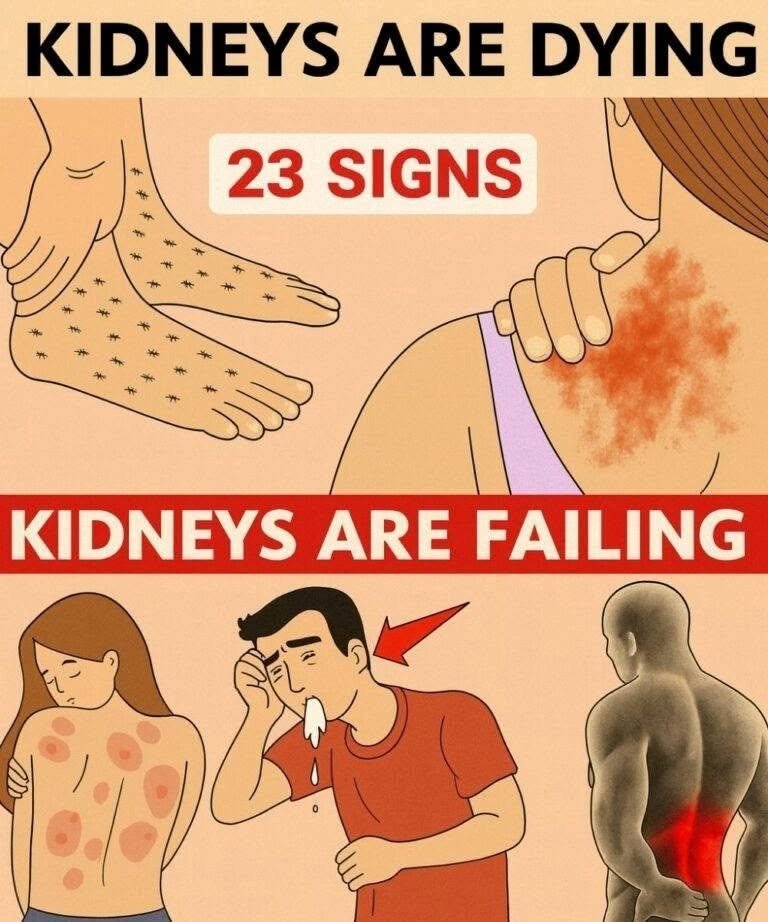
23 Strange Signs Your Kidneys Might Be in Trouble
Your kidneys filter waste and excess fluid from your blood, help regulate blood pressure and electrolytes, and contribute to red-blood-cell production and bone health. The tricky part is that kidney disease can develop with few or no symptoms in its early stages. Many noticeable symptoms appear only after kidney function has declined.
Here are 23 signs that can sometimes point to a kidney problem.
1. Changes in How Often You Urinate
Needing to urinate much more or much less than usual can sometimes indicate a kidney or urinary-tract problem.
Frequent nighttime urination can also occur with kidney disease, although diabetes, an enlarged prostate, medications, and other conditions are common causes.
2. Foamy or Frothy Urine
Persistent, unusually foamy urine can be a sign that protein is leaking into the urine.
Occasional bubbles aren’t necessarily concerning—urine can become bubbly simply from the force of urination or concentrated urine. Persistent foam, particularly when accompanied by swelling, deserves evaluation.
3. Blood in the Urine
Pink, red, or cola-colored urine can indicate blood or other substances in the urine.
Blood in the urine has many possible causes, including kidney stones, urinary infections, medications, and cancers—not just kidney disease. Visible blood should be medically evaluated.
4. Swelling Around the Eyes
Puffiness around the eyes, especially in the morning, can occur when the kidneys aren’t properly eliminating excess fluid or when protein is being lost through the urine.
Allergies, lack of sleep, and other conditions can produce similar swelling.
5. Swollen Ankles or Feet
Kidney dysfunction can cause fluid retention, leading to swelling in the feet, ankles, or legs.
Heart and liver problems, certain medications, and prolonged sitting can cause swelling too.
6. Unexplained High Blood Pressure
The kidneys play an important role in regulating blood pressure.
Kidney disease can contribute to high blood pressure, while long-standing high blood pressure can itself damage the kidneys.
The two conditions can therefore reinforce each other.
7. Persistent Fatigue
Feeling unusually tired can occur with advanced kidney disease.
One reason is anemia, because damaged kidneys may produce less erythropoietin, a hormone involved in making red blood cells.
Fatigue is extremely nonspecific, however, and has many other possible causes.
8. Difficulty Concentrating
Some people with significant kidney dysfunction experience difficulty concentrating, reduced alertness, or “brain fog.”
This can occur when waste products accumulate in the bloodstream or when anemia and other metabolic disturbances develop.
9. Nausea
Advanced kidney disease can cause nausea, reduced appetite, or an unpleasant taste in the mouth.
Sudden or persistent nausea has many possible causes and shouldn’t automatically be attributed to the kidneys.
10. Loss of Appetite
A declining appetite can occur as kidney disease becomes more advanced.
If you’re consistently eating less without intending to, especially alongside weight loss or other symptoms, it’s worth discussing with a healthcare professional.
11. Unexplained Weight Loss
Unintentional weight loss can occur with advanced kidney disease but is not a specific kidney symptom.
Because unexplained weight loss can have many important causes, it should be investigated rather than attributed to kidney problems without testing.
12. Itchy Skin
Persistent itching can occur in people with advanced chronic kidney disease, particularly when mineral and waste-product levels become abnormal.
Dry skin, allergies, medications, liver disease, and several other conditions can also cause itching.
13. Dry Skin
Kidney disease can be associated with dry or irritated skin, particularly in later stages.
However, ordinary dry skin is much more commonly caused by environmental conditions, frequent bathing, soaps, or insufficient skin moisturization.
14. Muscle Cramps
Kidneys help regulate electrolytes such as calcium, potassium, and phosphorus.
Significant kidney dysfunction can disturb these balances and contribute to muscle cramps or weakness.
Most occasional leg cramps, however, are not caused by kidney disease.
15. Muscle Weakness
Electrolyte abnormalities and the accumulation of waste products can contribute to weakness in advanced kidney disease.
Sudden or severe weakness requires prompt assessment because it can have many potentially serious causes.
16. Metallic Taste in the Mouth
Some people with advanced kidney disease develop a metallic or unusual taste.
Waste-product accumulation can also affect taste and appetite, sometimes making food less appealing.
17. Bad Breath
A persistent ammonia-like or unusually unpleasant breath odor can occur with advanced kidney failure because waste products can accumulate in the blood and saliva.
This is not a reliable early sign of kidney disease, and dental and gastrointestinal causes are much more common.
18. Shortness of Breath
Kidney disease can contribute to shortness of breath in several ways.
Fluid accumulation can affect the lungs, while kidney-related anemia can reduce the blood’s oxygen-carrying capacity.
Shortness of breath can also indicate heart or lung disease and should not automatically be blamed on the kidneys.
19. Trouble Sleeping
People with chronic kidney disease may experience disrupted sleep, restless legs, itching, muscle cramps, or sleep apnea.
Poor sleep by itself, however, is not evidence of kidney disease.
20. Restless Legs
Restless-leg symptoms occur more frequently in people with chronic kidney disease.
The sensation may involve an uncomfortable urge to move the legs, particularly when resting or trying to sleep.
Iron deficiency and other neurological or metabolic conditions can also cause similar symptoms.
21. Puffy or Rapidly Changing Weight
Rapid weight gain over a short period can sometimes represent fluid accumulation rather than increased body fat.
This can occur with kidney, heart, or liver problems and should be evaluated if accompanied by significant swelling or breathing difficulties.
22. Persistent Back or Side Pain
Kidney stones or infections can cause pain in the side or back, often below the ribs.
However, ordinary chronic lower-back pain is usually not a sign of kidney disease. Kidney problems don’t typically cause persistent, nonspecific back pain.
Severe flank pain, fever, vomiting, or blood in the urine warrants medical evaluation.
23. Feeling Generally Unwell
Advanced kidney dysfunction can produce a collection of vague symptoms—fatigue, nausea, poor appetite, itching, weakness, sleep problems, and difficulty concentrating.
The combination can be more informative than any single symptom.
The Most Important Point: Symptoms Aren’t Enough
Many of these signs have much more common explanations unrelated to the kidneys.
And early chronic kidney disease frequently causes no obvious symptoms at all.
If you’re at increased risk because of diabetes, high blood pressure, cardiovascular disease, a family history of kidney disease, or previous kidney problems, routine testing can be much more useful than waiting for symptoms.
How Are Kidney Problems Detected?
A healthcare professional may use:
- Blood creatinine and estimated glomerular filtration rate (eGFR) to assess kidney filtration.
- Urine albumin-to-creatinine ratio (UACR) to look for protein leakage.
- A routine urinalysis to look for blood, protein, or other abnormalities.
- Blood-pressure measurements.
- Imaging such as ultrasound when appropriate.
These tests can identify kidney problems before obvious symptoms develop.
When to Seek Urgent Care
Get prompt medical attention if you develop very little or no urine, severe flank pain, blood in the urine, significant swelling, severe vomiting, confusion, chest pain, or difficulty breathing.
These symptoms can have several causes, some of which require urgent treatment.
Bottom Line
There isn’t one “strange sign” that proves your kidneys are in trouble. Persistent foamy urine, blood in the urine, unexplained swelling, changes in urination, persistent itching, or a combination of fatigue and other systemic symptoms can justify getting checked.
Most importantly, don’t wait for symptoms if you have major kidney-disease risk factors. Simple blood and urine tests can detect kidney problems much earlier than symptoms often do.