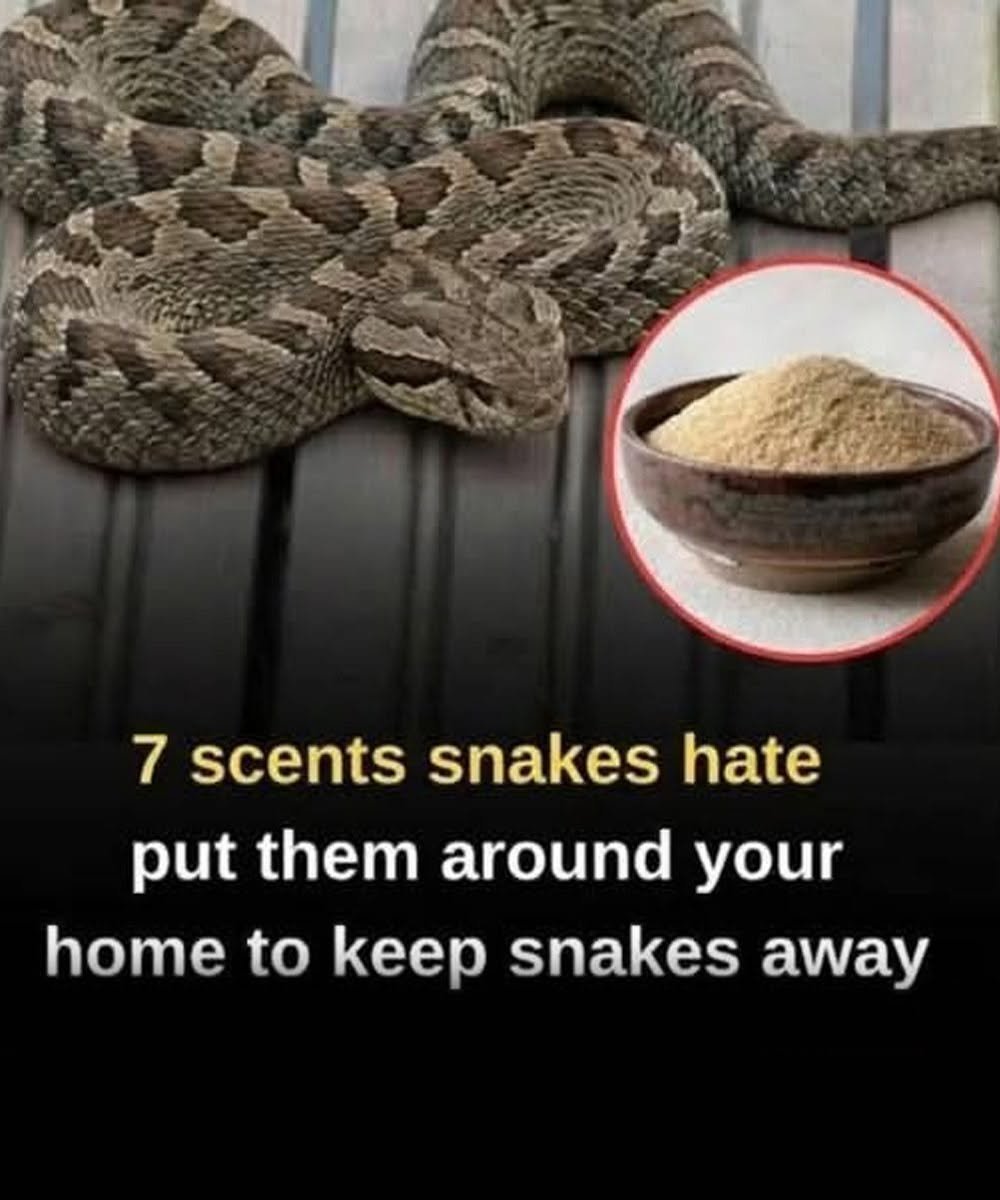
🐍 7 Smells Snakes Are Said to Dislike—and Better Ways to Keep Them Away
You may have heard that certain strong smells can keep snakes away from your home. Some scents may temporarily discourage snakes, but there is no household smell proven to create a reliable long-term snake barrier.
The most effective strategy is to make your property less attractive to snakes by removing food, shelter, and access points.
1. 🌿 Garlic
Garlic around areas where snakes might enter, although its effect is likely to be temporary and it has a strong odor that many people use as a natural snake deterrent.
How to use it
Crushed garlic can be placed around areas where snakes might enter, although its effect is likely to be temporary and it will need frequent replacement.
Don’t place large amounts directly against doors, vents, or other areas where pets could ingest it.
2. 🧅 Onions
Onions contain strong sulfur-containing compounds that produce a noticeable odor.
Some DIY methods suggest scattering chopped onions around outdoor areas.
The reality
There isn’t strong evidence that onions reliably keep snakes away, particularly outdoors where rain and wind quickly reduce the smell.
3. 🌿 Cinnamon and Clove
These spices have strong aromas and are sometimes included in homemade snake-repellent mixtures.
You can place small amounts around potential entry areas, but consider them temporary deterrents rather than a guaranteed solution.
4. 🌱 Lemongrass
Lemongrass has a strong citrus-like scent and is sometimes recommended for snake-prone gardens.
Instead of relying on the smell alone, planting attractive landscaping strategically can be combined with good yard maintenance.
5. 🍋 Citrus Scents
Lemon and other citrus aromas are often mentioned as snake repellents.
You can use citrus peels around outdoor areas, but they lose their odor relatively quickly.
Don’t spray concentrated citrus oils directly on animals or plants without checking that they’re safe.
6. 🌿 Mint
Mint has a strong scent and is frequently included in natural pest-control suggestions.
Growing mint around a property can make a garden pleasant for people, but don’t count on it as a snake-proof barrier.
7. 🧴 Commercial Snake Repellents
Some commercially available products contain strong-smelling substances marketed specifically for snake deterrence.
If you use one, choose a product registered or approved for your area, and follow its label exactly—especially if children, pets, livestock, or wildlife are nearby.
🏡 The Best Way to Keep Snakes Away
Rather than concentrating on smells, focus on the things that actually attract snakes.
1. 🐭 Control Rodents
Snakes may enter yards because mice and rats provide an easy food source.
Keep:
- Garbage securely covered
- Birdseed contained
- Pet food stored indoors
- Food spills cleaned up
Reducing rodents can make your property much less attractive to snakes.
2. 🌾 Remove Hiding Places
Keep grass and vegetation trimmed.
Clear away:
- Wood piles
- Building materials
- Rock piles
- Thick brush
- Unused containers
- Accumulated debris
These provide places for snakes and their prey to hide.
3. 🚪 Seal Entry Points
Inspect the exterior of your home for gaps around:
- Doors
- Windows
- Pipes
- Utility lines
- Foundations
- Vents
Seal appropriate openings with durable materials.
A snake can fit through a surprisingly small gap, so physical exclusion is much more dependable than scent-based repellents.
⚠️ What NOT to Use
Avoid internet remedies involving dangerous chemicals, poisons, or substances that could harm pets, children, or wildlife.
Also don’t attempt to handle an unidentified snake yourself.
If you encounter a snake inside your home, keep your distance, isolate the area if possible, and contact a qualified local wildlife or snake-removal service.
🐍 Bottom Line
Garlic, onions, cinnamon, cloves, lemongrass, citrus, and mint are commonly promoted as snake-repelling smells, but none should be considered a guaranteed snake deterrent.
For lasting protection, the winning combination is:
Remove rodents + eliminate hiding places + maintain the yard + seal openings.
That approach addresses why snakes come to your property in the first place, rather than simply trying to overwhelm them with a smell.