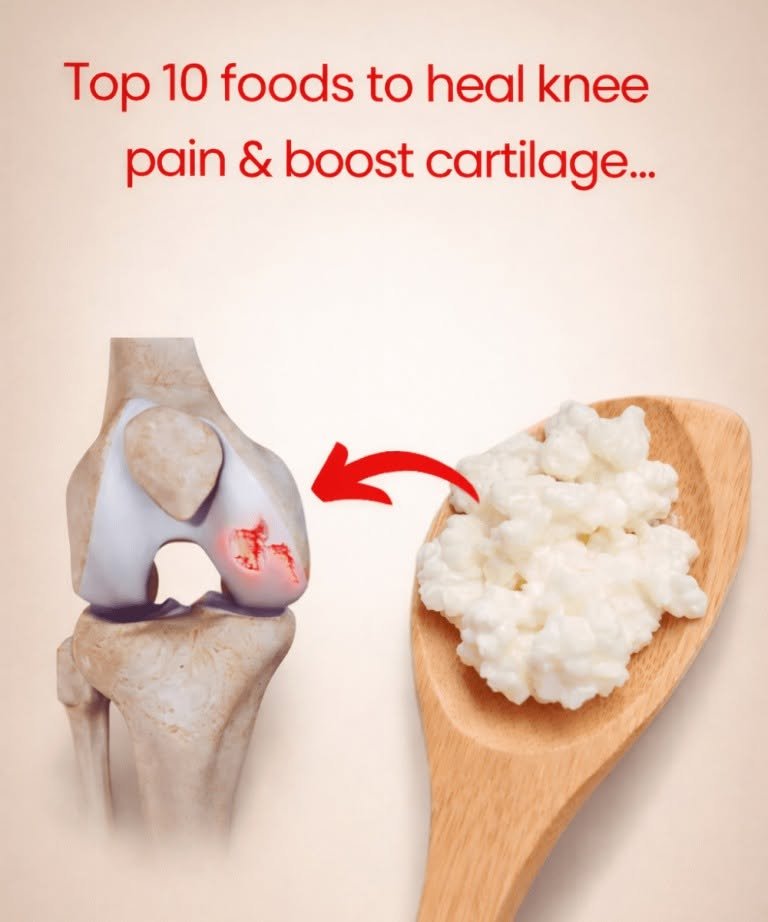
Top 10 Foods That May Help Knee Pain and Support Healthy Cartilage
There is no food that can “heal” worn-out cartilage or reverse arthritis by itself. However, a nutritious, anti-inflammatory eating pattern can support joint health, help maintain a healthy weight, and provide nutrients needed for bones, muscles, and connective tissues.
🥇 1. Fatty Fish
Salmon, sardines, mackerel, and trout are rich in omega-3 fatty acids.
Omega-3s have anti-inflammatory properties and may be helpful as part of an overall diet for people with inflammatory joint conditions.
Try: grilled salmon or sardines 2–3 times a week.
🥈 2. Extra-Virgin Olive Oil
Olive oil contains monounsaturated fats and plant compounds with anti-inflammatory properties.
Use it instead of butter or other sources of saturated fat when practical.
Try: drizzling it over vegetables, salads, or beans.
🥦 3. Broccoli and Other Cruciferous Vegetables
Broccoli, cabbage, cauliflower, and Brussels sprouts provide vitamin C, vitamin K, fiber, and various plant compounds.
They won’t rebuild cartilage overnight, but they’re excellent components of a joint-friendly diet.
🫐 4. Berries
Blueberries, strawberries, raspberries, and other berries provide polyphenols and vitamin C.
Vitamin C is important for collagen production, while plant compounds may help support a healthy inflammatory response.
Try: adding berries to oatmeal or plain yogurt.
🥜 5. Nuts and Seeds
Walnuts, almonds, chia seeds, and flaxseeds provide healthy fats, fiber, minerals, and—depending on the food—omega-3 fatty acids.
A small handful makes a convenient snack.
🫘 6. Beans and Lentils
Beans, chickpeas, and lentils provide:
- Protein
- Fiber
- Magnesium
- Plant-based nutrients
They can also help you feel full, which may make maintaining a healthy body weight easier.
🍊 7. Citrus Fruits
Oranges, grapefruit, lemons, and other citrus fruits are excellent sources of vitamin C.
Vitamin C is required for normal collagen formation, including the collagen found in connective tissues.
🥬 8. Dark Leafy Greens
Spinach, kale, collard greens, and similar vegetables provide vitamin K, vitamin C, folate, and other nutrients.
They’re particularly useful as part of a varied diet rather than as a single “arthritis cure.”
🥚 9. Eggs
Eggs provide high-quality protein and several micronutrients.
Adequate protein is important for maintaining the muscles around the knee. Stronger muscles can help support joint function and mobility.
🥛 10. Yogurt and Other Calcium-Rich Foods
Healthy bones provide the structural support around your joints.
Yogurt, milk, and fortified alternatives can provide calcium and protein. Some products also provide vitamin D.
If you don’t consume dairy, calcium-fortified plant milks can be alternatives.
What About Bone Broth and Collagen?
Bone broth and collagen supplements are frequently promoted as “cartilage builders.”
There is some research into collagen-derived supplements and joint symptoms, but the evidence does not mean that drinking bone broth will rebuild damaged knee cartilage.
Think of these as optional foods/supplements—not replacements for proven arthritis management.
The Most Important “Food” Factor May Be Your Overall Diet
If excess body weight is contributing to knee osteoarthritis, even modest weight loss can reduce the mechanical load on the knees and may improve pain and function.
A Mediterranean-style eating pattern is a useful model:
Vegetables + fruit + whole grains + beans + nuts + fish + olive oil
while limiting highly processed foods, excessive added sugar, and large amounts of saturated fat.
Foods to Limit
There isn’t a universal “arthritis forbidden foods” list, but consider reducing:
- Sugary drinks
- Highly processed snacks
- Excess refined carbohydrates
- Large amounts of processed meat
- Foods very high in saturated fat
- Excess alcohol
For gout, the dietary advice is different, particularly regarding purine-rich foods and alcohol, so the type of arthritis matters.
Don’t Forget Exercise
Food alone isn’t enough to protect a painful knee.
For knee osteoarthritis, strengthening exercises, appropriate aerobic activity, and maintaining mobility can be extremely important. Physical therapy can be useful when pain or movement limitations make exercise difficult.
Bottom line
The best “cartilage-supporting” diet isn’t a miracle food. It’s a nutrient-rich overall eating pattern that provides adequate protein, vitamins, minerals, healthy fats, and fiber while helping you maintain a healthy weight.
And if your knee is severely swollen, hot/red, suddenly very painful, locked, or you can’t put weight on it, get medical evaluation rather than trying to treat it with food alone.