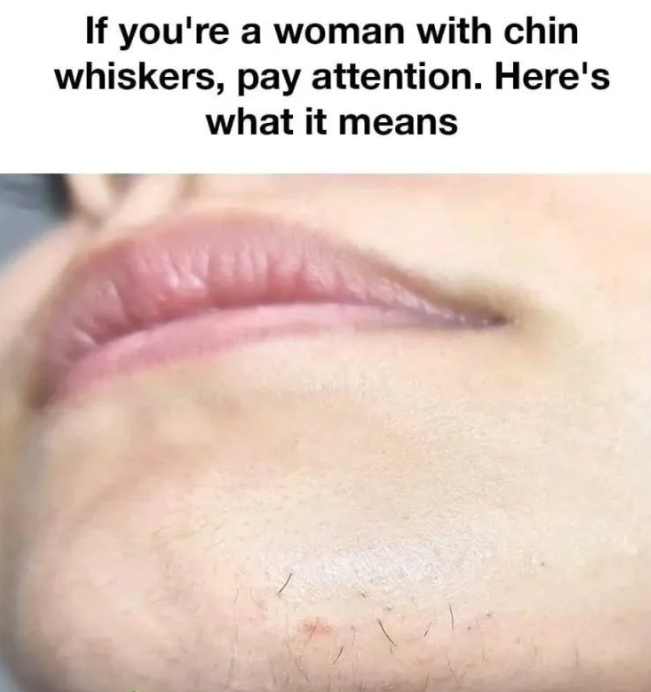
Facial hair—even something as small as chin whiskers—can actually provide clues about your overall health or hormonal balance. Here’s what it could be telling you:
1. Hormonal Imbalances
- Excess chin hair in women may indicate high levels of androgens (male hormones).
- Conditions linked to this include:
- Polycystic Ovary Syndrome (PCOS)
- Cushing’s syndrome
- Hormonal changes during menopause
What to do:
- If you notice sudden or excessive growth, consult a doctor or endocrinologist for hormone testing.
2. Thyroid Issues
- Hypothyroidism (low thyroid function) can sometimes cause coarse or unusual facial hair growth.
- May also be accompanied by dry skin, fatigue, or weight changes.
3. Aging and Menopause
- As women age, estrogen decreases, which can lead to more noticeable chin whiskers.
- This is a natural part of aging, but hair growth may accelerate in some individuals.
4. Genetics
- Family history plays a big role:
- If your mother or grandmother had similar facial hair patterns, it might simply be hereditary.
5. Lifestyle and Health Factors
- Stress and poor diet can affect hormone levels, indirectly causing chin hair growth.
- Insulin resistance (linked to obesity or metabolic syndrome) can also trigger excess facial hair.
When to See a Doctor
- Sudden or rapid growth in women.
- Accompanied by other symptoms like irregular periods, weight changes, or fatigue.
- If hair growth affects self-esteem or mental health, a dermatologist can suggest safe hair removal and treatment options.
💡 Bottom line: Chin whiskers aren’t just cosmetic—they can signal hormonal imbalances, thyroid issues, or metabolic changes. Paying attention to them can be an early clue to check your health.
I can make a “Chin Whiskers Health Clues Chart” showing possible causes and what to do for each, if you want a quick reference guide.
Do you want me to make that?
