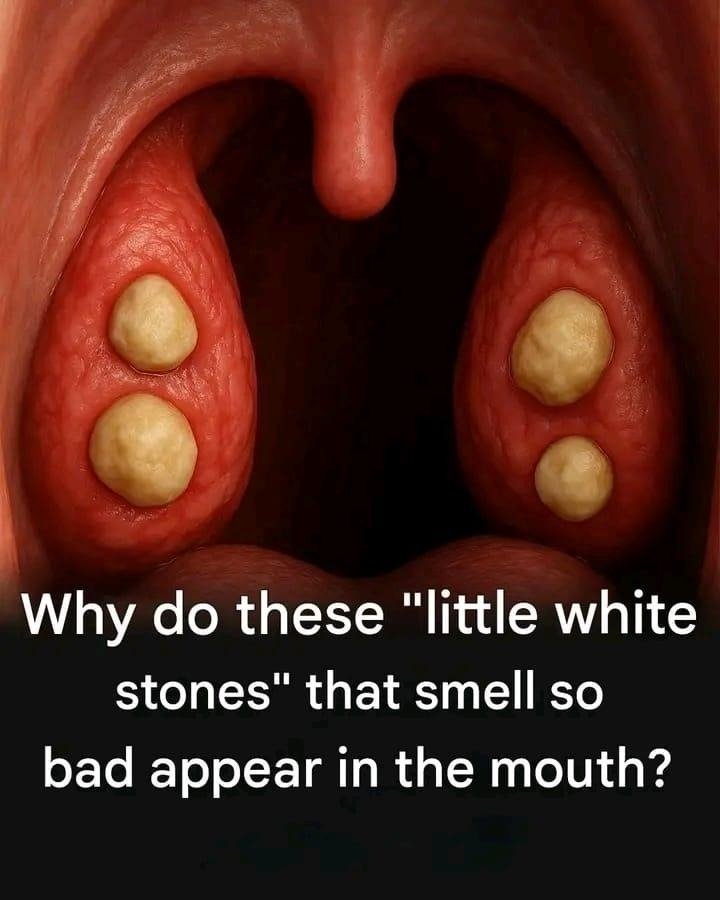
Ah! You’re talking about tonsil stones, also known as tonsilloliths. These are fairly common and can cause discomfort or bad breath. Here’s a detailed explanation:
What Are Tonsil Stones?
- Tonsil stones are small, hard formations that develop in the crevices of the tonsils (the back of your throat).
- They are usually white or yellowish, and vary in size from tiny specks to larger, noticeable lumps.
How They Form
- Trapped Debris: Food particles, dead cells, and bacteria can get trapped in the tonsillar crypts (tiny pockets in the tonsils).
- Calcification: Over time, the debris hardens into small stones.
- Bacterial Growth: Bacteria feed on the trapped material, releasing sulfur compounds that cause bad breath (halitosis).
Symptoms
- Bad breath is the most common sign.
- White or yellow lumps visible at the back of the throat.
- Sore throat or discomfort when swallowing.
- Feeling like something is stuck in the throat.
How to Remove or Manage Tonsil Stones
- Gargle with salt water daily to loosen stones.
- Use a cotton swab or oral irrigator carefully to remove small stones (avoid hurting the tonsils).
- Maintain good oral hygiene: brush teeth, tongue, and floss regularly.
- Stay hydrated to keep mouth and tonsils clean.
- Medical removal: For large or recurring stones, a doctor can remove them, or in extreme cases, tonsillectomy may be considered.
Prevention Tips
- Gargle regularly, especially after meals.
- Avoid smoking and reduce dairy if it seems to worsen stone formation.
- Treat chronic tonsillitis promptly.
💡 Bottom line: Those “white stones” are tonsil stones, caused by trapped debris in the tonsils. They’re usually harmless but can lead to bad breath, discomfort, and throat irritation. Good oral hygiene and salt-water gargles are usually enough to prevent or manage them.
If you want, I can make a “Quick Guide to Tonsil Stones” showing how to spot, remove, and prevent them safely at home.
Do you want me to make that?
