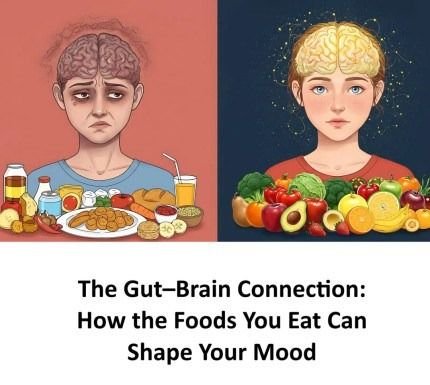
The foods you eat don’t just fuel your body—they also influence how you feel, think, and cope with stress. This connection between diet and emotional well-being is driven by biology, chemistry, and even the microbes living in your gut.
Here’s how food can shape your mood:
🧠 1. Food and Brain Chemistry
Your brain relies on nutrients to produce neurotransmitters like serotonin, dopamine, and GABA, which regulate mood, motivation, and calmness.
- Carbohydrates help increase serotonin, supporting feelings of relaxation and well-being.
- Protein-rich foods provide amino acids (like tryptophan and tyrosine) that are building blocks for mood-regulating chemicals.
- Omega-3 fatty acids (found in fatty fish, walnuts, flaxseeds) support brain cell function and are linked to lower rates of depression.
🍭 2. Blood Sugar and Emotional Stability
What you eat affects how stable your blood sugar is—and that matters for mood.
- Rapid spikes and crashes (from sugary or highly refined foods) can lead to irritability, anxiety, fatigue, and brain fog.
- Balanced meals with fiber, protein, and healthy fats help maintain steady energy and emotional balance.
🦠 3. Gut Health and Mood (The Gut–Brain Axis)
Your gut and brain are in constant communication.
- A healthy gut microbiome helps produce neurotransmitters—about 90% of serotonin is made in the gut.
- Foods like yogurt, kefir, kimchi, sauerkraut, beans, and whole grains nourish beneficial gut bacteria.
- Poor gut health has been associated with increased stress, low mood, and anxiety.
⚡ 4. Nutrient Deficiencies and Low Mood
Lack of key nutrients can subtly (or significantly) affect how you feel.
Common mood-related nutrients include:
- B vitamins (energy and stress regulation)
- Iron (fatigue and concentration)
- Magnesium (relaxation and sleep)
- Vitamin D (linked to mood regulation)
☕ 5. Caffeine, Alcohol, and Mood Swings
- Caffeine can boost alertness short-term but may worsen anxiety or disrupt sleep if overused.
- Alcohol is a depressant—it may feel relaxing at first but can lower mood and increase anxiety later.
Moderation is key.
🥗 6. Patterns Matter More Than Perfection
You don’t need a “perfect” diet to support good mental health.
Helpful habits include:
- Eating regularly (don’t skip meals)
- Prioritizing whole, minimally processed foods
- Staying hydrated
- Enjoying food without guilt—pleasure matters too
🌱 The Big Picture
Food won’t replace therapy, medication, or professional care when needed—but it can be a powerful foundation for emotional resilience. Small, consistent choices add up to better mood, clearer thinking, and steadier energy.
If you’d like, I can:
- Turn this into a short essay or blog post
- Create a mood-supportive meal plan
- Explain foods that help with stress, anxiety, or focus
- Simplify it for students or presentations
Just let me know!
