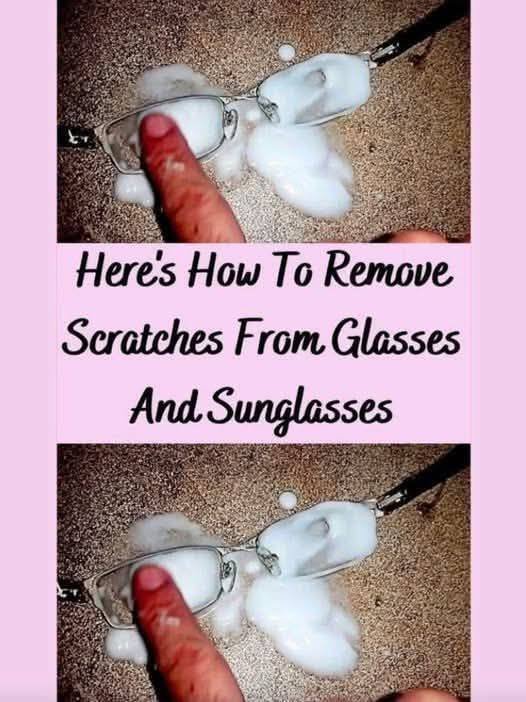
Here’s a safe and practical guide to remove or minimize scratches on glasses and sunglasses. The method depends on whether the lenses are plastic or glass and whether they have special coatings.
1. Toothpaste Method (Plastic Lenses Only)
- Use: Non-abrasive, plain white toothpaste (no gels or whitening).
- How to do it:
- Clean lenses with warm water and mild soap.
- Apply a small amount of toothpaste to the scratched area.
- Rub gently in circular motions for 10–20 seconds.
- Rinse with warm water and dry with a microfiber cloth.
- Tip: Repeat if scratches are light. Avoid on coated lenses, as it may damage coatings.
2. Baking Soda Paste (Plastic Lenses Only)
- Ingredients: 1 part water + 2 parts baking soda → make a thick paste.
- How to do it: Same as toothpaste method.
- Result: Can reduce minor scratches, but won’t remove deep ones.
3. Vehicle or Jewelry Polishing Compounds
- Use: For plastic or glass lenses without anti-reflective coatings.
- How to do it: Apply a tiny amount of compound, buff gently with a microfiber cloth.
4. Professional Repair Kits
- Available in optical stores or online.
- Include polishing solutions and pads for safe scratch removal.
- Best option for anti-reflective or coated lenses.
5. Prevention Tips
- Keep lenses in a hard case.
- Clean with a microfiber cloth, never paper towels or clothes with grit.
- Avoid leaving glasses lens-down on surfaces.
⚠️ Important Warnings
- Do not use abrasive powders or household cleaners like glass cleaner or bleach on coated lenses.
- Deep scratches may be impossible to fully remove—sometimes replacement lenses are safer.
💡 Bottom line: Minor scratches can often be polished out with toothpaste, baking soda, or professional kits, but coated or deep scratches may require replacement lenses for clarity and safety.
If you want, I can make a “Scratch Removal Cheat Sheet” showing best method for plastic vs. glass vs. coated lenses—super handy for keeping your glasses clear.
Do you want me to make that?
