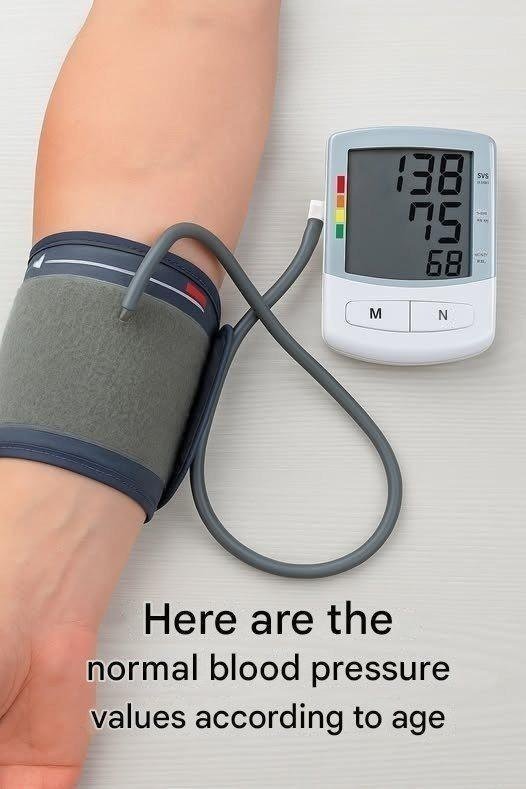
Here’s a clear guide to normal blood pressure values according to age, based on current clinical references (in mmHg):
1. Children and Adolescents
Blood pressure in children depends on age, sex, and height percentile, but approximate normal ranges are:
| Age (years) | Systolic (mmHg) | Diastolic (mmHg) |
|---|---|---|
| 1–3 | 85–105 | 35–65 |
| 4–5 | 90–110 | 55–70 |
| 6–9 | 95–115 | 60–75 |
| 10–12 | 100–120 | 60–75 |
| 13–15 | 105–125 | 65–80 |
| 16–18 | 110–130 | 65–85 |
Pediatric blood pressure is often interpreted using percentile charts, not just fixed numbers.
2. Adults (18 years and older)
For adults, the American Heart Association (AHA) defines normal blood pressure as:
| Category | Systolic (mmHg) | Diastolic (mmHg) |
|---|---|---|
| Normal | <120 | <80 |
| Elevated | 120–129 | <80 |
| Hypertension Stage 1 | 130–139 | 80–89 |
| Hypertension Stage 2 | ≥140 | ≥90 |
| Hypertensive Crisis* | >180 | >120 |
*Hypertensive crisis requires immediate medical attention.
3. Older Adults (60+)
- Traditionally, slightly higher systolic pressures (up to 140 mmHg) were considered acceptable in older adults, but modern guidelines often recommend <130/80 mmHg if tolerated.
- Diastolic should still be around 70–80 mmHg.
Key Notes
- Blood pressure varies naturally during the day, with stress, activity, and posture.
- Always measure at rest, seated, with back support, feet on the floor, and arm at heart level.
- Consistently high readings over time indicate hypertension; consistently low readings may indicate hypotension.
If you want, I can make a visual age-based blood pressure chart that’s super easy to read and remember. It would look like a mini infographic for children, adults, and seniors.
Do you want me to create that chart?
