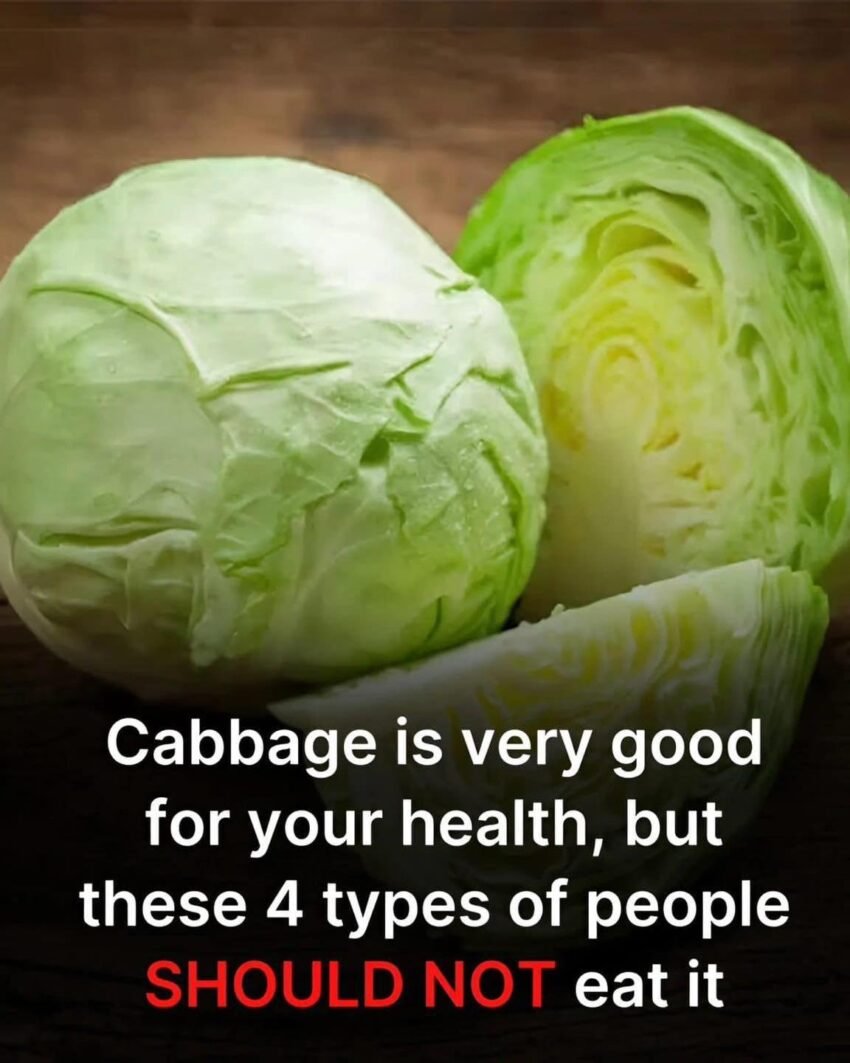
Here’s a clear, evidence-based look at cabbage and who should avoid or limit it. While cabbage is generally healthy, certain people may experience adverse effects due to its fiber, compounds, or effect on thyroid function.
Cabbage: Who Should Avoid or Limit It
1. People with Thyroid Problems (Hypothyroidism)
- Raw cabbage contains goitrogens, compounds that can interfere with iodine absorption
- Excessive consumption may worsen thyroid function
- Cooking cabbage reduces goitrogens, so moderate amounts are safer
2. People with Irritable Bowel Syndrome (IBS) or Digestive Sensitivity
- Cabbage is high in fiber and raffinose, a sugar that can cause gas, bloating, and discomfort
- Eating large amounts raw may trigger IBS flare-ups
3. People on Blood Thinners
- Cabbage is rich in vitamin K, which affects blood clotting
- Those taking warfarin (Coumadin) or similar medications should monitor intake and keep it consistent
4. People with Kidney Problems
- Cabbage contains oxalates, which can contribute to kidney stone formation in susceptible individuals
- Moderation is key if prone to kidney stones
✅ General Tips
- Cooked cabbage is easier to digest and safer for thyroid and IBS concerns
- Balance your intake—a little raw cabbage is fine for most people
- If you fall into one of the above categories, consult a doctor or dietitian for safe portions
If you want, I can make a quick table showing “Cabbage Benefits vs. Who Should Avoid”—super easy to read and share.
Do you want me to do that?
