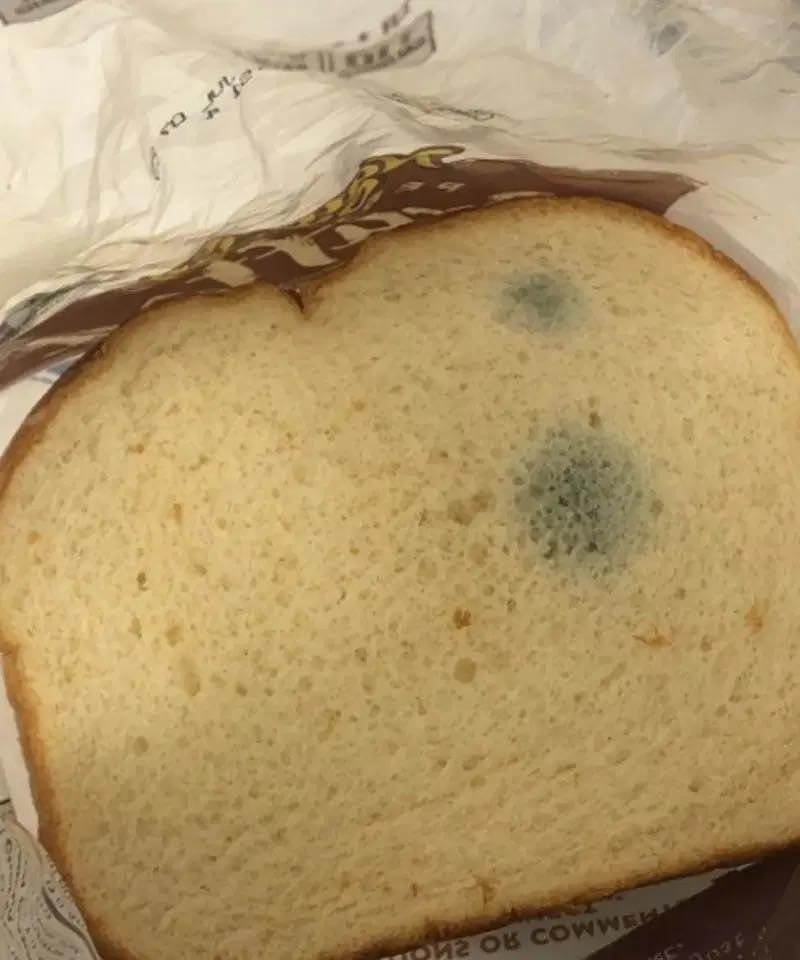
If you’re seeing greenish spots on bread, that is almost certainly mold — and you’re right to be cautious.
🍞 What It Is
Common bread molds include species like:
- Penicillium (often blue-green)
- Aspergillus (green, yellow, or black)
- Rhizopus (black/gray, fuzzy)
They can start as small green dots and quickly spread invisible “roots” (hyphae) deep into soft foods like bread.
⚠️ Is It Safe If You Cut It Off?
No. With soft foods such as bread:
- Mold roots spread beyond what you can see.
- Cutting off the visible spot does not remove the contamination.
- Some molds can produce mycotoxins, which may cause stomach upset or other health issues.
Food safety authorities recommend throwing away moldy bread completely.
👶 Especially Important for Kids
Children can be more sensitive to:
- Stomach irritation
- Allergic reactions
- Respiratory symptoms (if mold spores are inhaled)
If your instinct says don’t feed it to your kids — you’re right.
🗑️ What To Do
- Seal the bread in a bag before discarding (to avoid spreading spores).
- Check nearby bread or baked goods — mold spreads through airborne spores.
- Clean the bread box or storage area.
🧊 Prevention Tips
- Store bread in a cool, dry place.
- Refrigeration slows mold growth (though may dry bread).
- Freeze extra bread and thaw as needed.
✅ Bottom Line
Green spots on bread = mold.
It is not safe to eat, even if someone says “just cut it off.” When in doubt, throw it out.
If you’d like, you can describe the spots (color, fuzzy or flat, smell), and I can help confirm what you’re seeing.
