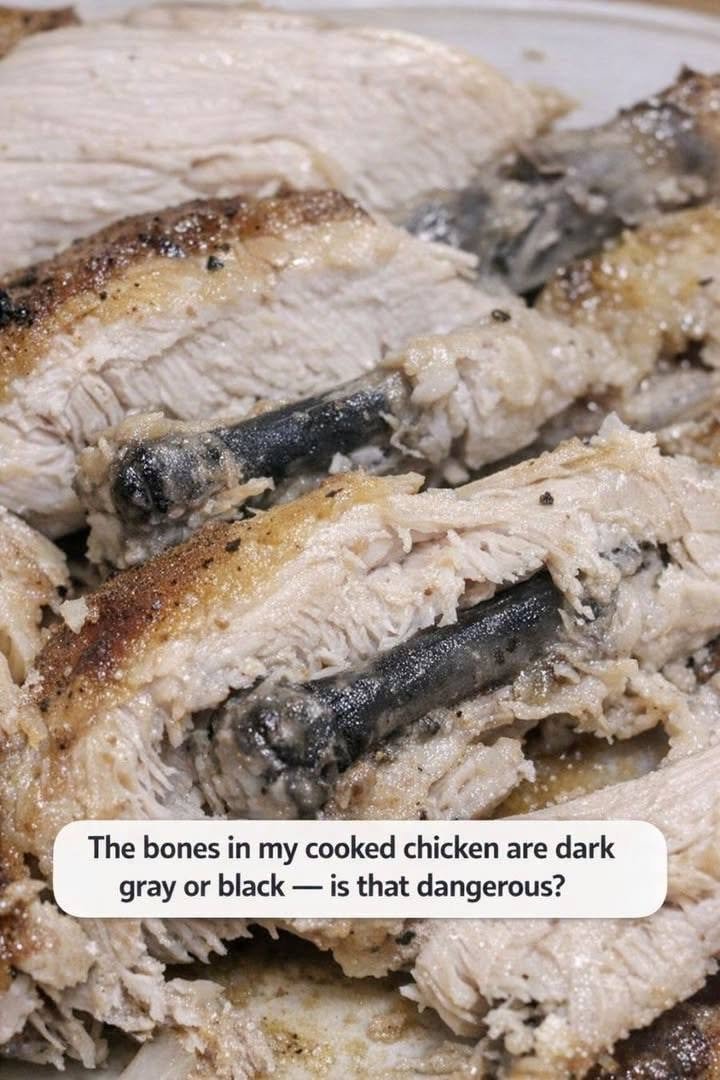
🍗 Dark Gray or Black Bones in Cooked Chicken — Is It Dangerous?
Seeing dark gray, purple, or even black-looking bones inside cooked chicken can be alarming, but the color alone does not necessarily mean the chicken is spoiled or dangerous.
In many cases, the discoloration comes from bone marrow or pigments moving through the bone during cooking, especially in young chickens.
🦴 Why Do Chicken Bones Turn Dark?
Young chickens have relatively porous bones. During cooking, bone marrow and blood pigments can move through the bone and into surrounding tissues.
This can make the bone appear:
- Dark gray
- Purple
- Brown
- Nearly black
The effect can be especially noticeable when chicken is cooked with the bone in.
Dark bones by themselves are not a reliable indicator of spoilage.
🍗 What About the Meat Around the Bone?
If the meat itself looks slightly pink or darker near the bone, that doesn’t automatically mean it’s undercooked either.
Color isn’t a reliable way to determine whether chicken is safely cooked.
The important measurement is internal temperature.
🌡️ Check the Temperature
Chicken should reach an internal temperature of 165°F (74°C).
Use a food thermometer in the thickest part of the meat, avoiding contact with the bone.
If the chicken reached the appropriate temperature and was handled and stored properly, dark bone coloration is generally not a reason to throw it away.
👃 When Should You Be Concerned?
Look at the whole chicken, not just the bone.
Be cautious if you notice:
- A strong rotten or sour odor
- Slimy or unusually sticky texture
- Unusual greenish discoloration of the meat
- Mold
- Packaging that is leaking or unusually swollen
- Chicken that was left unrefrigerated for too long
- Uncertainty about whether it was cooked thoroughly
If several of these signs are present, don’t taste the chicken to see whether it’s safe. When in doubt, discard it.
❄️ Proper Storage Matters
Even perfectly cooked chicken can become unsafe if it is improperly stored.
Refrigerate cooked chicken promptly rather than leaving it at room temperature for extended periods.
Keep your refrigerator at 40°F (4°C) or below, and use refrigerated leftovers within the recommended timeframe.
When reheating leftovers, heat them thoroughly rather than repeatedly warming and cooling the same food.
🚫 Don’t Judge Chicken Safety by Color Alone
A common mistake is assuming: “Pink = raw” or “black bone = spoiled.”
Neither rule is reliable.
Chicken can remain somewhat pink near the bone even after reaching a safe temperature, while spoiled chicken may not always have an obvious visual warning.
Temperature, storage, handling, smell, and texture together provide much better information.
🌟 The Bottom Line
Dark gray or black chicken bones are often harmless and can result from marrow and pigments released during cooking.
If the chicken was properly stored, smells normal, has no signs of spoilage, and reached 165°F (74°C) internally, the dark bone color alone generally isn’t a reason to consider it dangerous.
If you’re unsure whether the chicken was adequately cooked or safely stored, however, don’t take the risk—discard it.