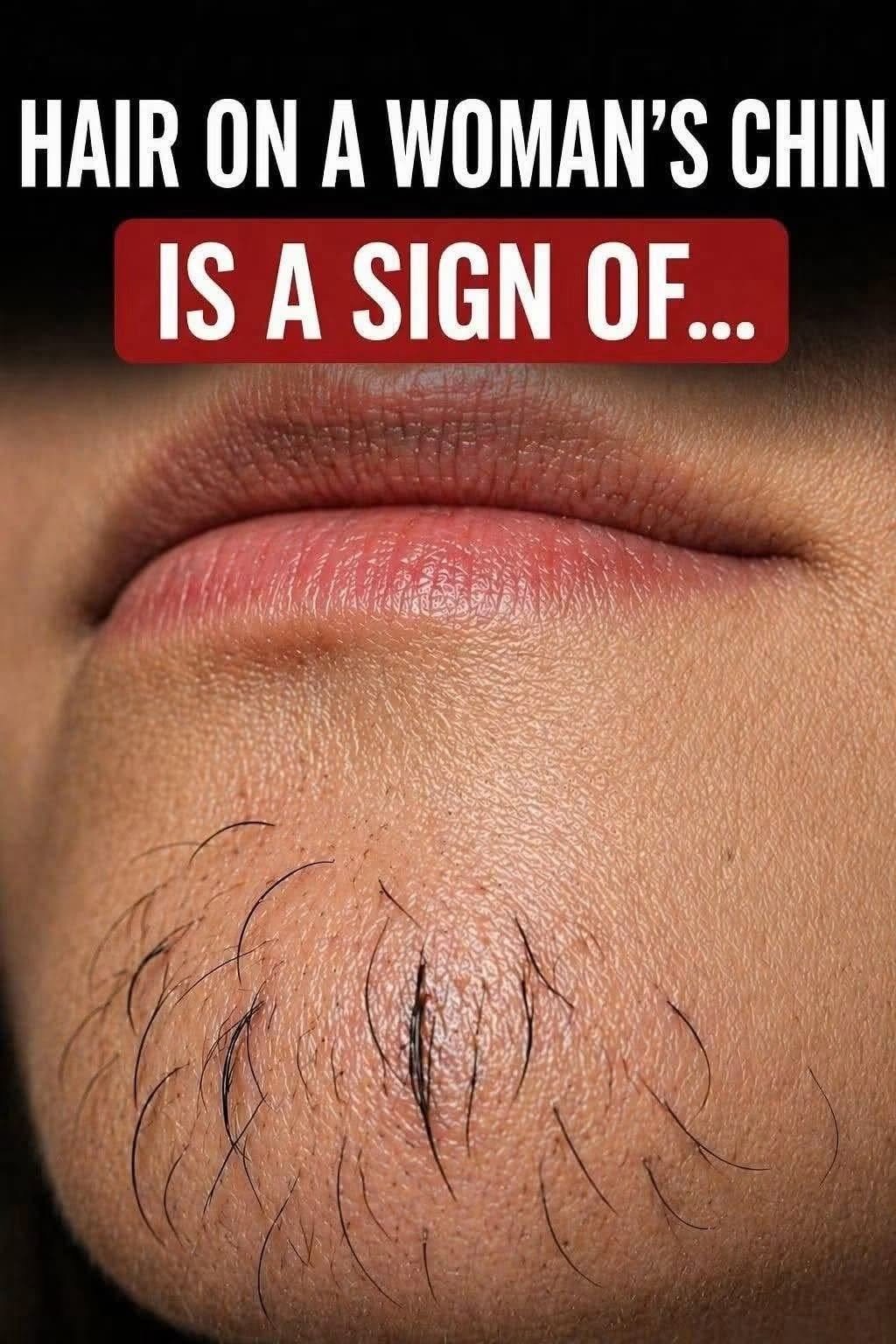
👩 A Woman’s Chin Hair Could Be a Sign of More Than Just Aging, Experts Say
Finding a few coarse hairs on your chin is very common, particularly as women get older. Hormonal changes can alter hair growth patterns, making facial hair more noticeable after menopause.
But if chin or facial hair suddenly becomes thicker, darker, or much more abundant, it can sometimes be a clue that androgen hormones are higher than usual or that your body is responding differently to them.
This doesn’t mean something is necessarily wrong. Chin hair by itself cannot diagnose a medical condition.
1. 🌸 Hormonal Changes With Age
As women age, estrogen levels change, particularly around and after menopause.
At the same time, the relative influence of androgens (hormones such as testosterone) can become more noticeable. Hair follicles on the face may therefore produce coarser, darker hairs.
This is one reason a woman who never had facial hair when she was younger may notice a few chin hairs later in life.
2. 🧬 Polycystic Ovary Syndrome (PCOS)
For younger women, excessive facial or body hair can sometimes be associated with polycystic ovary syndrome (PCOS).
PCOS is a hormonal condition that may also cause:
- Irregular or absent menstrual periods
- Acne
- Weight changes
- Difficulty becoming pregnant
- Thinning hair on the scalp
- Increased facial or body hair
Having chin hair alone doesn’t mean you have PCOS. Doctors consider the overall pattern of symptoms and may perform blood tests or other evaluations.
3. ⚖️ Changes in Androgen Levels
Excessive coarse facial hair is sometimes called hirsutism when it occurs in a pattern associated with male-type hair growth.
Higher androgen levels can stimulate thicker hair growth on areas such as the chin, upper lip, chest, abdomen, or back.
Certain medications and hormonal conditions can also affect androgen levels.
4. 💊 Medications Can Sometimes Play a Role
Some medications can influence hair growth.
If you notice a significant change after starting a medication or supplement, don’t stop prescribed treatment on your own. Instead, tell your healthcare professional about the change.
They can determine whether the medication could be contributing to it.
5. ⚠️ Sudden, Rapid Hair Growth Deserves Attention
A few isolated chin hairs that gradually appear with age are generally very different from rapidly developing, extensive facial hair.
See a healthcare professional if facial hair suddenly becomes much thicker or is accompanied by symptoms such as:
- A deeper voice
- New severe acne
- Rapidly increasing muscle mass
- Irregular or absent periods
- Hair loss from the scalp
- Increased hair growth on the chest or abdomen
Rarely, rapid development of significant androgen-related symptoms can be associated with an ovarian or adrenal disorder that requires investigation.
6. 🩺 What Might a Doctor Check?
If your facial hair growth is new or excessive, your clinician may ask about:
- When the hair growth began
- Your menstrual pattern
- Medications and supplements
- Other hormonal symptoms
- Family history
- Changes in weight or metabolism
Depending on your symptoms, they may order hormone tests or other investigations.
You don’t necessarily need extensive testing for a few ordinary hairs that appear gradually with age.
7. ✨ Safe Ways to Remove Chin Hair
If the hair is simply a cosmetic concern, several options are available:
- Tweezing
- Shaving
- Facial trimming
- Waxing
- Threading
- Depilatory products designed specifically for facial use
- Laser hair removal
- Electrolysis
Shaving doesn’t make hair grow back thicker. It may feel stiffer because the hair has been cut bluntly.
Laser treatment and electrolysis should be performed by appropriately trained professionals, particularly for darker skin tones where certain laser settings require careful selection.
🌷 When Is Chin Hair Normal?
A few stray hairs can be completely normal.
The important distinction is between gradual, mild changes and sudden or excessive hair growth accompanied by other hormonal changes.
Don’t let a social-media headline convince you that every chin hair is a warning sign.
❤️ The Bottom Line
A woman’s chin hair can be a normal consequence of aging and hormonal changes. But unusually rapid or excessive facial hair growth can sometimes indicate an underlying hormonal issue such as PCOS or another condition affecting androgen levels.
If the change is sudden, pronounced, or accompanied by other hormonal symptoms, it’s worth discussing with a healthcare professional.
A single chin hair isn’t a diagnosis—the overall pattern is what matters.