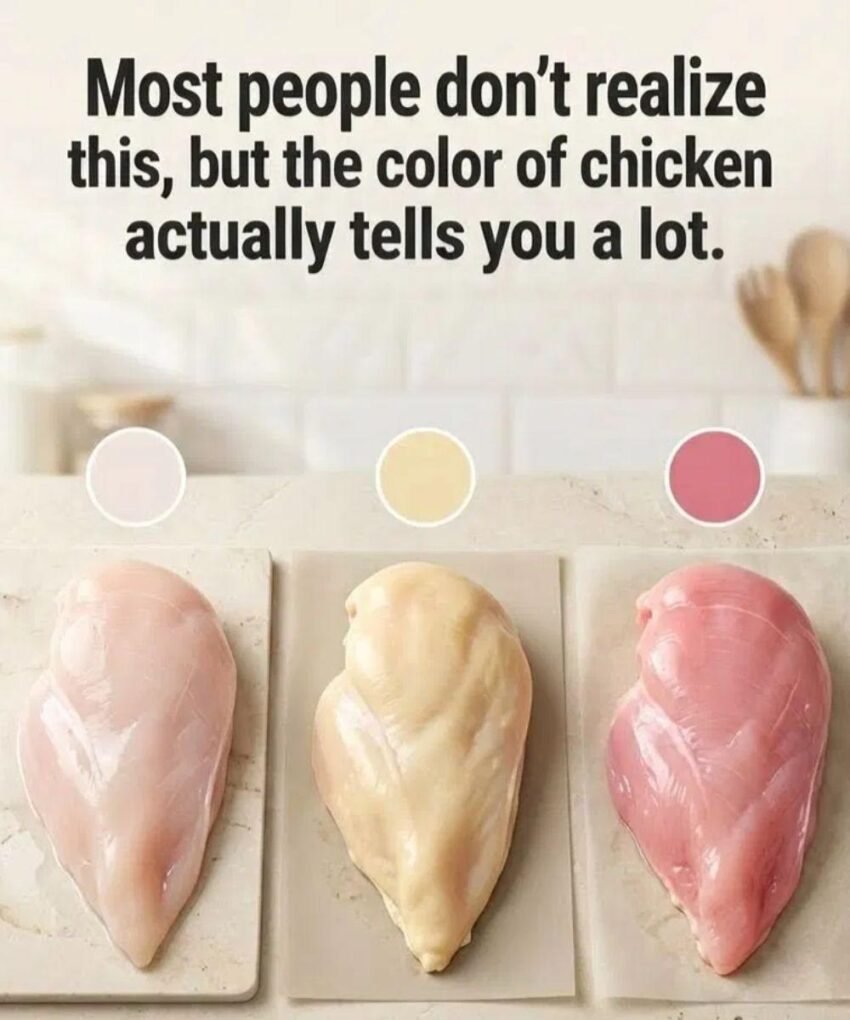
You’re right—it is surprising how much confusion still exists around chicken color and quality. Here’s a clear, science-based explanation to settle it once and for all.
Chicken Color vs. Quality: What Really Matters
1. White Meat vs. Dark Meat
- White meat (breast, wings): lighter because the muscles are used less
- Milder flavor, slightly lower fat
- Dark meat (thighs, legs): darker due to more myoglobin
- Juicier, richer flavor, slightly higher fat
👉 Color here reflects muscle function, not quality or freshness.
2. Raw Chicken Color
- Pale pink = normal and fresh
- Yellowish tint = often due to the chicken’s diet (corn-based feed), not poor quality
- Gray or greenish hues = potential spoilage → discard
3. Cooked Chicken Color
- Properly cooked chicken can still look:
- Slightly pink near bones (especially in young or frozen birds)
- This does not automatically mean it’s unsafe
✔️ Safety is determined by internal temperature:
- 165°F / 74°C = safe to eat
4. Skin Color (White vs. Yellow)
- Yellow skin: chickens fed corn or marigold-rich diets
- White skin: different feed
- No nutritional or quality difference
5. What Actually Indicates Quality
Instead of color, look for:
- Fresh smell (clean, neutral—not sour)
- Firm texture (not slimy)
- Proper storage and handling
- Clear labeling (freshness date, refrigeration)
🧠 Bottom Line
Chicken color is influenced by diet, muscle use, age, and cooking method, not by quality or safety. Smell, texture, and temperature are the real indicators you should trust.
If you’d like, I can also:
- Bust common chicken safety myths
- Explain why pink chicken near bones is safe
- Share a visual guide to raw vs. spoiled chicken
- Compare free-range vs. conventional chicken quality
Just tell me 🍗
