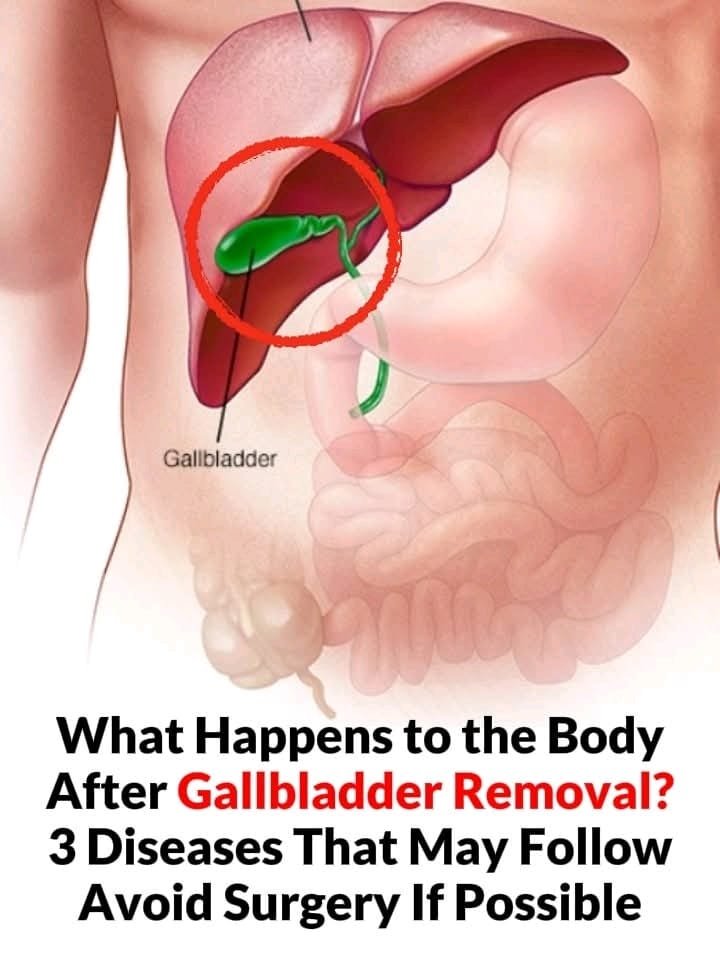
Gallbladder removal (cholecystectomy) is very common and often necessary, but it’s also true that the body must adapt afterward. The key is to explain this accurately and without fear.
👉 Gallbladder removal does NOT automatically cause disease, but in some people it may increase the risk of certain conditions—especially if diet and lifestyle aren’t adjusted.
🩺 What Happens to the Body After Gallbladder Removal?
The gallbladder’s job is to store and concentrate bile.
After removal:
- Bile flows continuously from the liver into the intestine
- It is less concentrated
- Fat digestion becomes less efficient, especially at first
Most people adapt within weeks to months.
⚠️ 3 Conditions That May Occur After Gallbladder Removal
1. Digestive Problems (Post-Cholecystectomy Syndrome)
Possible symptoms:
- Diarrhea (especially after fatty meals)
- Bloating and gas
- Indigestion or nausea
Why it happens:
- Continuous bile flow can irritate the intestines
- Fat digestion may be impaired
✅ Usually manageable with diet changes
2. Fat Malabsorption & Vitamin Deficiencies
- Reduced absorption of fat-soluble vitamins:
- Vitamins A, D, E, K
- May contribute to:
- Fatigue
- Bone weakness
- Skin or immune issues (long term, uncommon)
✅ Preventable with proper nutrition and monitoring
3. Increased Risk of Bile Reflux or Gut Imbalance
- Bile may reflux into the stomach or esophagus
- Can cause:
- Upper abdominal pain
- Burning sensation
- Chronic gastritis-like symptoms
Some people also experience changes in gut bacteria balance, which may affect metabolism.
🚫 Important Clarification
❌ Gallbladder removal does NOT directly cause:
- Diabetes
- Cancer
- Liver failure
These claims are not supported by medical evidence.
🥗 How to Stay Healthy After Gallbladder Removal
Eat Smarter
- Smaller, more frequent meals
- Limit greasy, fried foods
- Increase soluble fiber (oats, bananas, rice)
Support Bile & Digestion
- Lean proteins
- Healthy fats in moderation (olive oil, avocado)
- Probiotics for gut balance
Monitor Nutrients
- Vitamin D, B12, and fat-soluble vitamins if symptoms persist
⚠️ “Avoid Surgery If Possible” — Is That True?
✔ Yes, if gallstones are mild and asymptomatic
❌ No, if there are:
- Severe pain
- Infections
- Blocked bile ducts
- Pancreatitis risk
Delaying necessary surgery can be dangerous.
✅ Bottom Line
Gallbladder removal:
- Is often life-saving and appropriate
- May lead to digestive changes, not guaranteed disease
- Requires diet adjustments, not fear
Most people live completely normal, healthy lives without a gallbladder.
If you want, I can:
- Create a post-gallbladder diet plan
- Explain natural ways to support bile flow
- Clarify myths vs facts about gallstones
Just tell me what you’d like next.
