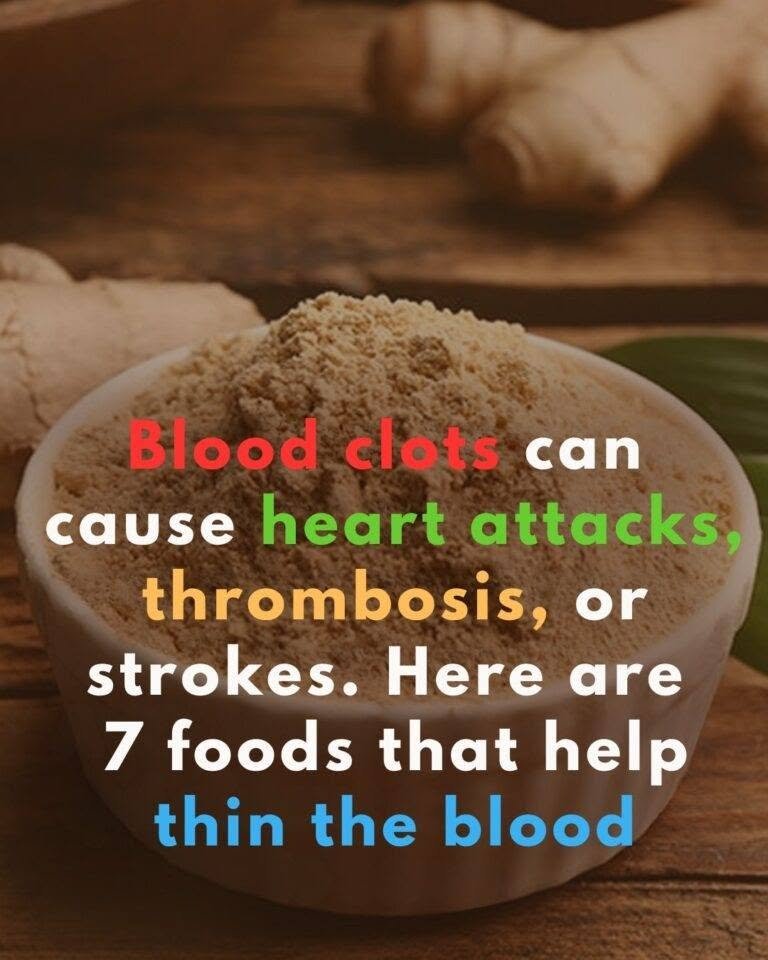
7 Powerful “Blood-Thinning” Foods You Need to Know About
You may have heard that certain foods can “thin the blood.” The phrase is commonly used online, but it can be misleading.
Foods don’t work like prescription anticoagulants such as warfarin, apixaban, or rivaroxaban. However, some foods and food components can modestly influence platelet activity, clotting pathways, or cardiovascular risk.
That distinction matters—especially if you’re already taking a blood-thinning medication.
1. Garlic 🧄
Garlic is one of the foods most commonly associated with natural blood-thinning effects.
Garlic contains sulfur-containing compounds, particularly when it is chopped or crushed. Some research suggests these compounds may influence platelet aggregation, meaning how readily platelets stick together.
Garlic is also associated with cardiovascular benefits as part of a healthy diet.
However, eating garlic doesn’t produce the same predictable anticoagulant effect as a prescription medication.
Important caution
Large amounts of garlic or concentrated garlic supplements may increase bleeding risk, particularly when combined with medications that affect clotting.
If you’re taking an anticoagulant or antiplatelet drug, don’t start high-dose garlic supplements without speaking with your healthcare professional.
2. Ginger 🫚
Ginger contains biologically active compounds such as gingerols and shogaols.
Laboratory and some human research suggests ginger may influence platelet function and inflammatory pathways.
Adding ginger to food or tea is generally different from taking concentrated ginger supplements.
If you take blood-thinning medication, however, it’s worth mentioning regular high-dose ginger supplementation to your doctor or pharmacist.
3. Turmeric
Turmeric contains curcumin, a compound that has been extensively studied for its anti-inflammatory and other biological effects.
Some laboratory research suggests curcumin may influence platelet aggregation and other pathways involved in clotting.
But this doesn’t mean turmeric is a substitute for an anticoagulant.
Food versus supplement
Using turmeric as a normal culinary spice is generally a much smaller exposure than taking concentrated curcumin supplements.
Some supplements contain high doses or formulations designed to increase absorption, potentially producing stronger effects.
If you’re taking anticoagulants or antiplatelet medicines, discuss concentrated turmeric/curcumin supplements with your healthcare professional.
4. Fatty Fish 🐟
Fatty fish such as:
- Salmon
- Sardines
- Mackerel
- Herring
- Trout
provide omega-3 fatty acids, particularly EPA and DHA.
Omega-3 fatty acids have important cardiovascular effects and may influence platelet function.
Eating fish as part of a balanced diet is generally considered beneficial for cardiovascular health.
However, consuming fish isn’t equivalent to taking an anticoagulant, and you shouldn’t alter prescribed medication because you’ve increased your fish intake.
5. Flaxseeds
Flaxseeds are rich in alpha-linolenic acid (ALA), a plant-based omega-3 fatty acid. They also provide fiber and other compounds that may support cardiovascular health.
Ground flaxseed is often easier to incorporate into the diet than whole seeds because whole seeds can pass through the digestive tract without being fully broken down.
Potential effects on clotting are considerably less established than the effects of prescription anticoagulants.
6. Foods Rich in Polyphenols
Many fruits and vegetables contain polyphenols, plant compounds with antioxidant and other biological properties.
Examples include:
- Berries
- Grapes
- Apples
- Citrus fruits
- Leafy vegetables
- Cocoa-containing foods
Some polyphenols have demonstrated effects on platelet activity in laboratory research.
But it’s important not to interpret this as meaning that eating berries or other fruits will “thin your blood” enough to prevent a dangerous clot.
The bigger cardiovascular benefit comes from the overall dietary pattern, rather than any individual food.
7. Green Tea 🍵
Green tea contains polyphenols, including catechins, that have been studied for cardiovascular and metabolic effects.
There is some evidence that components of tea can influence platelet function, but the clinical significance for blood clot prevention is uncertain.
A very important point about vitamin K
People taking warfarin sometimes hear that they should completely avoid green vegetables or green tea because of vitamin K.
That’s not generally the right message.
Vitamin K is important for normal blood clotting, and large changes in vitamin-K intake can affect warfarin treatment. The key is usually to keep vitamin-K intake reasonably consistent, rather than eliminating healthy vegetables.
Always follow the specific dietary advice given by your anticoagulation team.
Are These Foods Actually “Blood Thinners”?
Not in the same sense as medication.
Prescription anticoagulants and antiplatelet drugs have been studied in specific doses and are monitored for their intended effects.
Foods generally have much weaker and less predictable effects.
So it’s better to think of these foods as potentially influencing cardiovascular or platelet biology—not as natural replacements for anticoagulant medication.
What About Aspirin?
Aspirin is not a food, but it is frequently discussed alongside “natural blood thinners.”
Aspirin affects platelet function and can reduce the formation of certain blood clots.
However, taking aspirin every day isn’t appropriate for everyone. It can cause serious bleeding, and whether it is beneficial depends on a person’s cardiovascular risk and medical history.
Don’t start daily aspirin simply because you want to prevent a heart attack or stroke without medical advice.
What If You’re Taking Warfarin?
This is particularly important.
Warfarin works by interfering with vitamin-K-dependent clotting factors.
Foods containing vitamin K—especially leafy green vegetables—can therefore affect warfarin management.
But that doesn’t mean you should stop eating vegetables.
Instead, people taking warfarin are generally advised to keep their vitamin-K intake consistent and have their anticoagulation monitored as recommended.
Suddenly going from very little green vegetables to very large amounts can change the effect of warfarin.
What If You’re Taking Apixaban or Rivaroxaban?
These medications are direct oral anticoagulants (DOACs).
Their food interactions are different from warfarin, but supplements and herbal products can still cause concerns.
Don’t assume that a supplement labeled “natural blood thinner” is safe simply because you’re taking a newer anticoagulant.
Always tell your pharmacist or doctor about supplements.
Foods Are Not a Treatment for a Blood Clot
This is perhaps the most important safety point.
If you have symptoms that could indicate a deep-vein thrombosis (DVT)—such as unexplained swelling, warmth, redness, and pain in one leg—or symptoms of a pulmonary embolism, such as sudden shortness of breath or chest pain, eating garlic, ginger, or turmeric is not an appropriate treatment.
These situations require urgent medical assessment.
What Does a Heart-Healthy Diet Actually Look Like?
Rather than focusing on one “blood-thinning” food, think about the overall pattern.
A cardiovascular-friendly diet generally emphasizes:
- Vegetables
- Fruits
- Whole grains
- Beans and lentils
- Nuts and seeds
- Fish
- Healthy unsaturated fats
while limiting excessive amounts of:
- Processed meats
- Highly processed foods
- Added sugars
- Excess sodium
- Trans fats
This approach supports cardiovascular health without pretending that individual foods can replace medical treatment.
Should You Take Blood-Thinning Supplements?
Be cautious.
Concentrated supplements can deliver much larger doses of active compounds than ordinary food.
Products marketed as:
- “Natural blood thinners”
- “Clot dissolvers”
- “Circulation boosters”
- “Blood cleansers”
may contain multiple herbs or concentrated extracts.
Their safety and effectiveness can vary, and combining them with anticoagulants or antiplatelet medications may increase bleeding risk.
Natural doesn’t automatically mean harmless.
The Bottom Line
Foods such as garlic, ginger, turmeric, fatty fish, flaxseed, polyphenol-rich fruits and vegetables, and green tea contain compounds that may influence platelet activity, inflammation, or cardiovascular health.
But calling them “powerful blood thinners” is an oversimplification.
They cannot reliably replace prescribed anticoagulant or antiplatelet medication, and concentrated supplements can sometimes increase bleeding risk.
If you’re taking warfarin, apixaban, rivaroxaban, dabigatran, clopidogrel, aspirin, or another medication that affects clotting, talk with your doctor or pharmacist before making major dietary changes or adding concentrated supplements.
The safest goal isn’t to make your blood “as thin as possible.” It’s to maintain the right balance between preventing dangerous clots and avoiding excessive bleeding.