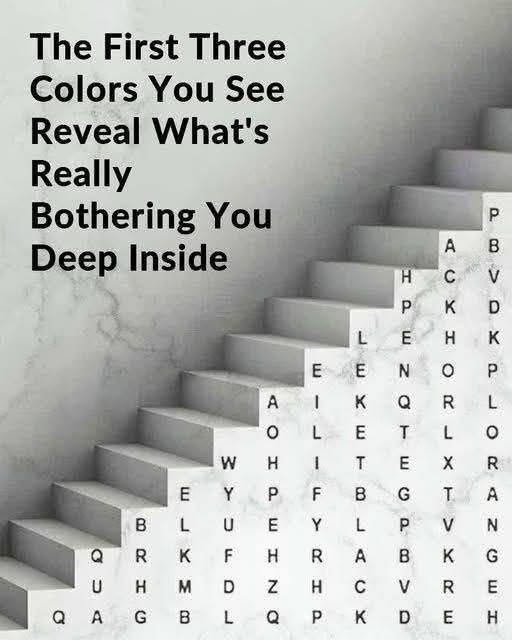
This is a type of personality or psychological “color test”—a popular way to interpret your subconscious thoughts or emotional state based on the first colors you notice in an image or text. While it’s more of a fun, reflective tool than a scientific test, it can help you explore emotions you might not be fully aware of.
Here’s a simple framework:
How the Color Test Works
- Look at the image or list of colors.
- Note the first three colors you naturally notice.
- Each color is linked to certain emotional traits or inner conflicts.
Common Color Meanings (Psychological/Emotional)
| Color | What It Might Reveal |
|---|---|
| Red | Passion, anger, frustration, or strong energy that needs release |
| Blue | Calmness, sadness, introspection, or need for peace |
| Green | Growth, healing, or feeling stuck in a situation |
| Yellow | Anxiety, stress, optimism, or desire for attention |
| Black | Fear, grief, or feeling overwhelmed |
| White | Desire for simplicity, purity, or emotional reset |
| Purple | Creativity, imagination, or unexpressed emotions |
| Orange | Restlessness, excitement, or social needs |
| Pink | Love, nurturing, or unmet emotional needs |
How to Interpret Your Three Colors
- First color: Often represents what you are most consciously feeling.
- Second color: Hidden emotions or stressors.
- Third color: Deep-seated issues or long-term desires.
Example
- First color: Blue → feeling calm on the surface
- Second color: Red → underlying frustration or passion
- Third color: Green → need for growth or change
Important Notes
- This is not a medical or psychological diagnosis
- Useful for self-reflection and emotional insight, not treatment
- Patterns may change over time, reflecting evolving emotions
If you want, I can create a quick “first three colors” self-reflection guide where you can pick colors and get a detailed emotional interpretation for yourself.
Do you want me to make that?
