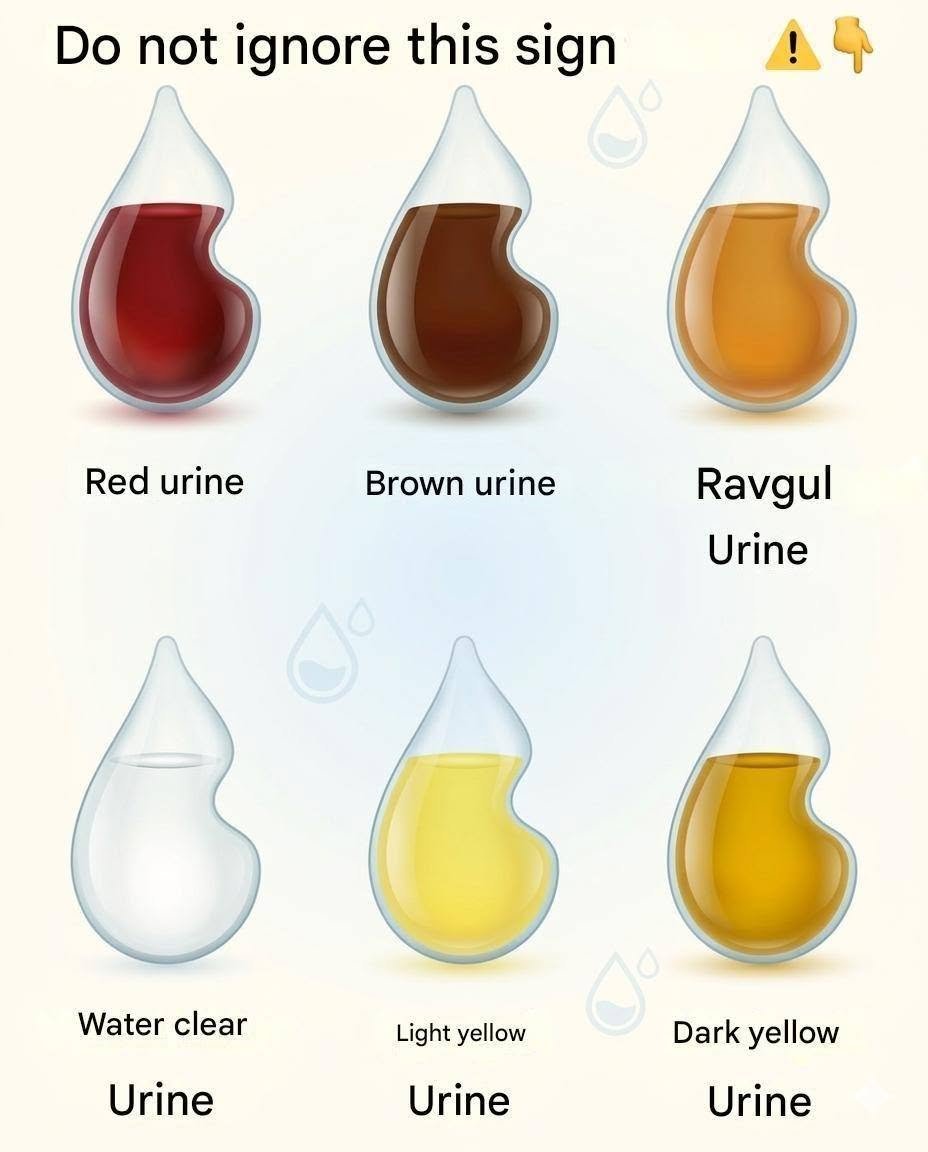
What Does the Color of Your Urine Say About Your Health?
Urine color can provide useful clues about hydration, medications, foods, and sometimes underlying health problems. Most changes are harmless and temporary, but persistent unusual colors or changes accompanied by pain, fever, blood, or other symptoms deserve medical attention.
1. Pale Yellow: Usually Well Hydrated
Pale yellow or straw-colored urine is generally considered normal.
The color comes partly from urochrome, a pigment produced as the body processes substances from normal metabolism.
When you’re adequately hydrated, urine is often relatively light because it contains more water.
2. Dark Yellow: You May Need More Fluids
Dark yellow urine commonly occurs when urine is more concentrated.
This can happen after sweating, exercising, spending time in hot weather, or simply not drinking enough fluid.
Try drinking water regularly and see whether the color becomes lighter.
However, people with certain heart, kidney, or liver conditions may have specific fluid restrictions, so they shouldn’t dramatically increase fluid intake without medical advice.
3. Completely Clear Urine: You May Be Drinking a Lot
Very clear urine isn’t necessarily a problem.
It can simply mean you’re drinking plenty of fluids.
But constantly forcing yourself to drink excessive amounts of water isn’t healthier. Extremely high fluid intake can dilute blood sodium to dangerously low levels.
Drink according to thirst and your healthcare professional’s recommendations rather than trying to keep your urine completely colorless.
4. Bright or Neon Yellow: Often Vitamins
Bright yellow urine can be surprisingly noticeable after taking certain B vitamins, particularly riboflavin (vitamin B2).
The excess water-soluble vitamin is eliminated through urine, producing a striking fluorescent-yellow color.
This is generally harmless when it occurs after taking a vitamin supplement.
5. Pink or Red: Don’t Ignore It
Pink, red, or cola-colored urine can have several causes.
Sometimes it comes from foods such as beetroot, but blood in the urine (hematuria) is another important possibility.
Blood can occur with urinary tract infections, kidney stones, prostate problems, kidney disease, or other conditions.
If you see unexplained red or pink urine, particularly if it happens repeatedly, contact a healthcare professional for evaluation.
6. Brown or Tea-Colored: Needs Attention
Brown or dark tea-colored urine can occur with significant dehydration, certain medications, or some foods.
It can also occur with problems involving the liver, bile system, or muscles.
If brown urine persists after adequate hydration or occurs with yellowing of the skin or eyes, abdominal pain, severe muscle pain, or weakness, seek medical attention.
7. Orange Urine: Several Possible Causes
Orange urine can sometimes result from dehydration or certain medications.
Some medicines can change urine color as they are processed by the body.
However, orange or dark urine accompanied by yellow skin or eyes, pale stools, or abdominal symptoms can warrant evaluation for a liver or bile-related problem.
8. Blue or Green Urine: Uncommon
Blue or green urine is unusual but doesn’t necessarily mean something dangerous is happening.
Certain medications, dyes, food colorings, and medical procedures can cause unusual colors.
In some circumstances, urinary infections involving particular bacteria can also produce unusual coloration.
If you haven’t recently consumed something or taken a medication that could explain the color, persistent blue or green urine should be evaluated.
9. Cloudy or Milky Urine: Check for Other Symptoms
Cloudy urine can result from harmless causes, including crystals, concentrated urine, or certain foods.
But cloudy urine can also occur with a urinary tract infection, particularly when accompanied by burning during urination, frequent urination, pelvic discomfort, fever, or an unpleasant smell.
Cloudiness can also have other causes, so persistent changes should be checked rather than diagnosed from color alone.
10. Foamy Urine: Pay Attention if It Persists
A few bubbles in the toilet are normal and can simply result from the force of urination.
However, urine that repeatedly appears very foamy or has persistent froth can sometimes indicate protein in the urine.
Persistent proteinuria can be associated with kidney disease.
If this keeps happening, a clinician can perform a simple urine test to determine whether protein is actually present.
11. Urine Color Can Change Because of Medication
Many medications can alter urine color.
For example, some medicines can make urine orange, red, blue, or brown.
This doesn’t necessarily mean the medication is harming you.
If you’ve recently started a medication and notice an unusual color, check the medication information or ask your pharmacist whether the change is an expected effect.
Don’t stop a prescribed medication simply because your urine has changed color without discussing it with your healthcare professional.
12. Color Alone Can’t Diagnose a Disease
This is perhaps the most important point.
Urine color is a clue, not a diagnosis.
Two people can have the same urine color for completely different reasons. Conversely, someone can have a medical problem while their urine looks completely normal.
Doctors may use urinalysis, blood tests, imaging, or other investigations when symptoms or medical history suggest that further evaluation is necessary.
When to Seek Medical Attention
Contact a healthcare professional if an unusual urine color is persistent, unexplained, or repeatedly returns.
Seek prompt medical attention for urine changes accompanied by:
- Visible blood or blood clots
- Severe back or side pain
- Fever or chills
- Painful urination
- Difficulty urinating
- Yellowing of the skin or eyes
- Severe weakness
- Significant swelling
- Very dark urine with severe muscle pain
Sudden inability to urinate or severe pain with vomiting can require urgent evaluation.
Final Takeaway
Pale yellow urine is generally reassuring, while dark yellow often suggests concentrated urine. Bright yellow can come from vitamins, while red, brown, orange, cloudy, or persistently foamy urine can have a range of causes that sometimes require medical evaluation.
Don’t judge your health from urine color alone. The color, how long it lasts, your medications, hydration, and any accompanying symptoms all matter.