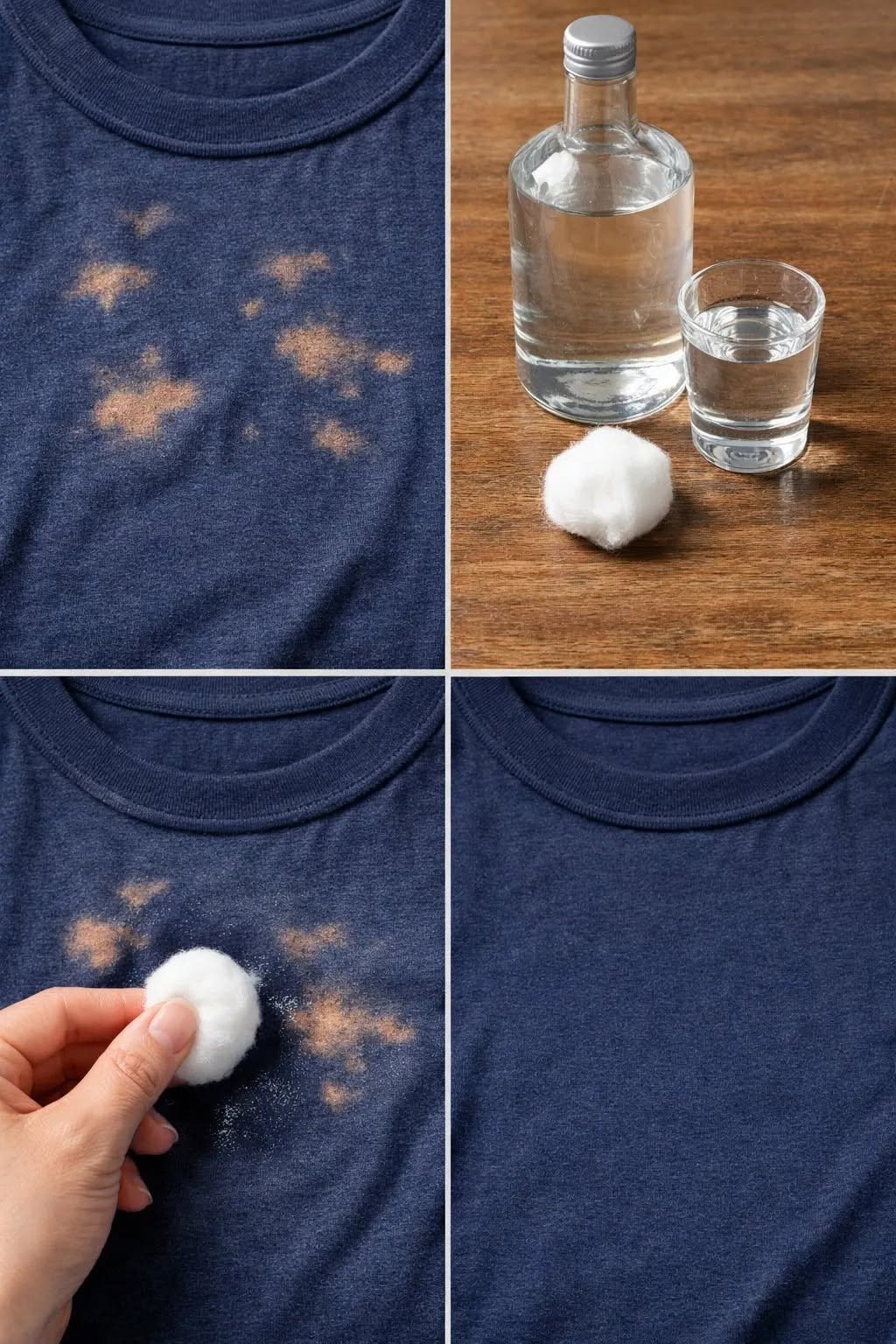
Bleach Stains on Your Clothes? No Need to Throw Them Away: Here’s the Solution
Accidentally splashed bleach on your favorite shirt? Don’t throw it away just yet. A bleach mark is technically not a normal stain—it means the bleach has removed some of the fabric’s original dye. That means ordinary stain removers won’t bring the original color back, but you can often repair or disguise the damaged area.
1. Act Quickly If the Bleach Was Just Spilled
If the bleach has only recently gotten onto the fabric, rinse the affected area immediately with plenty of cool water.
The goal is to remove as much remaining bleach as possible before it continues damaging the fibers and spreading the discoloration.
Then wash the garment according to its care label.
Never mix bleach with vinegar, ammonia, or other household cleaners. Dangerous gases can form.
2. For a Small Bleach Spot, Use a Fabric Marker
For a tiny mark, a fabric marker in a matching color can be one of the easiest fixes.
How to do it:
- Wash and completely dry the garment.
- Find a marker that closely matches the original fabric color.
- Test the color on an inconspicuous area first.
- Lightly color the bleached section.
- Allow it to dry.
- Add additional light layers until the color looks reasonably even.
This works particularly well for small black, navy, brown, or dark-colored spots.
3. Dye the Entire Garment
If there are several bleach marks or a large faded area, redyeing the whole garment can give you a much better result than trying to color individual spots.
Choose a fabric dye appropriate for the material.
For example, cotton and other natural fibers generally respond differently to dye than polyester or other synthetic fabrics.
Why dyeing the whole garment helps
Trying to match one small bleach spot perfectly can be difficult. Dyeing the entire garment gives the fabric a new, more uniform color and can make the previous bleach marks much less noticeable.
Keep in mind that bleach-damaged areas may absorb dye differently, so the finished color isn’t always perfectly uniform.
4. Turn the Damage Into a Design
If the bleach marks are large or irregular, you can actually make them intentional.
Consider:
- Tie-dye
- Bleach-art patterns
- Fabric paint
- Embroidery
- Decorative patches
- Appliqué designs
A random bleach mark can sometimes become a deliberate-looking pattern instead of a mistake.
5. What About Black Clothes?
Black clothing is particularly easy to notice when bleach hits it because the damaged area may turn orange, reddish, yellow, or pale brown.
For a small spot, a black fabric marker may be enough.
For larger damage, black fabric dye is generally the better option. However, the final result depends heavily on the fabric composition and how severely the bleach affected it.
6. Can You Make the Original Color Come Back?
Unfortunately, you can’t simply wash a bleach mark away.
Bleach doesn’t just put a different-colored substance on top of the fabric. It chemically alters or removes the dye that gives the fabric its color.
So the realistic solutions are:
replace the color, cover the area, or turn the mark into part of the design.
7. One Important Mistake to Avoid
Don’t keep applying bleach or random household chemicals in an attempt to “fix” the color.
And don’t combine different cleaning products. In particular, never mix bleach with acids such as vinegar or with ammonia-containing products.
If you’re unsure what treatment your garment can tolerate, check its care label and identify the fabric first.
The Best Fix Depends on the Damage
| Bleach damage | Best approach |
|---|---|
| Tiny spot | Fabric marker |
| Several small spots | Fabric paint or markers |
| Large faded area | Redye the garment |
| Extensive/random marks | Tie-dye or intentional pattern |
| Valuable/delicate garment | Professional textile repair |
Final Tip
Don’t think of a bleach mark as a normal stain. The color has been removed, so the solution isn’t another stain remover—it’s color restoration or camouflage.
For the best result, identify the fabric type and original color before choosing a dye or marker.