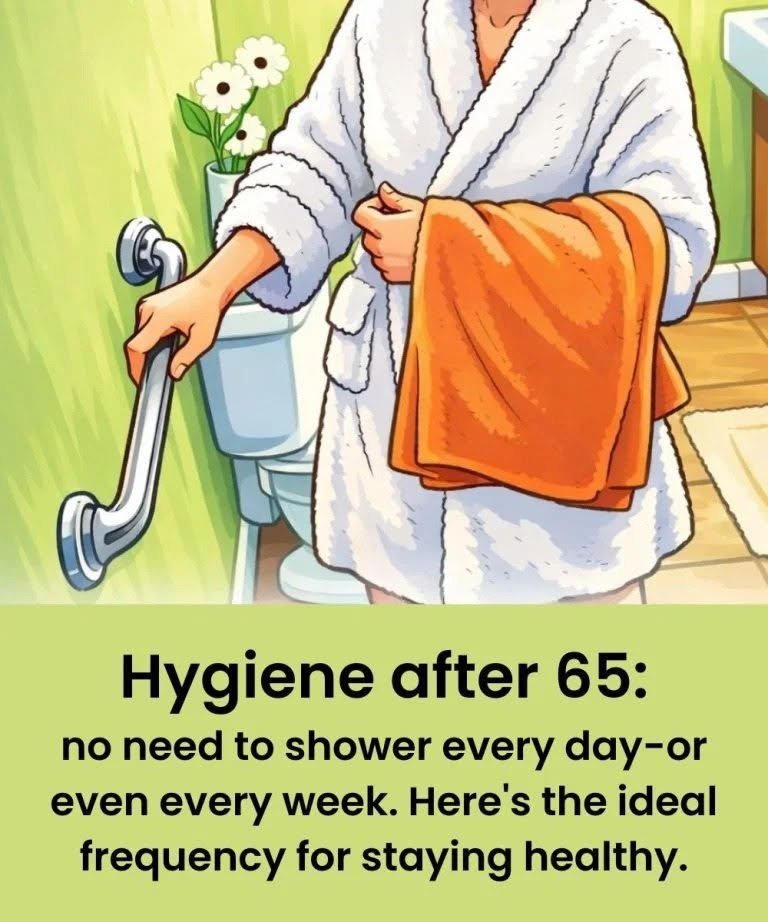
🚿 Why Daily Showers After 65 May Do More Harm Than Good
Getting older can change the way your skin handles water, heat, and cleansing products. However, daily showering is not automatically harmful after 65. The issue is usually how you shower rather than simply how often you shower.
🧴 1. Older Skin Is Often Drier
As we age, the skin generally produces less oil and becomes more prone to dryness. Frequent exposure to hot water and strong soaps can remove some of the skin’s natural oils.
This can leave the skin:
- Dry and tight
- Flaky
- Itchy
- More easily irritated
- More susceptible to cracking
For someone already experiencing very dry skin, showering less frequently—or changing the shower routine—may help.
🔥 2. Very Hot Showers Can Be Irritating
Hot water feels relaxing, but prolonged hot showers can worsen dry or itchy skin.
A better approach is warm rather than very hot water, with showers kept relatively short.
You don’t need to endure a cold shower; simply avoiding extremely hot water can make a noticeable difference.
🧼 3. Soap Doesn’t Need to Cover Every Inch of Skin
Using harsh soap over the entire body every day can contribute to dryness.
Pay particular attention to areas that actually need cleansing, such as:
- Armpits
- Groin
- Feet
- Areas that become sweaty or dirty
A gentle, fragrance-free cleanser is often preferable for sensitive or dry skin.
🧴 4. Moisturizing After Showering Matters
One of the easiest improvements is to apply a fragrance-free moisturizer soon after bathing, while the skin is still slightly damp.
This helps trap moisture in the skin and can reduce dryness and itching.
Creams and ointments generally provide more moisturizing than very lightweight lotions.
🦠 5. Don’t Stop Washing Because of This Headline
It’s important not to interpret this as “people over 65 shouldn’t shower every day.”
Regular bathing can be important for:
- Removing sweat and dirt
- Personal hygiene
- Reducing unpleasant odors
- Maintaining comfort
- Cleaning areas prone to moisture and irritation
Someone who exercises, sweats heavily, works outdoors, or has incontinence may reasonably need more frequent washing.
🦶 6. Foot and Skin Care Become Particularly Important
Older adults should pay attention to changes such as:
- Persistent cracks
- Open sores
- New rashes
- Unusual redness
- Swelling
- Persistent itching
- Areas that don’t heal
These shouldn’t simply be attributed to “getting older.” Persistent or worsening skin changes deserve medical evaluation.
✅ A Better Shower Routine After 65
A skin-friendly routine can look like this:
1. Use comfortably warm water rather than very hot water.
2. Keep the shower relatively short.
3. Use a mild, fragrance-free cleanser.
4. Don’t aggressively scrub the skin.
5. Pat—not vigorously rub—the skin dry.
6. Apply moisturizer while the skin is still slightly damp.
7. Adjust bathing frequency according to your activity, climate, skin condition, and personal needs.
⭐ Bottom Line
Age 65 isn’t a magic cutoff at which daily showers become unhealthy. The bigger concern is that aging skin can become more vulnerable to dryness and irritation, particularly with hot water, long showers, harsh soaps, and vigorous scrubbing.
For many older adults, the answer isn’t necessarily fewer showers—it’s gentler showers and better moisturization.